


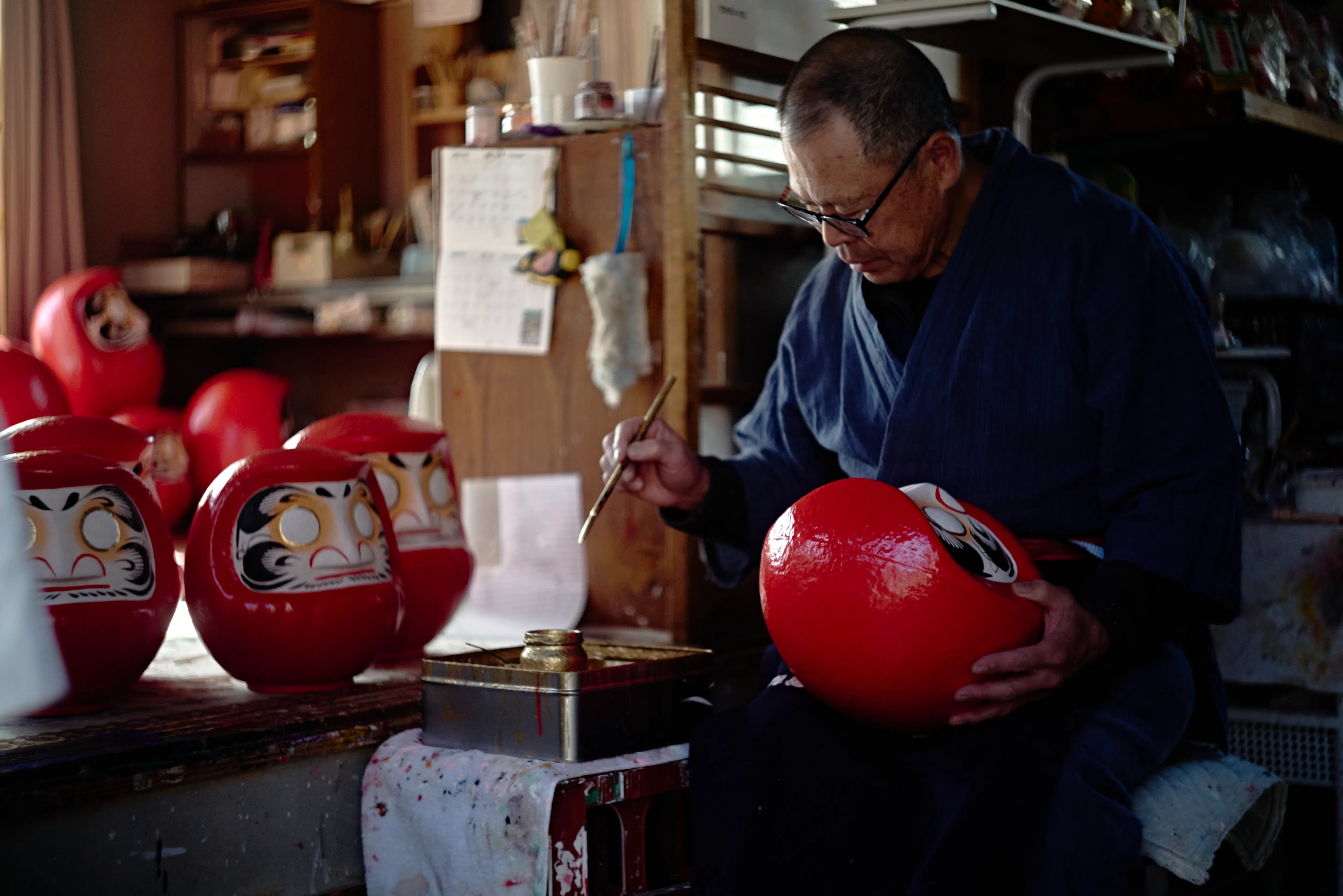

The Daruma doll is a round, self-righting Japanese good-luck figure modeled after Bodhidharma, the monk remembered in Japan as Daruma. Its familiar form developed much later through Japanese craft, toy design, red protective customs, regional production, and the eye-painting goal ritual.
The short version is: Bodhidharma gives Daruma its name and stern face; Japan gives the doll its round body, rising-after-falling symbolism, red lucky-object role, and modern use for one goal or wish.
| Part of the story | Short answer |
|---|---|
| Daruma history | A Bodhidharma image became a Japanese lucky doll through craft, toy, market, and wish customs |
| Daruma origin | The name and face come from Bodhidharma; the doll form developed later in Japan |
| Daruma doll story | A meditating monk image becomes a doll that rises after falling and marks one goal |
| Bodhidharma Daruma doll | The doll is modeled on Bodhidharma, but Bodhidharma did not make Daruma dolls |
| Daruma meaning in history | The doll joins Zen imagery, folk belief, perseverance, and goal-setting practice |
If you only need the modern meaning and use, start with the complete Daruma guide. This page focuses on the history, origin, and story behind the doll.
Daruma History at a Glance
Daruma doll history is easiest to understand as six connected layers.
| Stage | What happened | Why it matters |
|---|---|---|
| Bodhidharma tradition | Bodhidharma became remembered as a meditating figure connected with Zen tradition | explains the name Daruma and the stern face |
| Japanese Daruma image | In Japan, Bodhidharma became Daruma in visual culture | connects the religious figure to Japanese imagery |
| Wall-gazing legend | Stories of long meditation shaped later explanations of endurance and form | explains why Daruma is linked with discipline |
| Self-righting doll form | Weighted round dolls rise after falling | turns resilience into a visible movement |
| Edo-period lucky object | Paper Daruma, red color, markets, and household customs spread | connects the doll to folk belief and good fortune |
| Modern goal ritual | People paint one eye for a goal and the second when it is complete | makes Daruma a personal commitment object |
This layered history prevents a common shortcut. Daruma origin is not simply "Bodhidharma meditated, so Daruma dolls appeared." Bodhidharma is the image source. The doll is a later Japanese transformation of that image into a craft object, lucky charm, and goal ritual.
Daruma Origin: Bodhidharma and Japan
Daruma is the Japanese name and cultural image associated with Bodhidharma. In many explanations, Bodhidharma is described as a monk connected with the early history of Chan in China and Zen in Japan.
In Japanese visual culture, he became recognizable as Daruma: a severe face, large eyes, strong brows, facial hair, and a robe-like body. Those visual features helped make the later doll immediately recognizable.
The historical record around Bodhidharma is limited, so the strongest wording is careful. Many details come through religious tradition, legend, paintings, and later storytelling. For Daruma doll history, the key point is this:
| Origin layer | What began there | What not to overclaim |
|---|---|---|
| Bodhidharma image | the name Daruma, the face, and the Zen frame | Bodhidharma did not invent the dolls |
| Japanese doll tradition | the round body, self-righting form, red lucky role, and eye ritual | the doll is not only a religious portrait |
This is why "Daruma" can refer to both the figure and the doll. The Daruma in Japanese guide covers the forms だるま, ダルマ, and 達磨.
The Daruma Doll Story
The Daruma doll story is the movement from a meditating monk image to a Japanese doll that teaches persistence.
The doll can be pushed down and rise again. That physical action made it a natural symbol for resilience after setbacks. It also connects with the Japanese idea often summarized in English as falling seven times and rising eight.
The eye-painting ritual turns the story into a personal practice. A person chooses one goal, paints one eye, keeps the Daruma visible, and paints the second eye when the goal is complete.
| Part of the story | Meaning |
|---|---|
| stern face | Bodhidharma image and focused discipline |
| round body | rising again after falling |
| blank eyes | a goal or wish not yet completed |
| first eye | commitment begins |
| second eye | the goal is fulfilled or the cycle is closed |
For the practical ritual, read how to use a Daruma doll and which Daruma eye to paint first.
The Wall-Gazing Legend
One famous Bodhidharma story says that he meditated facing a wall for many years. Later explanations connect this legend with Daruma's intense face, seated form, and lack of visible arms and legs.
That story matters, but it should be treated as legend, not as a complete historical explanation. The wall-gazing legend helps explain the feeling of endurance around Daruma. It does not, by itself, explain every part of the Japanese doll.
The self-righting form also matters. A weighted Daruma rises after falling, and that movement became central to the doll's meaning. The round body turns endurance into something the viewer can see.
From Self-Righting Toy to Good-Luck Doll
Daruma became powerful because its shape carries a message. Push it down, and it rises again. That made it a natural symbol for setbacks, effort, recovery, and commitment.
The eye-painting custom is a later Japanese wish-making practice. It should not be described as something Bodhidharma personally did. In modern use, you set a goal, paint the first eye, work toward the goal, and paint the second eye when the goal is complete.
This history explains why Daruma is not just decoration. It is a visible object tied to one intention.
Edo-Period Daruma and Red Meaning
Daruma dolls spread in Japan through craft, popular culture, and folk belief. Paper Daruma are often explained through Edo-period toys, lucky objects, markets, and household customs.
Red also helped Daruma become a protective and auspicious object. In Japanese folk belief, red could be associated with protection from illness and misfortune, and it also fits the robe-like image connected with Bodhidharma.
That means red Daruma should not be reduced to one origin. Religious imagery, protective belief, craft style, and good-luck practice overlap. For more detail, see why Daruma are red and the Daruma colors meaning chart.
Why Takasaki Matters
Takasaki matters because it gives a concrete regional example of how Daruma became a craft, a lucky object, and a seasonal tradition.
The Takasaki area in Gunma is one of Japan's best-known Daruma-producing regions. Its history is often described through papier-mache production, local fairs, wish-making, household good fortune, and work connected with regional communities.
Takasaki should not be presented as the single origin of every Daruma doll. It is better understood as a major and well-known lineage within a wider Japanese history of Daruma images, toys, and lucky objects.
For the regional craft story, see the Takasaki Daruma history guide. For the making process, see how Daruma dolls are made.
Common Misunderstandings About Daruma Origin
| Misunderstanding | Better explanation |
|---|---|
| Bodhidharma invented Daruma dolls | Bodhidharma inspired the image; the doll developed later in Japan |
| Daruma is only a religious object | It is Zen-inspired, but also part of folk craft, toys, lucky customs, and goal practice |
| The wall-gazing legend explains everything | The legend matters, but self-righting toy design and craft history also matter |
| Red Daruma are red for one simple reason | Red connects with robe imagery, protection, and good luck |
| Takasaki is the origin of all Daruma | Takasaki is a major regional center, not the single origin of every Daruma |
Daruma History vs Meaning, Use, and Buying
History explains where the doll comes from. It is not the same as every modern Daruma question.
| If you want to know | Best next page |
|---|---|
| what a Daruma means today | Daruma meaning and symbolism |
| how to set a goal and paint the eyes | How to use a Daruma doll |
| which eye to paint first | Which Daruma eye to paint first |
| whether a Daruma is a good gift | Daruma gift meaning and etiquette |
| how to choose a size, color, and type | How to choose a Daruma doll |
Together, these guides separate the doll's history from the practical questions that arise after someone chooses one.
Quick Answers About Daruma History
What is the origin of Daruma dolls?
Daruma dolls originated in Japan as later folk and craft objects based on the name and image of Bodhidharma. The doll became a good-luck and wish-making object through Japanese craft, toy form, red symbolism, and goal-setting customs.
Is Daruma the same as Bodhidharma?
Daruma is the Japanese name and cultural form associated with Bodhidharma. The doll is modeled on Bodhidharma's image, but it is a later Japanese object, not something Bodhidharma made.
What is the Daruma doll story?
The Daruma doll story is the movement from Bodhidharma's meditating image to a Japanese doll that rises after falling. That rising form made Daruma a symbol of perseverance, resilience, and completing a goal.
What is a Bodhidharma doll?
A Bodhidharma doll usually refers to a Daruma doll: a round Japanese doll modeled after Bodhidharma and used as a symbol of perseverance, good luck, and goal-setting.
Did Bodhidharma invent Daruma dolls?
No. Bodhidharma did not invent Daruma dolls. The dolls developed much later in Japan.
Why are Daruma dolls round and limbless?
The shape is often linked to Bodhidharma legends, especially the wall-gazing story, but it is also tied to self-righting toy traditions. The weighted round body lets the doll rise after falling.
When did Daruma become a Japanese good-luck doll?
Daruma spread as a Japanese lucky object especially from the Edo period onward, when paper dolls, red protective belief, rising toys, markets, and wish-making customs came together.
Why is Takasaki associated with Daruma?
Takasaki is one of Japan's best-known Daruma-producing regions. Its craft history shows how Daruma became linked with local production, fairs, household wishes, and good fortune.

