


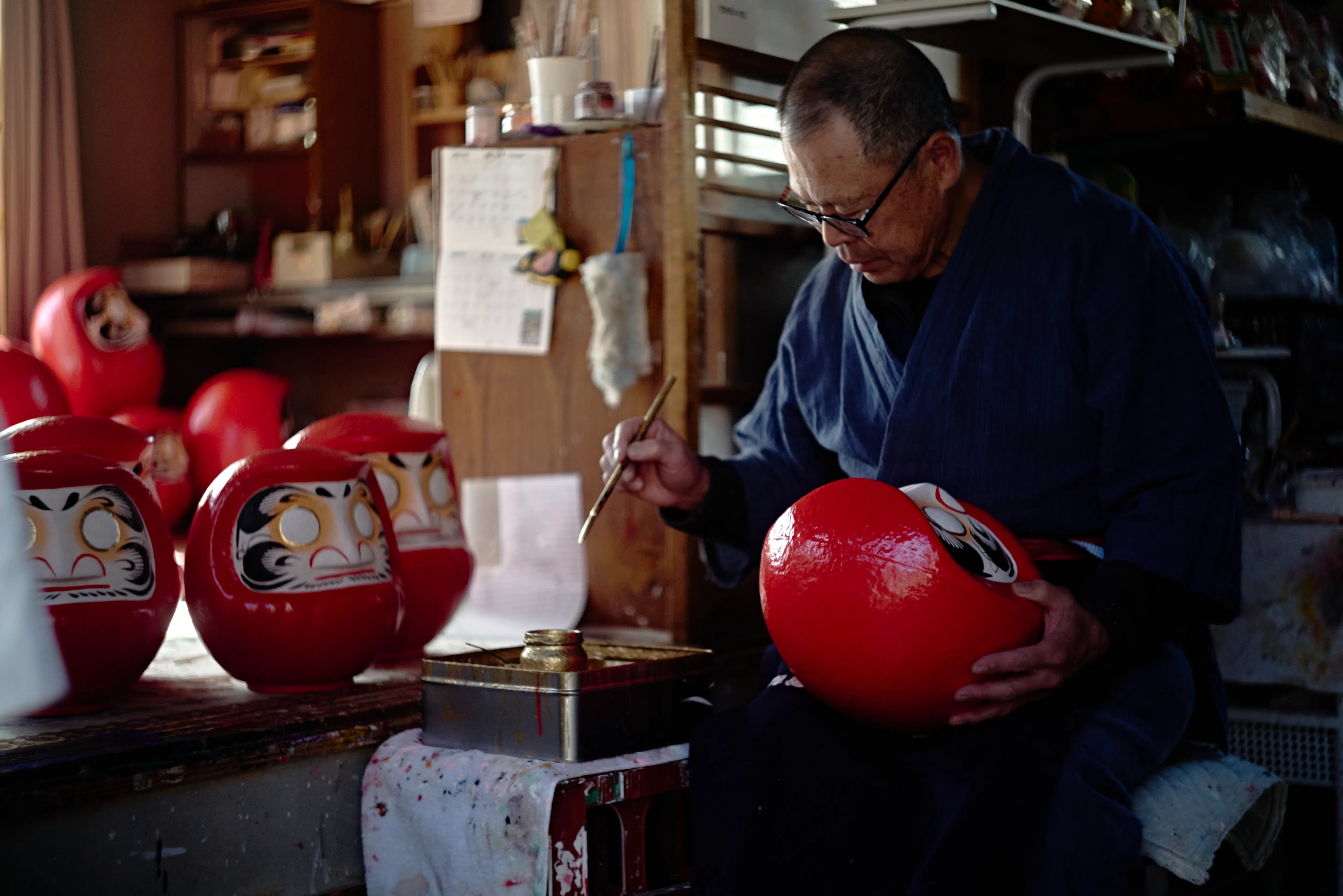

Daruma doll color meanings are easiest to compare in a chart. Red commonly represents good fortune, protection, and perseverance; gold or yellow suggests prosperity; black is associated with protection or business strength; and white can represent clarity or a fresh start. Blue, green, pink, purple, orange, and silver give a goal a more specific emphasis.
The color does not change the basic Daruma ritual. It helps connect the Daruma to the wish or goal you want to keep visible. For the tradition and ritual behind every color, see the complete Daruma guide.
Daruma Doll Color Meaning Chart: Quick Answer
| Daruma color | Common meaning | Best goal fit | How fixed is the meaning? |
|---|---|---|---|
| Red | Good fortune, protection, perseverance | First Daruma, broad goals, encouragement | Strongest traditional association |
| Gold | Wealth, prosperity, business success | Money goals, sales, visible achievement | Strong modern prosperity meaning |
| Yellow | Financial luck, optimism, support | Positive momentum, encouragement | Often close to gold, but varies more |
| Black | Protection, stability, business strength | Business, career, grounded long-term goals | Common modern protective meaning |
| White | Purity, balance, clarity, fresh starts | Exams, resets, new chapters | Common, but maker wording can vary |
| Blue | Study, academic focus, calm judgment | Learning, certification, skill building | Common modern study/focus meaning |
| Green | Health, wellness, growth | Recovery, habits, steady progress | Common modern health/growth meaning |
| Pink | Affection, romance, harmony | Relationships, warm gifts, connection | Common modern relationship meaning |
| Purple | Patience, maturity, sometimes longevity | Long-term growth, reflection, dignity | Less standardized than red or gold |
| Orange | Energy, motivation, study support, new challenge | Fresh effort, action, warm encouragement | One of the least standardized colors |
| Silver | Refinement, special achievement, protection | Special gifts, maker-specific goals | Check the maker's meaning first |
Red is the safest all-purpose choice. Another color can be more useful when it makes a specific goal easier to remember.
The main caution is that Daruma color meanings are not one fixed ancient rulebook. Red has the clearest traditional weight. Many other color meanings come from modern convention, regional practice, and maker explanations. Treat the chart as a strong choosing guide, not as a universal rule that every maker uses in exactly the same way.
Daruma Color Meaning by Goal
If you are choosing a Daruma, start with the goal before choosing the color. The color should make the intention clearer, not more complicated.
| Goal or wish | Best Daruma color | Why this color fits |
|---|---|---|
| First Daruma or general good luck | Red | Red is the classic, broadly understood Daruma color |
| Protection and steady effort | Red or black | Red is traditional; black adds a stronger protective or business tone |
| Money, prosperity, business growth | Gold or yellow | Gold is the clearest prosperity color; yellow is a lighter variation |
| Business stability or career strength | Black or gold | Black suggests protection and steadiness; gold suggests growth and success |
| Exam, study, or certification | Blue or white | Blue supports focus; white supports a clear beginning |
| Health or habit building | Green | Green naturally fits wellness, growth, and gradual progress |
| Love, relationships, or harmony | Pink | Pink is the clearest relationship-related color |
| Long-term personal growth | Purple | Purple fits patience, reflection, and mature effort |
| A fresh push or warm motivation | Orange | Orange works when energy and movement matter |
| A special commemorative goal | Silver | Silver is usually best when the maker gives a specific explanation |
If you know the wish but not the wording, use Daruma wish examples first, then return to the color chart. If you are still unsure, choose red. It is the most traditional option and works for the widest range of goals.
How Different Daruma Colors Change the Emphasis
Different Daruma colors help distinguish a broad wish for good fortune from a more specific goal. Red stays closest to the classic image. Gold, yellow, black, white, blue, green, pink, purple, orange, and silver give the intention a clearer focus.
That difference matters because the color is a memory device. A red Daruma can hold almost any serious wish. A gold Daruma makes a money or business goal more visible. A blue Daruma makes study and practice easier to associate with the doll. A green Daruma makes health or steady growth easier to remember. A pink Daruma makes the relationship meaning obvious.
The strongest way to use different Daruma colors is to match the color to the goal, then keep the Daruma where you will see it. The color does not replace the normal Daruma practice of setting one clear intention, painting one eye, working toward the goal, and completing the second eye after progress or completion.
For the full ritual context, read what a Daruma means. This article stays focused on color meaning and color choice.
Why Red Is the Traditional Daruma Color
Red is the most traditional Daruma color and the safest answer when someone asks what color a Daruma should be. The classic Daruma image is a red round body, a bold face, and blank or painted eyes.
Red is commonly associated with good fortune, protection from misfortune, and perseverance. It is also connected with the visual image of Bodhidharma, the figure behind Daruma. The careful answer is that red became powerful through overlapping associations: religious imagery, protective color belief, good-luck practice, and the visual tradition of the doll itself.
Choose red when this is your first Daruma, when the goal is broad, when the Daruma is a gift, or when you want the meaning to be immediately recognizable. For the deeper color origin, use the dedicated guide to why Daruma dolls are red.
What Each Daruma Color Means
Red Daruma Meaning
Red means good fortune, protection, perseverance, and broad well-being. It is the strongest choice for a first Daruma because it is traditional and easy to understand.
Choose red for a general life goal, encouragement, resilience, or a wish that does not fit one narrow category. Red also works well for gifts because the meaning does not require much explanation.
Gold Daruma Meaning
Gold means prosperity, wealth, visible success, and business achievement. It is the clearest color when the goal is tied to money, sales, revenue, a promotion, or a concrete career milestone.
Choose gold when you want the Daruma to keep a financial or business target visible. If the goal is less about money and more about confidence or optimism, yellow may be a softer version.
Yellow Daruma Meaning
Yellow is often grouped with gold, but it can feel brighter and less formal. It is commonly used for financial luck, optimism, support, and positive momentum.
Choose yellow when gold feels too direct or too business-like, but the wish still relates to prosperity, encouragement, or movement in a better direction.
Black Daruma Meaning
Black means protection, stability, strength, and business resilience. It has a serious tone and suits goals that need discipline, defense, or grounded effort.
Choose black for business stability, career endurance, leadership, or a long-term goal that must stay firm under pressure.
White Daruma Meaning
White means purity, balance, clarity, peace, fresh starts, and focused beginnings. It is a calm color for a clean reset.
Choose white for exams, study, a new project, a new season of life, or any goal where you want the visual feeling of starting clearly.
Blue Daruma Meaning
Blue means study, academic focus, calm judgment, and skill building. It fits goals that depend on practice more than speed.
Choose blue for exams, certification, language learning, career training, or any goal where repeated focused work matters.
Green Daruma Meaning
Green means health, wellness, growth, recovery, and steady progress. It works best for goals that develop gradually.
Choose green for habit building, physical well-being, recovery, balance, or a wish connected with growth over time.
Pink Daruma Meaning
Pink means affection, romance, relationships, harmony, and emotional warmth. It is the most direct color for relationship-related wishes.
Choose pink for romantic wishes, friendship, family harmony, encouragement, or a gentle gift connected with care.
Purple Daruma Meaning
Purple often points to patience, maturity, dignity, self-development, and long-term reflection. Some color guides also connect purple with health or longevity, so it is less standardized than red, gold, black, or white.
Choose purple for personal growth, long-term perseverance, inner steadiness, or a goal that requires patience.
Orange Daruma Meaning
Orange can mean energy, motivation, family warmth, study support, safety, academic effort, or a new challenge depending on the maker. It is one of the least standardized Daruma colors.
Choose orange when the color itself gives the right feeling of warmth and movement, or when the maker's color guide matches your goal clearly.
Silver Daruma Meaning
Silver appears less often than red, gold, black, or white. It may be used for refinement, special achievement, protection, or a commemorative gift, but the meaning depends strongly on the maker.
Choose silver only when the maker explains the meaning in a way that fits the goal. Otherwise, red, gold, black, white, blue, green, or pink will usually be clearer.
How to Choose a Daruma Color
Use three questions.
| Question | If yes | Good color choices |
|---|---|---|
| Is this your first Daruma or a broad wish? | Choose the classic meaning | Red |
| Is the goal about money, work, or business? | Make prosperity or strength visible | Gold, yellow, black |
| Is the goal about learning, health, or relationships? | Match the color to the life area | Blue, green, pink |
If two colors seem possible, choose the one you will understand at a glance a month from now. A Daruma is useful because it keeps the goal visible. The best color is the one that makes you remember the intention without needing to re-read a long explanation.
If you are choosing the whole doll, not only the color, use how to choose a Daruma. If the Daruma is a gift, check Daruma gift etiquette before choosing a strongly specific color such as pink, black, or gold.
Do Daruma Color Meanings Vary?
Yes. Daruma color meanings vary, especially for non-red colors. Red has the strongest traditional association. Other colors are often shaped by modern use, maker color charts, local practice, and gift context.
This is why one color chart may say orange means motivation while another connects orange with family, study, or safety. It is also why silver is better treated as maker-specific. The safest wording is "commonly associated with," not "always means."
Variation does not make the chart useless. It simply means the chart should help you choose, while the final meaning should still fit the Daruma you buy, make, paint, or give.
Common Questions About Daruma Color Meaning
What do Daruma colors mean?
Daruma colors connect the doll to a goal. Red means good fortune, protection, and perseverance; gold or yellow means prosperity; black means protection or business strength; white means purity, balance, clarity, or a fresh start; blue means study and focus; green means health and growth; pink means relationships; purple means patience or maturity; orange means energy; and silver depends on the maker.
What is a Daruma color chart?
A Daruma color chart is a quick reference that pairs each Daruma color with its common meaning and best goal fit. A useful chart should show both the color meaning and the situation where that color is the clearest choice.
What do different Daruma colors mean?
Different Daruma colors make the wish more specific. Red is the classic all-purpose color. Gold and yellow point to prosperity, black to protection or business strength, white to purity and fresh starts, blue to study, green to health, pink to relationships, purple to patience or maturity, orange to energy, and silver to maker-specific special meanings.
What color Daruma is for money?
Gold is the clearest Daruma color for money, prosperity, and business success. Yellow can also be used for financial luck or positive momentum, but gold is usually the stronger prosperity signal.
What does a black Daruma mean?
A black Daruma commonly means protection, stability, strength, and business resilience. It is a good choice for serious work goals, business steadiness, or a wish that needs a stronger protective feeling.
What does a white Daruma mean?
A white Daruma commonly means clarity, peace, fresh starts, and focused beginnings. It can fit exams, study, new projects, resets, and goals where a clean visual tone matters.
Which Daruma color should I choose if I am not sure?
Choose red. Red is the most traditional Daruma color, the easiest to understand, and the safest choice for a broad goal or a first Daruma.
Should I follow the chart or the maker's meaning?
Use the chart to choose the general direction, then follow the maker's explanation if it is specific. This is especially important for orange, purple, silver, and other modern color variations.
Choose the Color That Makes the Goal Visible
The point of Daruma color meaning is not to memorize every possible variation. The point is to choose a color that keeps the goal visible. Red is the classic choice. Gold, black, white, blue, green, pink, purple, orange, yellow, and silver are useful when the color makes the intention clearer.
After choosing the color, connect it to the Daruma practice itself: set one clear intention, paint one eye, keep the Daruma visible, work toward the goal, and complete the second eye when the goal is fulfilled or meaningfully reached.
If you want the full background beyond color, read the complete Daruma guide. If painting the color yourself would make the goal more personal, start with the Daruma painting guide. If you want a guided at-home option, the Daruma gift experience is the natural next step after choosing the color.

