


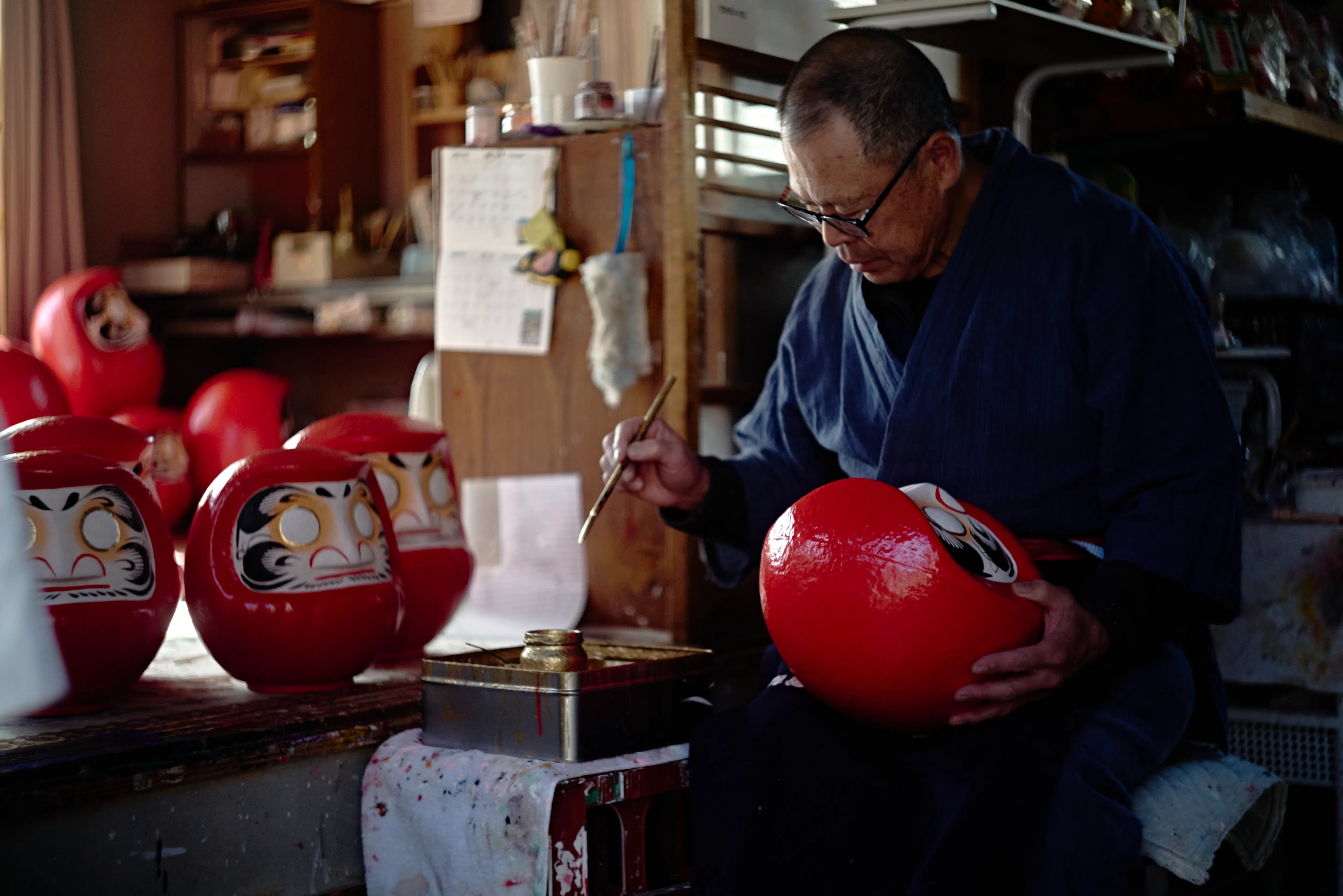

A Daruma gift means encouragement for one clear goal or new beginning. It represents perseverance, resilience, good fortune, and support for the recipient’s own effort. It is especially fitting when someone is starting a project, preparing for an exam, opening a business, changing careers, or rebuilding after a setback.
A thoughtful Daruma gift does not tell the recipient what they must achieve. It gives them a visible way to choose a goal, mark the beginning, and celebrate when they complete it.
| Question | Short answer |
|---|---|
| Is a Daruma a good gift? | Yes, when the occasion involves a goal, fresh start, or encouragement. |
| What does the gift mean? | “I support what you are working toward. Keep going.” |
| Should the eyes be blank? | Usually yes if the recipient will use the traditional goal ritual. |
| Is it a religious gift? | It has historical Buddhist associations, but it is widely given as a Japanese symbol of perseverance and good fortune. |
| Is there a bad occasion for it? | Avoid it when the message could feel like pressure or when the recipient does not want symbolic objects. |
What does a Daruma gift mean?
Giving a Daruma is a way to connect good wishes with action. Its rounded, self-righting shape recalls the idea of getting back up after a fall. Its blank eyes can turn a goal into a small ritual: one pupil is painted when the commitment begins, and the other when the goal is reached.
That gives the gift several connected meanings:
- Perseverance: continue after delays or setbacks.
- Encouragement: someone believes in the recipient’s effort.
- A new beginning: mark the first step of a project or life change.
- Good fortune: wish for a favorable path and outcome.
- Commitment: keep one goal visible until it is complete.
The message is stronger than a general “good luck.” A Daruma says that progress comes through repeated effort. For the wider symbolism of the figure, see the complete Daruma guide.
Is a Daruma a good gift?
A Daruma is a good gift when the recipient is moving toward something they care about. It can feel personal without requiring an expensive or elaborate object, because the meaning comes from the goal attached to it.
It works best when three things are true:
- The recipient has a goal or transition they have chosen.
- You can explain the eye ritual in one or two sentences.
- The size, color, and style suit the place where they might keep it.
The gift can still be appreciated as Japanese craft or decoration, but it becomes more memorable when the recipient understands what the unfinished eyes invite them to do.
Best occasions for a Daruma gift
| Occasion | Why a Daruma fits | A natural message |
|---|---|---|
| Exam or qualification | Supports steady study toward a clear result | “For the work you’re putting into the exam.” |
| Graduation | Marks a transition and the next goal | “For whatever you decide to build next.” |
| New job or promotion | Recognizes a fresh responsibility | “Wishing you a strong start in the new role.” |
| Business opening | Encourages persistence and long-term progress | “For the goals behind your new business.” |
| Creative project | Makes a long, uncertain process visible | “For finishing the work one step at a time.” |
| Recovery or restart | Honors resilience without promising an easy path | “For the next step, at your own pace.” |
| New Year | Gives the coming year one concrete direction | “Choose one wish you want to carry through the year.” |
| Personal habit | Helps keep a measurable commitment in sight | “For the routine you want to make your own.” |
A birthday can also work if the gift is tied to a goal the person has already mentioned. The occasion matters less than the fit between the Daruma and the recipient’s own intention.
Daruma gift etiquette
There is no complicated ceremony required, but a few choices make the gift easier to receive.
Let the recipient choose the goal
Do not assign a sensitive goal on someone else’s behalf. A gift meant to encourage weight loss, fertility, recovery, or career change can feel intrusive unless the person has openly invited that support.
A better approach is to explain the Daruma and leave the intention open: “You can choose the goal you want this to represent.”
Explain the eyes
If the Daruma has blank eyes, include a short note:
> Choose one goal. Paint the first pupil when you begin, keep the Daruma where you can see it, and paint the second when the goal is complete.
This is enough. The recipient does not need a long cultural lecture before enjoying the gift. The full sequence is available in the guide to using a Daruma.
Keep the eyes blank for the goal ritual
A Daruma intended for goal-setting is usually given with both pupils blank. The recipient can then make the first mark themselves.
A fully painted Daruma is still suitable as craft or decoration. It simply tells a different story: the eye ritual is already complete or was not the purpose of that piece.
Choose a practical size
A small Daruma works well on a desk or shelf and is easy to keep in view. A large one makes a stronger ceremonial or business-opening gift but needs more space. The Daruma size chart helps match the object to the setting.
Treat color meanings as guidance
Red is the classic, flexible choice. Gold is often connected with prosperity, blue with study, green with health, and white with a fresh start. These associations can vary by maker, so use them as helpful cues rather than fixed promises. The Daruma color guide compares them in detail.
Choosing the right kind of Daruma gift
A finished Daruma and a paint-your-own experience serve different people.
| Gift type | Best for | What the recipient does |
|---|---|---|
| Traditional finished Daruma with blank pupils | Someone who wants the goal ritual immediately | Chooses a goal and paints the eyes at the beginning and end |
| Fully completed decorative Daruma | Someone who values the craft or design more than the ritual | Displays it as a finished object |
| Blank Daruma or painting kit | A creative recipient, family, or shared activity | Paints the body first, then begins the eye ritual |
| Workshop or guided experience | Someone who values making and memory | Learns the process and creates a personal piece |
If you are unsure, a classic red Daruma with blank pupils is the clearest all-purpose choice. A finished Daruma suits someone who wants traditional craft, while a Daruma painting kit turns the gift into an activity.
When a Daruma may not be the right gift
A Daruma may be a poor fit when the recipient dislikes symbolic or spiritual objects, has nowhere to display it, or could read the goal as criticism.
Be especially careful when the gift implies that the person should change something private. Encouragement works when it follows their intention; it becomes pressure when it invents an intention for them.
For a formal workplace or international recipient, add a short explanation of the symbolism. That prevents the object from becoming an unexplained decoration and gives the person freedom to decide how to use it.
How the recipient uses the gift
The ritual is simple:
- Choose one goal that can be recognized when complete.
- Paint the Daruma’s first pupil.
- Keep it somewhere visible.
- Work toward the goal and use the empty eye as a reminder.
- Paint the second pupil when the goal is achieved.
The Daruma does not guarantee an outcome. Its value lies in making a commitment visible and creating a moment to acknowledge completion.
Common questions about Daruma gifts
Is it appropriate to give a Daruma to someone who is not Japanese?
Yes. Explain the meaning and let the recipient decide whether to use the eye ritual or simply appreciate the craft. Cultural context makes the gift more thoughtful.
Can I paint the first eye before giving it?
It is usually better to leave both pupils blank so the recipient can choose the goal and mark the beginning. Paint it first only if you are beginning a clearly shared goal together.
Is a Daruma gift bad luck if the goal is not completed?
No. Goals can change or take longer than expected. The recipient can review the intention, extend it, reformulate it, or close the cycle deliberately.
What color is safest for a gift?
Red is the most traditional and versatile. Choose another color when its stated meaning clearly fits the recipient’s goal.
Can a Daruma be given as a business gift?
Yes. It suits an opening, launch, expansion, or long-term target. Choose a size appropriate for the space and include a concise explanation of the eyes.
What should I write in a gift card?
Keep the message supportive and open. “For the goal you’re beginning—I’m cheering you on” conveys the meaning without imposing a specific outcome.
The gift is support, not a demand
The best Daruma gift recognizes effort the recipient has already chosen. It offers a symbol, a simple ritual, and a visible reminder that setbacks do not end the work. Given with that understanding, a Daruma can carry encouragement long after the occasion itself has passed.

