


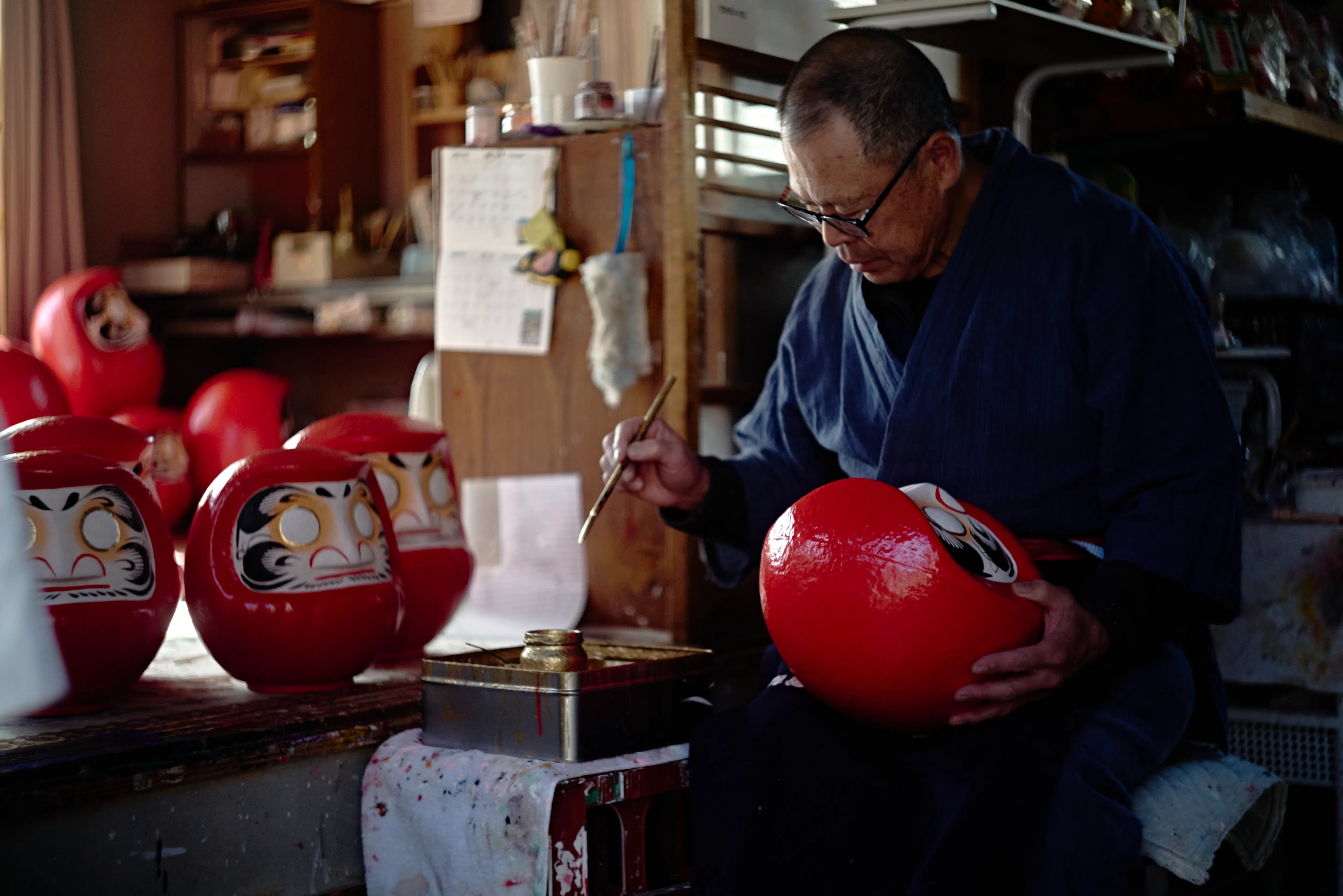

To use a Daruma doll, choose one clear goal, paint the first eye when you commit, place the Daruma where you will see it, work toward the goal, and paint the second eye when the goal is complete. That is the basic Daruma ritual: one goal, one visible reminder, one beginning, and one completion.
The ritual is practical rather than passive. A Daruma keeps your commitment visible, but the progress still comes from the work you do toward it.
| Step | What to do | What it means |
|---|---|---|
| 1 | Set one clear goal or wish | The Daruma represents one commitment |
| 2 | Paint the first eye | The ritual begins |
| 3 | Place the Daruma somewhere visible | The goal stays in sight |
| 4 | Keep working toward the goal | The doll supports effort, not passive luck |
| 5 | Paint the second eye when complete | The ritual closes |
What a Daruma Doll Is Before You Use It
A Daruma doll is a Japanese goal-setting doll associated with perseverance, good fortune, and returning to the goal after setbacks. It is often sold with blank eyes. The blank eyes are what make the ritual visible.
One eye begins the goal. The unpainted eye reminds you that the commitment is still open. The second eye closes the cycle when the goal has been fulfilled.
The complete Daruma guide covers the history and wider symbolism. Here, the focus is the ritual itself.
Daruma Doll Instructions: 5 Steps
1. Choose One Clear Goal
A Daruma works best when it stands for one goal, not a list of unrelated wishes. The goal can be personal, professional, creative, academic, health-related, or family-related, but it should be clear enough that you know when it has been fulfilled.
Weak goal: "be better."
Clearer goal: "finish this project," "pass this exam," "open the shop," "complete this recovery milestone," or "practice this habit for a defined period."
If choosing the words is difficult, the Daruma wish examples can help you make the goal more specific.
2. Paint the First Eye
Paint or fill in one eye when you commit to the goal. This is the moment the Daruma changes from an object on a shelf into a visible reminder of your intention.
Many explanations say to paint the Daruma's own left eye first. When you are facing the doll, that appears on your right. If your Daruma came with specific maker, workshop, or local guidance, follow that guidance.
The most important rule is that one eye marks the start and the second eye marks completion. For the left/right detail, read which Daruma eye to paint first.
3. Place the Daruma Somewhere Visible
Place the Daruma somewhere clean, stable, respectful, and easy to see. A desk, shelf, study area, work table, office, shop counter, or shared room can work if the doll stays visible.
| Goal type | Useful placement |
|---|---|
| Study or exam | Desk, bookshelf, study shelf |
| Work or business | Office shelf, workspace, shop counter |
| Household goal | Entryway, shared shelf, living room |
| Creative project | Studio, worktable, tool shelf |
| Personal habit | A clean place you see each morning |
Avoid the floor, cluttered corners, unstable ledges, or places where the Daruma will be ignored. The point is steady visibility, not complicated placement rules.
For a dedicated placement guide, read where to place a Daruma doll.
4. Keep Working Toward the Goal
A Daruma supports effort. It does not do the work for you.
Use the unpainted eye as a quiet check-in:
- Is the goal still clear?
- What is the next action?
- Is the Daruma still visible?
- Have you made the goal too broad?
- Do you need to adjust the plan while keeping the same commitment?
This is why Daruma symbolism is tied to perseverance. The doll keeps returning your attention to the goal after ordinary distractions.
5. Paint the Second Eye
Paint the second eye when the goal is complete, rather than at the first sign of progress. It marks the moment the commitment has been fulfilled.
After that, you can keep the Daruma respectfully as a record of the completed goal, begin a new Daruma cycle for a new goal, or close the cycle more formally. If you need options for an old or completed Daruma, read how to dispose of a Daruma doll respectfully.
Daruma Ritual: What It Means
The Daruma ritual is a start-to-completion cycle:
- choose one goal;
- paint the first eye;
- keep the Daruma visible;
- work toward the goal;
- paint the second eye when the goal is achieved.
You may hear the practice described as manifestation, but its everyday value is active commitment: set a goal, keep the reminder visible, and return to the work. The Daruma becomes a prompt for effort, patience, and follow-through rather than a substitute for them.
How to Set a Daruma Goal
To set a Daruma goal, make it specific enough that you can recognize completion. A Daruma goal should be clear, personal, and visible in daily life.
| Goal test | Good Daruma goal | Weak Daruma goal |
|---|---|---|
| One main commitment | "Pass this exam" | "Do better at school" |
| Clear completion | "Finish this project" | "Be more productive" |
| Actionable next step | "Practice three times a week" | "Improve someday" |
| Personally meaningful | "Open the shop" | "Become successful" |
| Visible reminder helps | "Recover steadily through this plan" | "Hope everything works out" |
If the goal is too broad, narrow it before painting the first eye. If the goal changes completely, close that cycle honestly and begin a new one rather than loading several goals onto the same doll.
What If You Do Not Achieve the Goal?
If the goal is not achieved, do not pretend the ritual is complete. Review the goal and the process.
Ask:
- Was the goal too broad?
- Did the timeline change?
- Did the goal stop mattering?
- Was the next action unclear?
- Does the same Daruma still represent the goal honestly?
Some people keep the Daruma visible longer if the goal is still active. Others close the cycle after a natural review point and start again with a clearer goal. The important point is not to turn one Daruma into a pile of unfinished wishes.
Finished Daruma or Blank Daruma?
A finished Daruma is the simplest option if you want to begin the ritual right away. Choose the goal, paint the first eye, place it well, and start using it.
A blank Daruma is better if the making process is part of the experience. If you start with a blank body, finish painting the body first, let it dry fully, and only then begin the eye ritual. For that separate process, read how to paint a Daruma at home.
Both options can work. The difference is whether you want the Daruma to arrive ready for the ritual, or whether you want the painting process to become part of how you begin.
Explaining the Ritual Aloud
If you are explaining the ritual to someone else, say it simply:
"Set one goal. Paint one eye when you start. Keep the Daruma where you can see it. Paint the second eye when the goal is complete."
If you also need to say the word clearly, use the separate Daruma pronunciation guide.
Common Questions About Using a Daruma Doll
How do you use a Daruma doll?
Set one goal, paint the first eye, place the Daruma where you will see it, work toward the goal, and paint the second eye when the goal is complete.
What are the basic Daruma doll instructions?
The basic instructions are: choose one goal, paint one eye to begin, keep the doll visible, continue working, and paint the second eye at completion.
What is the Daruma ritual?
The Daruma ritual is the full goal cycle: one eye begins the goal, daily visibility keeps the goal present, and the second eye closes the cycle when the goal is fulfilled.
Is Daruma a manifestation ritual?
Some people describe it that way, but the practical use is active goal commitment. A Daruma is strongest when it reminds you to take action, not when it replaces action.
How do you set a Daruma goal?
Choose one goal that is specific, meaningful, and complete-able. You should know what counts as success before painting the first eye.
Which Daruma eye do you paint first?
The usual explanation is the Daruma's own left eye first, which appears on your right when you face the doll. The second eye is painted after completion.
Can I use one Daruma for more than one goal?
It is better to use one Daruma for one main goal. That keeps the first eye tied to one commitment and the second eye tied to one clear completion.
Do I have to start at New Year?
No. New Year is common, but a Daruma can begin with any meaningful goal, project, exam, recovery, business launch, move, or personal milestone.
Can I give a Daruma as a gift?
Yes, if the recipient would appreciate a goal, milestone, or encouragement gift. For gift-specific context, read Daruma gift meaning and etiquette.
Begin With One Clear Goal
The best way to use a Daruma doll is to keep the ritual simple: one goal, one first eye, one visible place, steady effort, and one second eye when complete.
If you are ready to begin, choose a goal before choosing the doll. If you need a ready-to-use doll, see the finished Daruma. If you want the painting experience to be part of the ritual, see the Daruma Painting Kit. If you are still choosing a color, use Daruma colors meaning before starting.

