



A good souvenir from Japan should pass three tests: it fits your luggage, suits the person receiving it, and has a clear use or story once it gets home. For an easy choice, look for a tenugui cloth, furoshiki, stationery, chopstick rest, small ceramic piece, tea, packaged sweets, or a small piece of folk craft.
If the gift marks a new job, exam, business, or personal goal, a Daruma carries a more specific message of encouragement. If you are buying for several people, flat textiles, paper goods, and sealed food are easier to divide and pack.
Quick picks by need
| What you need | Good souvenir ideas |
|---|---|
| Light and flat | Tenugui, furoshiki, postcards, washi paper, letter sets |
| Small gifts for several people | Pens, stickers, tea, sweets, rice crackers |
| A practical adult gift | Chopsticks, a small pouch, tea cup, kitchen utensil |
| A traditional craft | Small ceramics, lacquerware, kokeshi, Daruma |
| A personal keepsake | Decorative name stamp, local postcard, souvenir coin |
| A gift with a message | Daruma, craft kit, carefully chosen good-luck symbol |
| Something to share at work | Individually wrapped sweets, tea, savory snacks |
25 Japanese souvenir ideas
1. Tenugui cloth
A tenugui is a light cotton cloth that can serve as a hand towel, wrapping cloth, table accent, or small wall hanging. It folds almost flat, so it is one of the easiest non-food souvenirs to carry.
2. Furoshiki wrapping cloth
Furoshiki can wrap a bottle, lunch box, book, or gift, then be used again. Choose a size that matches an everyday object rather than buying a large cloth without a likely use.
3. Small fabric pouch
A coin purse, glasses case, or zip pouch works well for someone who prefers useful gifts. Check the lining and closure, since a well-made pouch is more likely to stay in daily use.
4. Washi paper goods
Writing paper, envelopes, small notebooks, and decorative sheets show the texture of Japanese paper without taking much luggage space. They suit writers, artists, and people who enjoy wrapping gifts.
5. Japanese stationery
Pens, pencils, notebooks, clips, and stickers are easy to choose at several price points. A small set with one clear purpose feels more thoughtful than a bag of unrelated novelty items.
6. Local postcards
A postcard tied to a place you visited makes a compact record of the trip. Write a short note before giving it, or leave it blank for someone who collects paper goods.
7. A decorative name stamp
A custom stamp can be a playful personal keepsake. Treat it as a decorative item unless the maker specifically explains an official use; name stamps made for visitors are generally chosen for stationery, cards, and crafts.
8. Folding fan
A folding fan is compact, recognizable, and useful in warm weather. Look at how smoothly it opens and whether the design suits use, display, or both.
9. Chopsticks
Chopsticks are practical when the recipient will use them. Check the length, finish, care instructions, and whether they are sold as a single pair or a set.
10. Chopstick rests
Chopstick rests are smaller and easier to pack than most tableware. A pair or small set can add a specific Japanese detail to a table without demanding much storage space.
11. A small bowl or plate
A single small ceramic piece can be used for snacks, sauces, jewelry, or desk items. Wrap it inside clothing and leave space around the rim to reduce pressure in your luggage.
12. Tea cup
A tea cup works best for someone who already drinks tea or enjoys handmade tableware. Feel the rim and weight before buying; those details matter more in daily use than decoration alone.
13. Compact kitchen utensil
A small grater, tea scoop, rice paddle, or serving tool can make a practical souvenir for a home cook. Bladed or sharp tools may have transport restrictions, so confirm airline and destination rules before buying.
14. Incense and a small holder
Incense is light and easy to pack, while a small holder gives it an immediate use. Choose a restrained scent if you do not know the recipient's preference, and keep fragile holders protected.
15. A small lacquered item
A tray, spoon, cup, or box can introduce Japanese lacquer craft in a manageable size. Read the care instructions, since some finishes should not go in a dishwasher or microwave.
16. Kokeshi
A small kokeshi makes a lasting display piece and shows the hand of its maker through its painted face and body. Check the base so it will stand securely after the trip.
17. Daruma
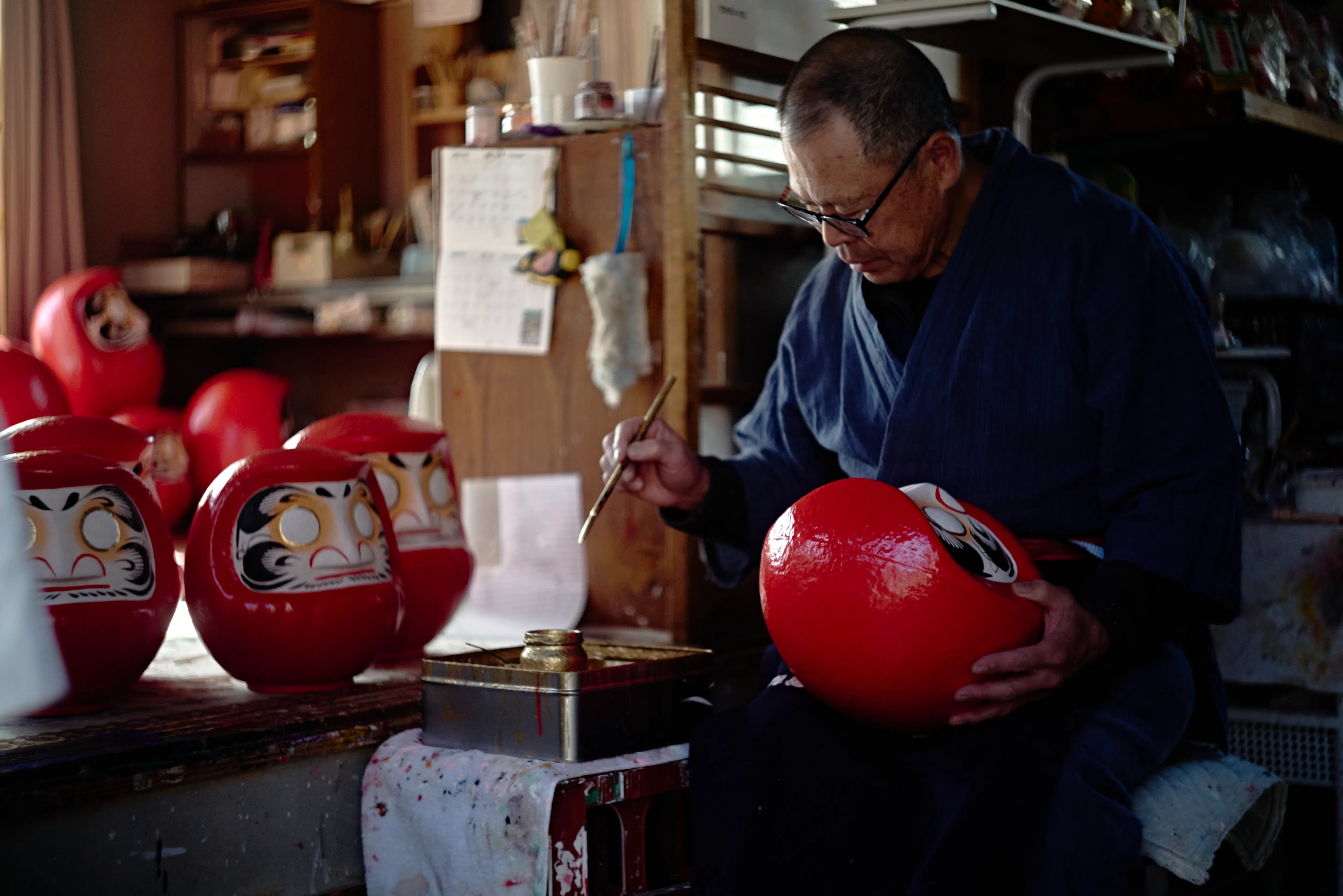
A Daruma suits someone beginning a goal. Its rounded body represents getting back up, and its blank eyes allow the owner to mark the start and completion of a wish or project. Read what a Daruma gift means before choosing one for another person.
18. A craft kit
A compact kit turns the souvenir into an activity after the trip. Paper craft, textile work, calligraphy, and Daruma painting all work best when the kit includes clear instructions and the tools that are difficult to replace.
19. Capsule toy
A capsule toy can be a fun, low-cost keepsake for a collector or child. Choose one connected to a real interest; random novelty often becomes clutter once the surprise has passed.
20. Souvenir coin or pressed token
A small token is easy to carry and can record a particular place or visit. It suits collectors and travelers who prefer a dated or location-specific memory over a decorative object.
21. A good-luck symbol
Small good-luck objects can carry a wish for safety, study, business, health, or a new beginning. Their meanings are not interchangeable, so learn what the object represents before giving it. Our guide to Japanese good-luck gifts separates the main symbols and occasions.
22. Japanese tea
Sealed tea is light, shareable, and available in small packages. Check the brewing style and choose loose leaf, tea bags, or powdered tea according to what the recipient can prepare.
23. Packaged sweets
Individually wrapped sweets work well for an office or household. Check the expiration date, allergens, heat sensitivity, and whether the package can survive the trip.
24. Rice crackers or savory snacks
Savory snacks are useful when the recipient does not want another sweet gift. Choose a sealed package and confirm that its ingredients can be brought into your destination country.
25. Small seasoning or pantry item
Tea salt, spice blends, dried seasoning, or a small bottle can bring a flavor memory home. Liquids, animal products, and plant ingredients may face travel restrictions, so check the current rules before paying.
Best small non-food souvenirs
When luggage space is tight, start with tenugui, furoshiki, stationery, washi paper goods, postcards, pouches, chopstick rests, stamps, and small craft objects. They avoid expiration dates and usually need less protection than food, bottles, or large ceramics.
Before buying, picture the object in the recipient's home. Where will it be used or kept? If there is no clear answer, choose something flatter, simpler, or consumable.
Traditional Japanese souvenirs worth keeping
A traditional souvenir is easier to appreciate when you can explain its material and use. Look for a label or maker information that tells you what it is made from, where it was made, and how to care for it.
Textiles, paper, ceramics, wood, bamboo, lacquer, and folk craft each age differently. A small, well-chosen piece is often a better gift than a large object selected only because it appears traditional. If you want to understand the process as well as the finished object, compare craft workshops in Kyoto, where the making method is part of the experience.
Choose by recipient
| Recipient | Usually a good fit | Check before buying |
|---|---|---|
| Coworker | Wrapped sweets, tea, pen, small cloth | Allergies and office customs |
| Host | Furoshiki, tea, tableware, small tray | Home style and storage space |
| Friend | Stationery, pouch, fan, playful collectible | Their actual interests |
| Home cook | Chopsticks, rests, bowl, compact utensil | Care and transport rules |
| Creative person | Washi, notebook, stamp, craft kit | Instructions and included tools |
| Someone starting a goal | Daruma or another meaningful symbol | Let them choose the goal |
| Child | Simple craft kit or sturdy small toy | Age suitability and small parts |
A souvenir does not need to surprise the recipient to be successful. Familiar things become memorable when the material, pattern, or use connects clearly to Japan and to the person receiving them.
What to buy in Japan and what to skip
Buy the item when you know how it will travel and what will happen to it at home. Skip it when it is too fragile for your packing, too large for the recipient's space, difficult to care for, or meaningful only while you are standing in the shop.
For food, confirm allergies, expiration dates, temperature needs, and import restrictions. For knives, liquids, plants, and animal products, check current airline and destination rules. For fragile work, ask for protective wrapping and carry it where it will not be crushed.
Common questions
What are the best souvenirs from Japan?
The safest choices are useful, packable, and easy to explain: tenugui, furoshiki, stationery, paper goods, chopstick rests, small ceramics, tea, sealed sweets, and compact traditional crafts.
What are good non-food souvenirs from Japan?
Choose textiles, stationery, washi paper, postcards, pouches, fans, chopsticks, small tableware, incense, stamps, folk craft, or a Daruma when its goal-setting meaning suits the recipient.
What is a good Japanese souvenir for several people?
Individually wrapped sweets, tea bags, pens, stickers, postcards, and small cloths are easy to divide. Check allergies and workplace customs before bringing food.
What is a traditional Japanese souvenir?
Textiles such as tenugui and furoshiki, washi paper, folding fans, chopsticks, ceramics, lacquered objects, kokeshi, and Daruma are common choices. Look for material, maker, region, and care information rather than judging by appearance alone.
What Japanese souvenir is best for a new job or goal?
A Daruma is a clear fit because it represents perseverance and a goal carried through to completion. Give it with a brief explanation and let the recipient choose the goal.
How do I avoid buying a souvenir I will regret?
Ask four questions: Who is it for? How will it travel? Where will it be used or displayed? Can I explain why I chose it in one sentence? If any answer is unclear, keep looking.
The best Japanese souvenir is the one that still has a place after the suitcase is unpacked. Start with the person and the practical limit, then choose the craft, flavor, or symbol that makes the memory specific.

