



Which craft workshop should you choose?
In Kyoto, you can dye a textile, work at a loom, shape a ceramic bowl, decorate paper or paint a keepsake. Start with the part you would enjoy doing: working with clay feels quite different from choosing colors and painting a design.
Then check whether your creation can leave with you. Some workshops finish with a souvenir ready to pack; others need time for firing, drying or assembly after your session.
| Workshop | What you do | What to check before choosing |
|---|---|---|
| Textile dyeing or printing | Add color and patterns to fabric | Whether you use stencils or paint by hand; whether your chosen item needs finishing |
| Weaving | Work at a loom to make a textile | Time at the loom, finished size, and whether you take your weaving home |
| Pottery or ceramic painting | Shape wet clay or decorate a pre-made piece | Which technique you will try and when firing will be complete |
| Paper crafts | Print on paper or build a washi-covered object | Whether paste or other materials need to dry before packing |
| Wood or bamboo crafts | Shape, weave or assemble prepared materials | Which steps you do yourself and which the studio has prepared |
| Decorative painting | Paint a design on an object made in advance | Choice of designs and colors, drying time, and take-home arrangements |
Textile dyeing: try a Yuzen pattern
Yuzen dyeing workshops suit travelers who like choosing colors and building a design. In a stencil-dyeing class, you apply color through cut-out patterns. Hand-painted formats give you more direct brush work, sometimes following an outline prepared for you.
Look at the technique as well as the finished item. A handkerchief and a folding fan may appear on the same workshop menu, yet the fan may need assembly afterward. Some dyed fabrics also need care at home to set the color. Ask for the instructions that apply to the item you choose.
Weaving: try working at a loom
Weaving is worth considering if you are curious about how threads become cloth. Kyoto’s Nishijin weaving experiences include beginner sessions where you make a small textile on a loom, with staff helping you through the process.
Compare the time spent weaving, not just the length of the visit. One experience may include a studio tour and explanation; another may devote more of the session to loom work. Check the finished size and take-home arrangement, too—trying a loom does not always include keeping the piece.
Pottery: shape the clay or paint the ceramic?
For hands-on work with clay, choose hand-building or wheel throwing. You form the piece during the class, but it still needs finishing and firing. That usually means collecting it later or arranging delivery.
For a session focused on color and decoration, look at ceramic painting. Here, you work on a piece that has already been shaped. Some courses include firing during the visit; others send the work to the kiln afterward. Painting is not automatically a same-day option.
Before reserving, ask: “Will I be making the shape or decorating it, and when will the finished piece be ready?” If you are leaving Japan soon, confirm whether overseas shipping is available and what it costs.
Paper, wood and bamboo: choose the process you want to try
Washi, Japanese paper, is used for more than flat pictures. In paper-construction workshops, you may apply it to a bamboo or wooden frame. The frame can be prepared in advance so you spend the session arranging and applying the paper. Paste may need to dry after the class, so check collection or delivery arrangements.
With wood and bamboo workshops, read what the activity actually involves. Weaving prepared strips, assembling parts and shaping material with tools are different experiences. Prepared components can make a complex craft manageable in a short visit; choose according to the steps you want to learn.
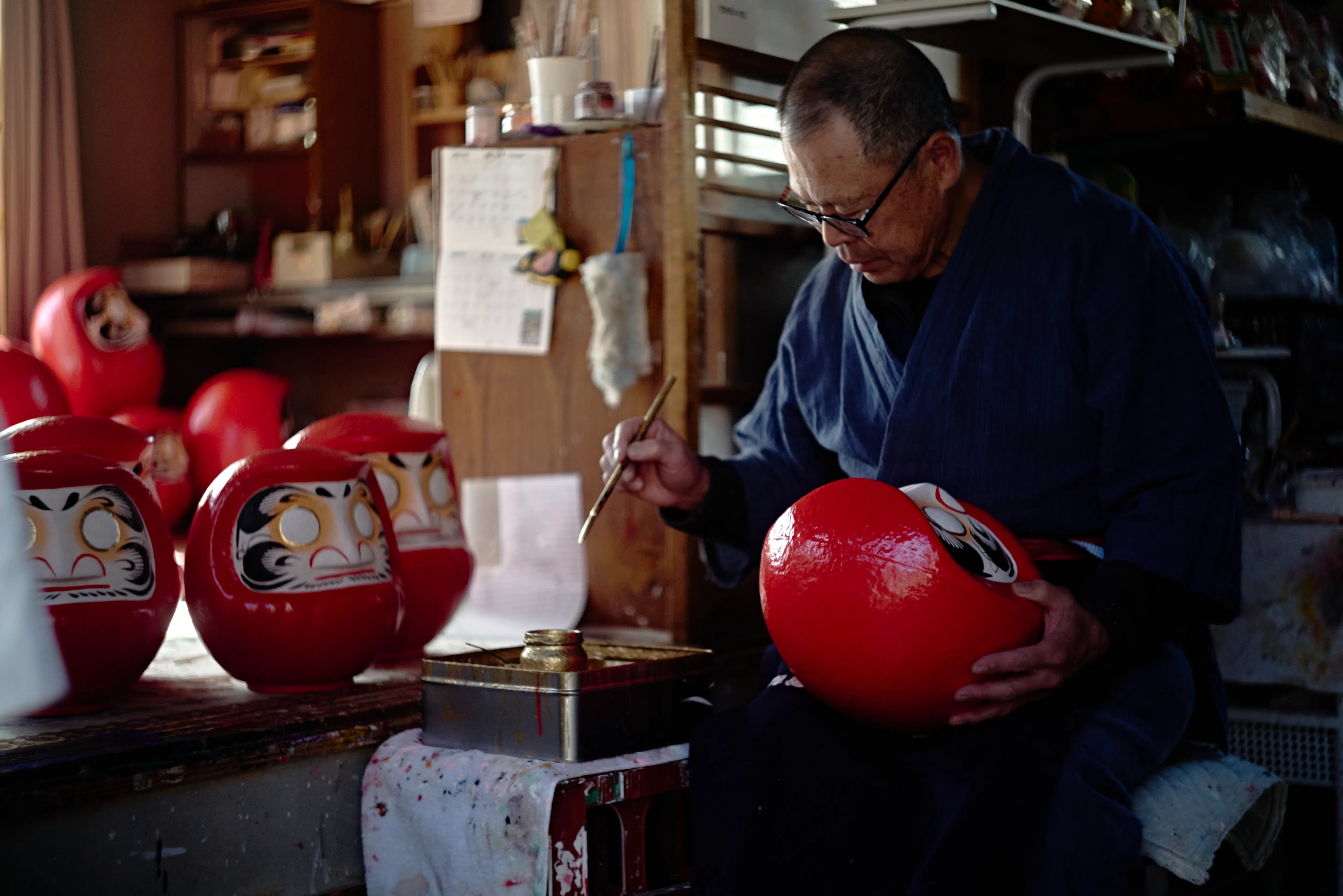
Decorative painting: make a Daruma your own
If you would rather work on a design than build the base object, decorative painting is a straightforward option.
At Zen Craftworks’ Daruma painting workshop in Kyoto, you choose a Takasaki Daruma from six base colors and practice on a sheet before painting your design. Staff offer guidance as you work. The visit takes about 90 minutes, including check-in, photos and packing, and you take your Daruma home that day in a drawstring bag.
The small-group workshop takes place on the second floor of MICASADECO&CAFE Kyoto, at 480 Umeya-cho, Nakagyo-ku. The Daruma comes from the Takasaki tradition in Gunma; the painting experience takes place in Kyoto.
Check available sessions and book before planning the rest of your day around the workshop.
What to check before booking a Kyoto workshop
Instruction language. If you need a workshop in English, look for an explicit statement about the teaching language. An English website or booking form does not establish that the class itself is taught in English. Ask whether instruction, written guidance or an interpreter is provided.
Total time at the venue. Allow for the introduction, making, finishing and packing, plus the journey there and onward. Once you have chosen a class, the Kyoto craft and culture itinerary can help you plan the surrounding day.
The final price. Check whether materials, firing, admission and shipping are included. If you choose a larger item or need interpretation, ask about those costs before paying. Compare the total for the experience you want, not just the lowest advertised starting price.
Take-home and care instructions. Confirm whether you leave with your work, collect it later or have it shipped. If you can carry it away, ask when it is ready to use. In kintsugi, for example, short courses can use different combinations of lacquer and faster-setting joining materials; a repaired piece may still need time to harden at home. Follow the course’s instructions rather than assuming that “take home today” means “use today.”
For a short stay, a workshop with a clear finish time and confirmed take-home arrangements is easier to plan around. If the craft you most want to try needs later firing or delivery, arrange that first—you can still enjoy making it while you are in Kyoto.

