



Spend the morning dyeing a small textile and exploring Nijo Castle, then head east for lunch, incense exhibits and Kyoto art. This one-day craft and culture itinerary stays around Nijo, Oike and Sanjo, so you can make something, see historical interiors and visit a museum without crossing the city repeatedly.
The route runs from about 9 a.m. to 4:50 p.m. Book the morning workshop first, then check that the other stops open on your date. If you would rather paint a Daruma, there is an alternative below that puts the workshop at the end of the day.
The one-day route at a glance
| Time | Stop | Plan |
|---|---|---|
| 9–10:30 a.m. | Oike: stencil dyeing | Make a small textile at Marumasu Nishimuraya, with the session confirmed in advance |
| 10:30–10:45 a.m. | Walk to Nijo Castle | Allow time to reach the East Gate, not just the edge of the grounds |
| 10:45 a.m.–12:45 p.m. | Nijo Castle | Visit Ninomaru Palace and the grounds |
| 12:45–2:15 p.m. | Lunch and walk east | Eat around Nijo or Oike, then continue toward Karasuma Nijo |
| 2:15–3 p.m. | Incense exhibits | Explore fragrance ingredients and displays at Kunjyukan |
| 3–3:20 p.m. | Walk toward Sanjo Takakura | Leave time for navigation and crossings |
| 3:20–4:50 p.m. | Kyoto art and culture | Visit the general exhibitions at The Museum of Kyoto |
| After 4:50 p.m. | Finish downtown | Continue independently for dinner or return to your hotel |
This is a self-guided plan, not a package tour. Book and pay for each activity separately. The walking and visiting times are planning estimates, not a tested guarantee for every pace or date. A midweek weekday is a useful starting point, but check each calendar before reserving.
Morning: make a textile, then explore the castle
9 a.m.: stencil dyeing in Oike
Choose a handkerchief, wrapping cloth or another small textile, then build up a design with stencils and brushes. The beginner's course usually takes one to one-and-a-half hours. Keep the design manageable so you have time to choose materials, finish and pack without rushing.
For this route, choose an item the staff confirms you can take away that day. Fans and coin purses need later assembly: the workshop currently quotes one to two months and domestic delivery only. They are not interchangeable with a handkerchief you can carry onward.
The dye dries quickly enough for eligible textiles to travel with you, but you still need to follow the home-ironing instructions before washing. Protect your clothing while you work; dye that comes off your hands may not come out of fabric.
10:45 a.m.: Ninomaru Palace and the grounds
Walk to Nijo Castle after the workshop. The plan allows 10–15 minutes for finding the entrance and crossing streets, followed by two hours for admission, palace interiors and gardens.
Ninomaru Palace gives the morning a different focus: rooms, painted decoration and the setting of political life, after working with color and pattern yourself. Check that your ticket includes the palace rather than the grounds alone.
This route does not include Honmaru Palace. That visit needs an advance timed reservation and additional walking inside the grounds; adding it would mean changing the schedule. Also check the palace calendar separately from the castle calendar, because the grounds can open when an interior is closed.
Lunch: leave room to eat and move on
The 12:45–2:15 p.m. block includes lunch, a restroom stop and the walk toward Karasuma Nijo. Allow roughly 25–30 minutes of that block for walking. Choose somewhere along the way rather than detouring to a restaurant across town.
This is also where a modest delay can be absorbed. If the workshop or castle takes longer, keep enough time to eat and shorten a later visit. A restaurant with a long queue is a reason to choose another lunch spot, not to rush the meal itself.
Afternoon: incense, then art
2:15 p.m.: explore incense ingredients and fragrances
Kunjyukan introduces the materials and fragrances used in Japanese incense. Give the exhibits about 30–45 minutes. They offer a change from looking at buildings and paintings, without adding another hands-on class.
The published hours are 10 a.m.–5 p.m., with irregular closures. The exhibit visit is different from the reserved factory tour described below; do not assume walking into the displays includes access to production areas.
3:20 p.m.: visit The Museum of Kyoto
Continue to Sanjo Takakura, allowing about 15–20 minutes on foot. The museum's general exhibitions introduce Kyoto art and culture through changing displays. The exact works vary, so look at the current program when choosing your date.
The general exhibitions are open until 7:30 p.m., with last admission at 7 p.m. That later closing time is why this is the final stop: arriving a little late does not immediately end the visit. Special exhibitions have different tickets and hours, so use the general-exhibition schedule for this plan.
You can finish around 4:50 p.m. as shown, or spend longer if the displays interest you. The evening has no further reservation built into it.
What to book and check beforehand
Request the 9 a.m. beginner's dyeing session through the workshop's booking channel. Its online and email requests need at least three days' notice; sending the request five to seven days ahead gives you more time to receive a reply. Same-day requests are possible by phone, but do not fix a full day around a session that has not been accepted.
Before confirming the date, check:
- Ninomaru Palace: some Tuesdays in January, July, August and December are closure days. Holiday exceptions and other closures need a calendar check.
- Incense exhibits: closures are irregular, so a usual weekday opening is not enough to assume admission.
- The museum: Monday is normally closed, with holiday exceptions. Check the exhibition you intend to see.
- Workshop participation: confirm language, age, seating or access needs that matter to your group. A short class does not automatically suit every visitor.
If you are booking for one, the Kyoto solo craft-workshop guide explains how to check minimum numbers and solo fees before fixing a route.
Two shorter or more focused versions
Only have half a day?
Keep the 9–10:30 a.m. workshop, the walk and the 10:45 a.m.–12:45 p.m. castle visit. Finish with lunch around Nijo or Oike. You still make a souvenir and see historical interiors, without needing an afternoon reservation.
Prefer to see incense being made?
A reserved incense factory tour can replace the ordinary afternoon exhibit visit. The published tour lasts about 40 minutes, with weekday starts at 11 a.m. and 2:30 p.m., excluding national holidays. Requests need at least a week's notice, and your preferred time may not be available.
For the 2:30 p.m. tour, finish lunch and reach Karasuma Nijo by about 2:10 p.m. After the tour ends around 3:10 p.m., allow time for the exhibits, then walk to the museum for roughly 4–5:15 p.m. Confirm the meeting point with the booking; photography is not permitted in the factory.
Use this instead of the standard incense stop, not as an extra appointment squeezed into it.
A Daruma-painting version of the day
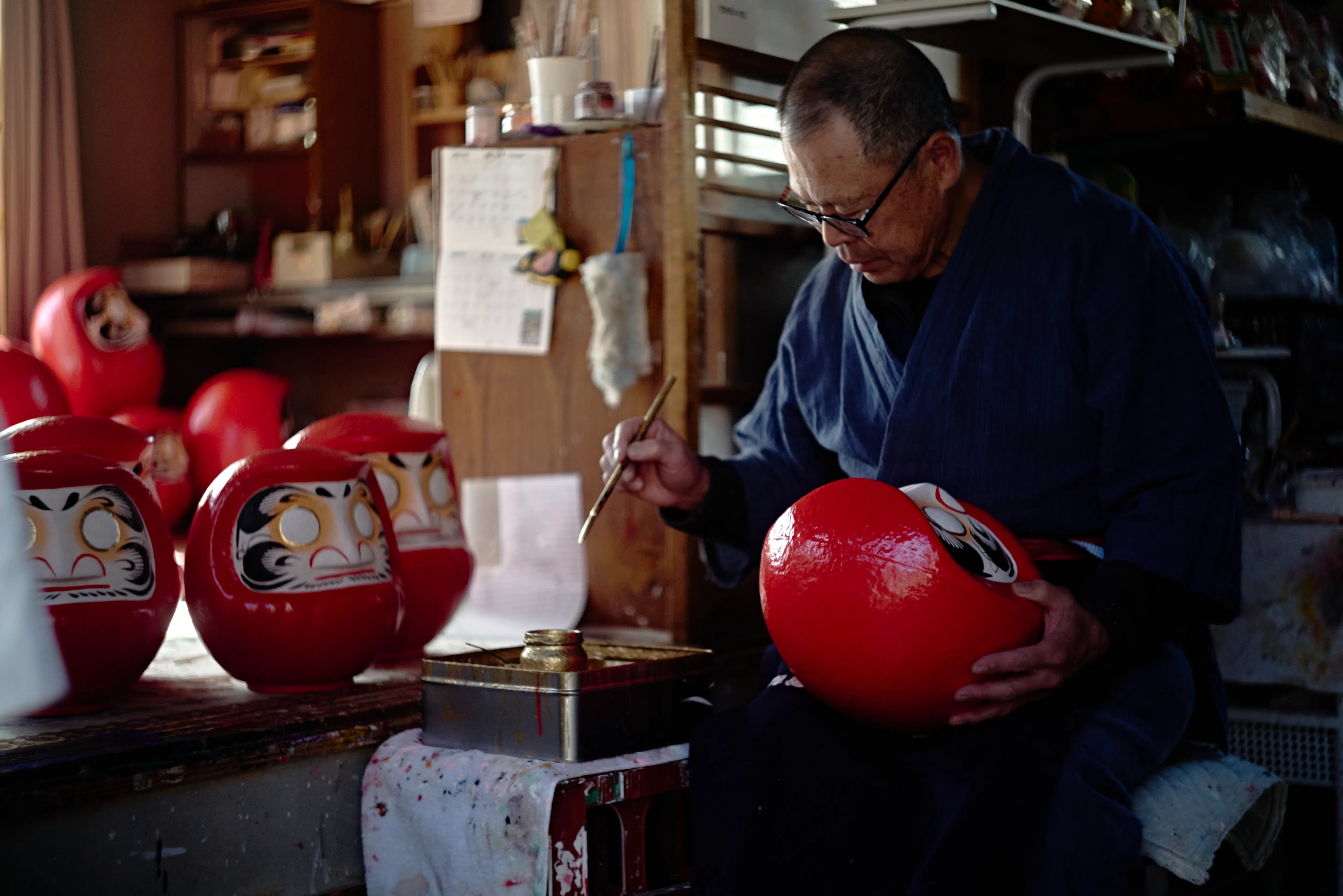
At Zen Craftworks, you can paint a Takasaki Daruma in a Kyoto machiya and take it home that day in a carry bag. The workshop lasts 90 minutes, including check-in, painting, photographs and packing. The Workshop page lists starts at 11 a.m., 1 p.m. and 3 p.m.; check which dates and sessions are available when booking.
With a confirmed 3 p.m. reservation, leave out the morning dyeing class and use this order:
| Time | Plan |
|---|---|
| 8:45–10:45 a.m. | Nijo Castle, including Ninomaru Palace |
| 10:45–11:15 a.m. | Travel toward Karasuma Nijo |
| 11:15 a.m.–noon | Incense exhibits |
| Noon–1:25 p.m. | Lunch and walk toward Sanjo Takakura |
| 1:25–2:20 p.m. | A shorter visit to the museum's general exhibitions |
| From 2:20 p.m. | Head to Zen Craftworks and leave time to check in |
| 3–4:30 p.m. | Daruma-painting workshop |
Check the walk from the museum to the workshop's current address before the day begins. The venue is on the second floor of a machiya in Nakagyo; confirm access and instruction needs when reserving. Do not rely on the timetable alone to determine whether the route suits you.
This version keeps the finished Daruma for the end of the day, so you are not carrying it through the earlier visits. If the museum runs late, shorten it to protect the workshop arrival time. Do not book both craft sessions for this schedule.
If the day does not go to plan
Workshop or palace unavailable: choose another date if those are the main reasons for taking this route. A different class may have a different location, duration or collection rule, so check it before substituting it.
Incense exhibits closed: go straight to the museum and give it more time. Museum closed: finish after the incense visit, or spend longer over lunch. There is no need to add a distant attraction to fill the gap.
Heavy rain or heat: the route still includes outdoor walks and castle grounds. The Tozai subway can help between Nijojo-mae and Karasuma Oike, but allow time for entrances, waiting and exits. Follow weather-related closures and drop a stop if conditions make the route unsuitable.
Running late: in the dyeing version, shorten the last museum visit first. In the Daruma version, leave the museum in time for the booked workshop. Keep lunch and essential breaks in the plan.
This is a day for making and looking closely, not a tour of every major Kyoto landmark. If you are still choosing between areas for a first visit, start with the broader things to do in Kyoto guide, then reserve this route for the day you want to focus on craft and culture.

