



You can join a Kyoto craft workshop on your own: stencil dyeing, bamboo basket making, pottery and paper crafts all have courses that accept one-person bookings. For something small to carry home, try a dyed handkerchief or a woven piece. If you would rather spend longer with an artisan, look at weaving, embroidery or a studio workshop.
Once you have a craft in mind, check the total price for one person and whether your chosen session is confirmed. A private lesson can welcome solo travelers while charging a two-person minimum; a shared class may need other bookings before it goes ahead.
Kyoto craft classes you can book for one person
These are examples of individual courses checked in September 2026, not rules for every workshop offering the same craft. Times below do not include travel to the studio.
| Craft | Example session | One-person booking | What happens to your work |
|---|---|---|---|
| Stencil dyeing | 60–90 minutes | Accepted at the same per-person fee | A handkerchief goes home that day; some assembled items are sent later |
| Bamboo basket making | About 2 hours | A published course has a one-person minimum | Take your basket home that day |
| Pottery on an electric wheel | 25 or 55 minutes | The English-language studio lists 1–30 participants | Fired later and shipped; not a same-day souvenir |
| Ikkanbari paper craft | About 2 hours | Published group size is 1–5 | Sent after the paste dries; overseas shipping is available |
| Wire craft | About 1½–2½ hours | Solo lessons explicitly welcomed | Depends on the project; a wire scoop needs later pickup |
| Silk weaving with a studio tour | About 2–2½ hours | A published course accepts 1–2 people | Take the small woven textile home |
| Handmade notebook and factory tour | About 1 hour | Accepted, with a minimum fee | Take your notebook home |
Dye a handkerchief or weave a bamboo basket
Stencil dyeing lets you choose a pattern and brush color through a stencil onto fabric. One small-handkerchief course costs ¥1,600 including tax and takes about 60–90 minutes. It accepts solo visitors without a different per-person fee. Follow the instructions for setting the dye with an iron at home.
Bamboo basket making is a longer, more hands-on option: you work the strips into shape and leave with a three-dimensional object. A two-hour course in Kamigyo Ward accepts bookings from one person. Check the basket's finished size if you are traveling with a small bag.
Try pottery without needing a travel companion
For a solo pottery class in Kyoto, choose a studio that explicitly accepts one participant and offers instruction in a language you understand. One English-language studio in Higashiyama has a 25-minute cup-making course from ¥2,900 including tax, plus shipping. A longer, 55-minute course includes two pieces.
The short class does not mean the pottery is ready quickly. This studio quotes roughly 7–10 weeks for overseas delivery and cannot ship to every country. Check your destination and the shipping total before paying. Also check the branch: its other studio offers lessons in Japanese only.
Make something with paper, wire or thread
Ikkanbari involves shaping washi paper or applying it to a prepared bamboo or wooden frame. A two-hour paper-only course starts at ¥3,000 including tax, with materials and shipping charged separately. It suits a traveler who is happy to receive the finished piece after returning home.
Wire craft is worth considering if you enjoy precise, repetitive handwork. In one Higashiyama workshop, the scoop-making session takes about 1½ hours, but pickup is two hours after the class finishes. The studio asks for reservations at least ten days ahead. A longer dreamcatcher project has different finishing arrangements, so choose the project before planning the rest of your day.
For weaving, a Kita Ward course combines a small silk textile with a studio tour. The whole visit takes about 2–2½ hours; weaving itself takes roughly 40–50 minutes per person. Notebook making is another option if you want to choose papers and assemble a useful keepsake. A factory-tour course accepts one guest, but its minimum charge makes the total for a solo visitor different from a simple per-person price.
Private workshops, woodblock printing and art classes
A private session is useful if you want to ask an artisan questions or work at your own pace. It does not necessarily cost the same as one place in a shared class. For example, a three-hour embroidery experience in Kita Ward accepts a solo guest at the two-person rate. You visit the atelier and embroider a handkerchief, with an interpreter accompanying the session.
Woodblock printing is another way to work with color and paper. Short karakami courses use patterned blocks to print washi. A booking-request example takes about 1–1½ hours and accepts one participant, but starts are scheduled: an open shop is not a promise that a class can begin when you arrive.
If you would rather draw what you see, consider a watercolor sketching lesson. A Kyoto instructor offers private two-hour outdoor classes and explicitly welcomes solo travelers; a public group option is also available in Fushimi. Unlike an indoor workshop, an outdoor lesson needs a weather plan.
What about lacquer and kintsugi?
Check the exact course, not just the craft name. Lacquered chopstick workshops may have a solo surcharge or combine bookings. Confirm who accepts individual reservations and whether the advertised English-guided option is the one you are booking.
Kintsugi courses also vary substantially. One current traditional kintsugi and lacquer-art program is a full-day, 7½-hour experience; it accepts a solo participant at 1½ times the standard price. That is quite different from a short introductory class. Ask which steps you will do, whether prepared pieces are used, and when the finished object can be handled, used or washed. Taking it home and being ready to use it are not always the same thing.
Four things to check before booking alone
- The final solo price. Check minimum charges, materials, interpretation, optional finishes and shipping—not just the starting price per person.
- Whether the session will run. Look for a confirmed booking, not only a submitted request. If there is a minimum number of participants, ask what happens if nobody else books and check the cancellation deadline.
- The language and format. An English website is not proof of English instruction. Some artisans demonstrate the steps with limited English; other courses include an interpreter. A shared workroom may be sociable, but it is not necessarily a group activity. A private class will not put you with other travelers.
- When you can leave with your work. Include finishing, packing or a return visit in your plan. For shipping, confirm the destination and cost. Ask about stairs, seating or luggage storage if those affect your visit.
If you prefer quiet concentration, choose an individual project with demonstrations as needed. If meeting people is part of the appeal, ask whether you will actually work alongside other participants. “Small group” describes the size, not how much conversation there will be.
Fit one workshop into your Kyoto day
Choose the workshop first, then keep the rest of that half-day nearby. A morning dyeing session can leave time for lunch and a walk; a longer weaving visit is better treated as the main activity of the morning or afternoon. Leave space for finding the entrance and checking in rather than arriving at the advertised start time.
For a more structured day, use the Kyoto craft and culture itinerary once your workshop time is confirmed. If your piece needs later pickup, plan a nearby stop between the class and collection instead of crossing the city twice.
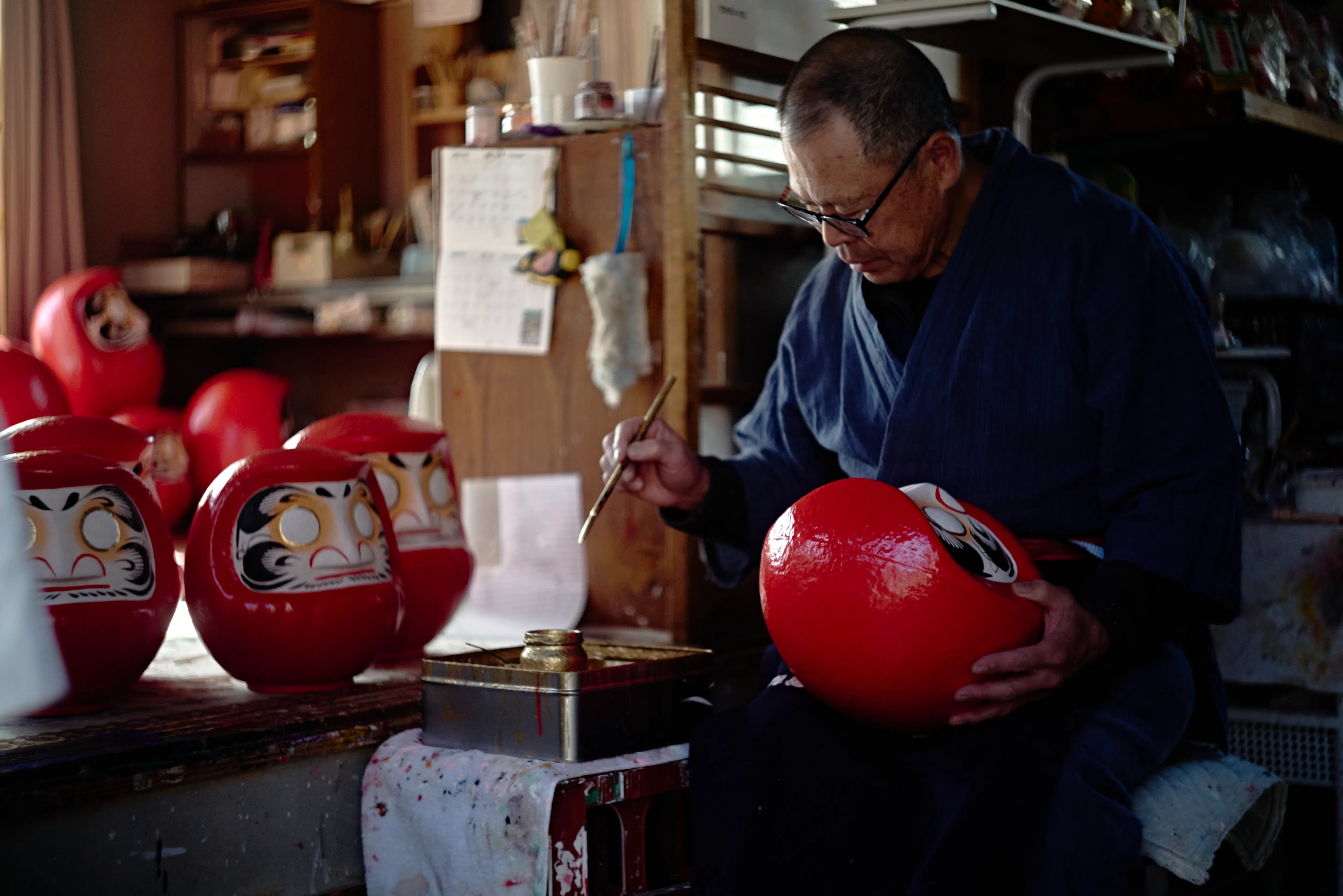
At Zen Craftworks, the Daruma-painting workshop takes about 90 minutes, including packing, and you take your painted Daruma home the same day. It takes place upstairs in a Kyoto machiya. If this is the craft you would like to try, check the workshop details and booking page and confirm availability for one person, the total charge and language support before making plans. Those solo conditions are not currently stated on the workshop page.

