


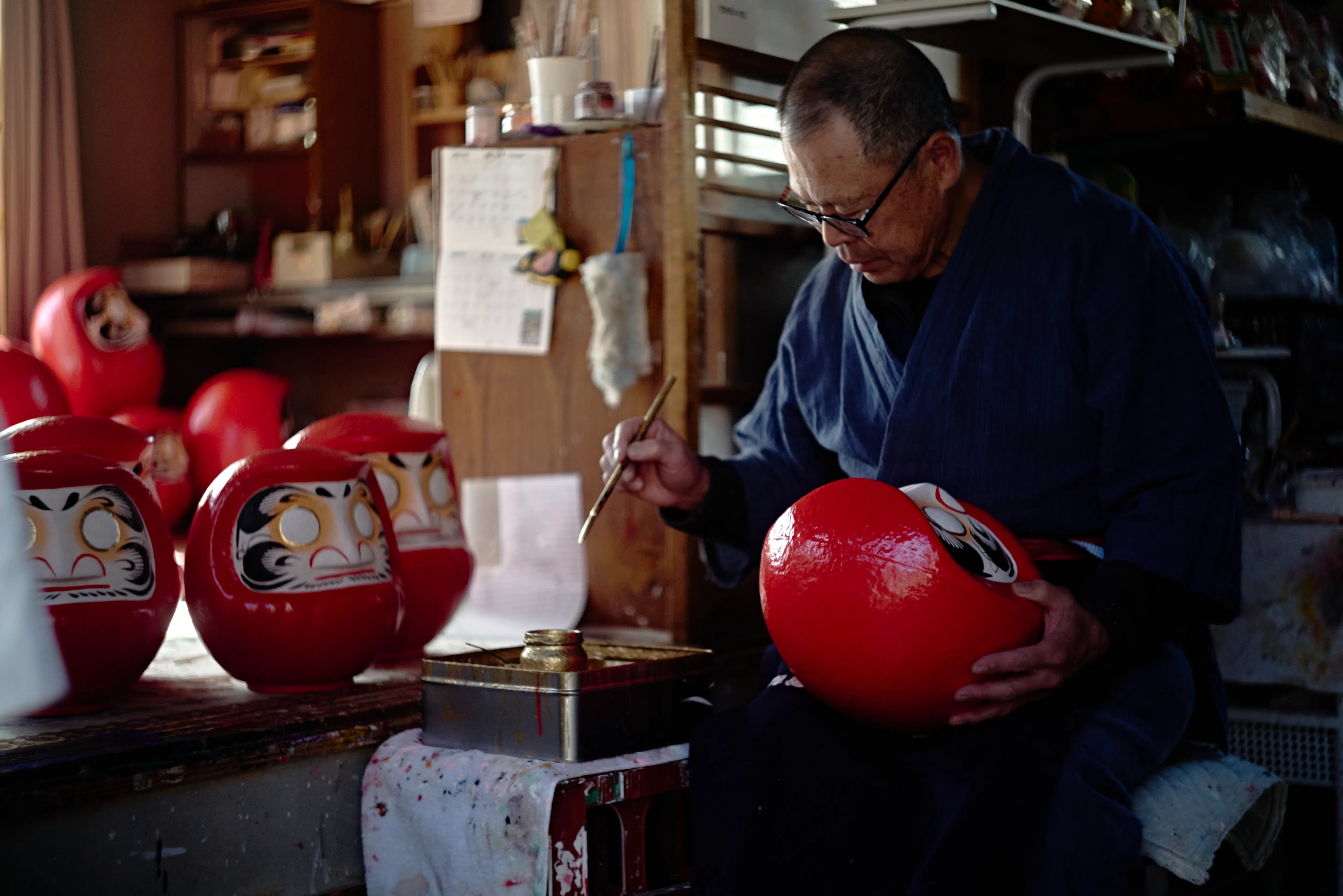

Japanese good luck charms include Daruma for perseverance, maneki-neko for welcome and prosperity, omamori for a particular prayer or protection, and cranes for long life and heartfelt wishes. The best choice depends on the occasion and on whether the person will carry, display, or take part in the tradition.
In Japan, auspicious objects are often called engimono. Some are everyday decorations or gifts. Others belong to a religious visit or seasonal custom, so their context matters as much as their appearance.
12 Japanese good luck charms and symbols
| Charm or symbol | Common meaning | Usual form | Gift fit |
|---|---|---|---|
| Daruma | Perseverance, goals, recovery after setbacks | Rounded figure with blank or completed eyes | Excellent for a new job, exam, project, or fresh start |
| Maneki-neko | Welcome, customers, prosperity, good fortune | Beckoning cat figure | Good for a shop, office, housewarming, or business opening |
| Omamori | Protection or support for a particular wish | Small fabric amulet received at a shrine or temple | Personal; choose a purpose that suits the recipient |
| Omikuji | A written fortune and guidance | Folded or tied paper fortune | Better as part of a visit than as a conventional gift |
| Ema | A written wish or expression of gratitude | Wooden plaque left at a shrine or temple | Better as a shared experience than a take-home object |
| Crane | Long life, peace, hope, and celebration | Origami, textile, ceramic, or painted motif | Suitable for weddings, recovery wishes, and milestones |
| Koi or carp | Strength, perseverance, and advancement | Fish motif or seasonal carp streamer | Good for growth, study, career, or family celebrations |
| Tai, or sea bream | Auspicious celebration and happiness | Food, ceramic dish, or fish motif | Well suited to celebratory occasions |
| Seven Lucky Gods | Good fortune in work, wealth, arts, health, and travel | Group image, figure, or treasure-ship motif | A broad prosperity gift when the imagery suits the recipient |
| Tanuki | Prosperity, good humor, and business fortune | Round-bellied animal figure | Often chosen for shops, restaurants, or playful home display |
| Akabeko | Protection, health, and resilience | Red bobble-headed cow figure | A distinctive regional-style gift of encouragement |
| Inu hariko | Family protection and healthy growth | Papier-mâché dog figure | Traditionally fitting for family and child-related good wishes |
The meanings above are common associations rather than guarantees. Designs, colors, and local customs can add a more specific interpretation.
Daruma: good luck tied to a goal
A Daruma is a rounded Japanese figure modeled on Bodhidharma. Its self-righting shape represents the ability to get back up after a setback. Many Daruma are sold with blank eyes: one pupil is added when a goal is set, and the other when it is achieved.
This makes Daruma especially suitable for encouragement that has direction. It can mark an exam, graduation, new job, business opening, creative project, recovery period, or personal restart.
The message is stronger than a vague “good luck.” A Daruma says, “Keep going until you finish.” For the full custom and symbolism, see our complete Daruma guide. If you are choosing one for another person, the Daruma gift guide explains occasions and etiquette.
Maneki-neko: welcome and prosperity
The maneki-neko, or beckoning cat, is commonly placed near the entrance or counter of a business. Its raised paw gives the impression of beckoning people or good fortune closer.
It works naturally as a gift for a shop, studio, restaurant, office, or new home. Colors and raised-paw interpretations vary, so check the description that comes with the figure instead of assuming every version carries exactly the same promise.
Choose a maneki-neko when the good wish belongs to a place or business. Choose a Daruma when the message belongs to one person's goal and effort.
Omamori: a charm for a particular prayer
Omamori are small amulets commonly received at Shinto shrines and Buddhist temples. Different kinds may relate to safe travel, study, health, relationships, business, or protection from misfortune.
They are usually carried in a bag, kept in a wallet, attached inside a vehicle, or placed somewhere appropriate to their purpose. The pouch is traditionally kept closed.
An omamori can be a thoughtful gift when you know what the recipient is facing. Because it comes from a religious setting, it should be presented with its meaning rather than treated as an anonymous decorative pouch.
Omikuji and ema: traditions connected to a visit
Omikuji are paper fortunes drawn at shrines and temples. They may offer predictions or advice in areas such as health, relationships, travel, and work. Customs for keeping or tying the paper vary by place.
Ema are wooden plaques on which visitors write a wish or thanks. They are generally left at the site rather than used as an ordinary home decoration.
Both can be meaningful parts of a trip, but neither functions like a typical boxed gift. If you are sharing the visit with someone, the experience and the wish are the gift.
Cranes: long life, hope, and heartfelt wishes
The crane is one of Japan's best-known auspicious motifs. It is associated with long life, celebration, and enduring bonds, which makes it common in wedding designs and formal gifts.
A folded paper crane can also express hope or support. A group of one thousand origami cranes, known as senbazuru, requires time and collective effort, so it carries a different weight from a single decorative crane.
For a gift, the motif can appear on cloth, ceramics, paper, or artwork. It suits a milestone when the message is lasting happiness, peace, or recovery.
Koi and carp streamers: strength and growth
Carp are admired for swimming against a current, so they are associated with strength, perseverance, and advancement. Koi motifs can appear in art, textiles, and ceramics.
Carp streamers, or koinobori, belong especially to Children's Day. They express hopes for children's healthy growth and courage. A general koi motif can suit many occasions; a carp streamer carries a more seasonal and family-specific meaning.
Tai: an auspicious symbol for celebration
Tai, or sea bream, is linked with happy occasions in part because its name echoes medetai, a Japanese word for auspicious or celebratory. It may appear as a festive dish or as a motif on tableware and decorations.
Tai fits a wedding, anniversary, opening, or other event with a clearly celebratory tone. As a gift motif, it feels more festive than the personal goal-setting message of a Daruma.
The Seven Lucky Gods: many kinds of fortune
The Seven Lucky Gods, or Shichifukujin, appear together in figures, prints, and treasure-ship imagery. As a group they represent a broad range of good fortune, including prosperity, work, the arts, health, and travel.
Their imagery can make a substantial decorative gift, but it carries more visual and cultural detail than a single-symbol object. Choose it when the recipient enjoys traditional iconography and has a place to display it.
Tanuki: a playful sign of business fortune
Ceramic tanuki figures are often seen outside shops and restaurants. Their exaggerated features and cheerful expression make them more humorous than most lucky objects, while their modern association is often business prosperity.
A tanuki works well for someone who enjoys playful decor. For a formal or restrained gift, a crane motif, small craft object, or Daruma may be easier to place.
Akabeko and inu hariko: protective animal figures
Akabeko is a red cow figure with a gently moving head. It is associated with protection, health, and resilience, and its bright color gives it a friendly presence on a shelf or desk.
Inu hariko is a papier-mâché dog figure associated with family protection, healthy growth, and good wishes surrounding children. It is especially meaningful when the family context is understood.
Both are more specific than a general lucky cat or Daruma. Include a short note about the figure's meaning so the recipient is not left guessing.
How to choose a Japanese good luck gift
Start with the message, then choose the object.
| Occasion | Strong choices | Why they fit |
|---|---|---|
| Exam or qualification | Daruma or study-focused omamori | Perseverance and support for study |
| New job or promotion | Daruma, koi motif, or compact omamori | A visible goal, advancement, or personal support |
| Business opening | Maneki-neko, Daruma, or tanuki | Welcome, prosperity, and persistence |
| Wedding or anniversary | Crane or tai motif | Long life, enduring bonds, and celebration |
| Recovery or difficult period | Daruma, crane, or akabeko | Resilience, hope, and protection |
| New baby or family occasion | Inu hariko or a gentle crane motif | Family protection and healthy growth |
| Housewarming | Maneki-neko or a small auspicious craft object | Easy to display and connected to the home |
| Shared trip in Japan | Ema or omikuji experience | The wish or fortune becomes part of the visit |
Also consider how the person will use it. An omamori is portable, a Daruma belongs where the goal can be seen, and a ceramic figure needs a safe place to stand. A beautiful symbol becomes a poor gift if it is too large, too fragile, or difficult to explain.
A few points of gift etiquette
- Explain the meaning in one or two sentences instead of promising that the object will make something happen.
- Let the recipient choose the goal connected with a Daruma.
- Match an omamori to a real concern rather than choosing one at random.
- Treat ema and omikuji as practices connected to a visit, not as generic trinkets.
- Check the maker's or source's explanation when a color or design has a special meaning.
- Avoid giving a strongly religious object when you know the recipient would be uncomfortable with it.
If symbolic luck is only part of what you want, compare our guide to Japanese craft gifts. For a wider range of occasions without a luck theme, use the broader Japanese gift ideas guide.
If the occasion does not call for a luck symbol, use our Japanese souvenir ideas to compare practical textiles, stationery, tableware, food, and small crafts instead.
Common questions
What is the most common Japanese good luck charm?
There is no single charm for every purpose. Maneki-neko, Daruma, and omamori are among the most widely recognized, but they serve different needs: welcome and prosperity, perseverance toward a goal, and support for a particular prayer.
What Japanese symbol means perseverance?
Daruma is the clearest choice. Its rounded, self-righting form represents getting back up after setbacks, and the custom of completing its eyes connects the object to a specific goal.
What is a good Japanese luck gift for a new business?
A maneki-neko suits a shop or entrance, while a Daruma suits the owner's goal and continuing effort. A tanuki figure can work when the recipient likes a more playful sign of business fortune.
Can I give an omamori to someone else?
Yes. Choose one whose stated purpose suits the person and explain where it came from. Keep the pouch closed and handle it as an amulet rather than opening it as packaging.
Are Japanese good luck symbols religious?
Some are closely connected to shrines, temples, or religious figures; others are folk objects, seasonal customs, decorative motifs, or modern symbols. The context of an omamori or ema is different from that of a ceramic lucky cat or a crane pattern.
A thoughtful Japanese good luck gift carries a message the recipient can understand. Choose the meaning first, then the form that fits the person, place, and occasion.

