


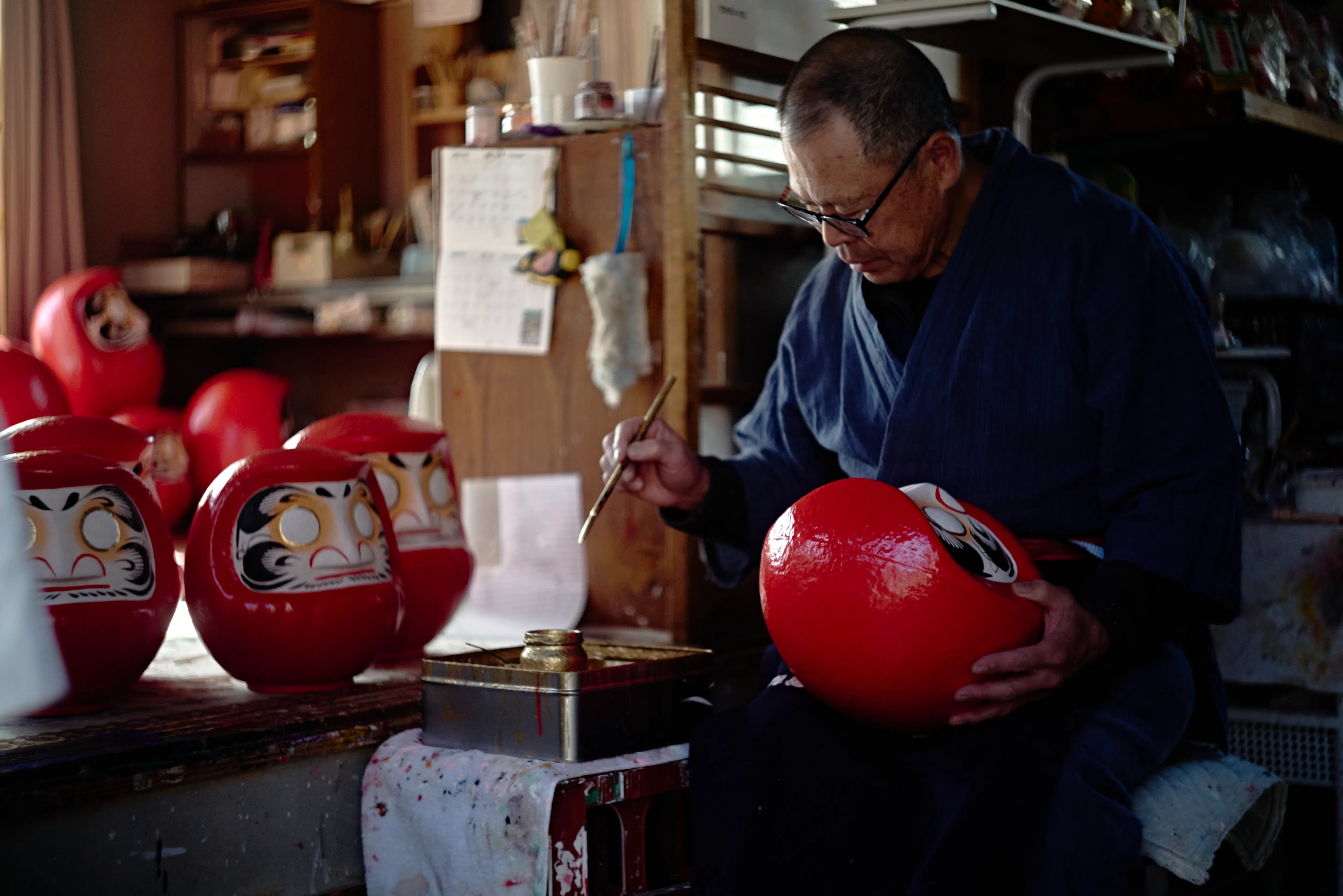

The best way to dispose of a Daruma doll is to close its role respectfully, then choose the most practical option available. If a temple, shrine, maker, market, or Daruma kuyo accepts old Daruma, you can return it for a formal memorial. If that is not realistic, you can dispose of it at home under your local waste rules.
Do not burn a Daruma yourself simply because ceremonial burning is practiced in Japan. A formal ceremony is organized and controlled; a fire at home may be unsafe, illegal, or unsuitable for the materials used in the doll.
How to Dispose of a Daruma Doll: Quick Decision
| Your situation | A sensible option | Before you let it go |
|---|---|---|
| The wish came true | Keep it, return it, or use a formal memorial service | Paint the second eye |
| The wish did not come true | Continue the goal, close it and keep the Daruma, or retire it | Acknowledge the unfinished goal rather than pretending it succeeded |
| A local service accepts Daruma | Follow that service's return or Daruma kuyo instructions | Confirm dates, fees, materials, and whether outside items are accepted |
| No formal option exists | Dispose of it at home | Thank it, wrap it if you wish, and follow local waste rules |
| The Daruma is broken | Use a memorial route if it matters to you, or sort it by material | Remove loose parts if local disposal rules require it |
| It was only decorative | Keep, pass it on, or dispose of it locally | No formal ritual is required |
The respectful choice is the one you can actually carry out. A formal return may feel right when it is available, but keeping an old Daruma indefinitely is not a requirement.
Can You Throw Away a Daruma Doll?
Yes. You can throw away a Daruma doll when no suitable return or memorial option is available, especially if you live outside Japan. What matters is that you do it thoughtfully and follow the rules for the materials in your area.
Throwing it away does not automatically bring bad luck. The custom is about gratitude and closure, not punishment for choosing an ordinary disposal route. If a formal service is accessible and accepts your Daruma, that may be the more traditional choice. If it is not, careful household disposal is reasonable.
How to Dispose of a Daruma at Home
If household disposal is the practical route, use this simple sequence:
- Dust or wipe the Daruma clean.
- If the goal was fulfilled, paint the second eye before retiring it.
- Pause to acknowledge the goal and thank the Daruma for the part it played.
- Wrap it in plain paper or cloth if that makes the ending feel more respectful.
- Sort and dispose of it according to local rules for paper, wood, plaster, plastic, or mixed materials.
Some people add a small amount of salt as a personal gesture of purification. This is optional, not a rule that every Daruma owner must follow. Paper wrapping is also a matter of care rather than a guarantee of good or bad luck.
Do not put a large or mixed-material Daruma into a waste stream without checking first. Requirements differ by municipality, and a handmade or decorative piece may include parts that need to be separated.
What Is Daruma Kuyo?
Daruma kuyo is a memorial or thanksgiving rite for old Daruma. Used dolls may be gathered, thanked, and ceremonially burned or otherwise memorialized. The purpose is to mark the end of the wish or goal and let the object go with gratitude.
Before taking or sending a Daruma anywhere, confirm the details with the organizer:
- whether it accepts Daruma from outside its own community
- the date and drop-off period
- any fee or offering
- size and material restrictions
- whether accessories and packaging must be removed
- whether mail-in returns are accepted
Do not assume that every temple, shrine, cultural group, or maker collects old Daruma. An advertised Daruma kuyo is a specific service or event, not a general disposal counter that is always open.
A Daruma Burning Ceremony Is Not Home Burning
Ceremonial burning is one traditional way to retire Daruma. It may be associated with purification, gratitude, the end of a yearly cycle, or the start of a new goal.
That practice does not make backyard or fireplace burning appropriate. Fire regulations, smoke, coatings, adhesives, and decorative materials all matter. Use an organized ceremony that clearly accepts Daruma; otherwise, choose a safe local disposal method.
What to Do After the Wish Comes True
When the wish is fulfilled, paint the second eye. You can then decide what the completed Daruma means to you.
- Keep it if it records an important milestone.
- Return or memorialize it if you want a formal ending.
- Retire and replace it if you are ready to begin a separate goal.
You do not have to dispose of it immediately. A completed Daruma can remain on display as a reminder of the work behind the achievement. If you start again with a new one, revisit how to use a Daruma before setting the next goal.
What If the Wish Was Not Fulfilled?
An unfinished wish does not leave you bound to the Daruma forever. Decide whether the goal is still alive.
If it is, you can keep the Daruma and continue. If the goal has changed or ended, thank the doll, acknowledge that the outcome was different from what you hoped, and retire it through a return service or local disposal.
There is no need to paint the second eye merely to make disposal feel permissible. The second eye traditionally marks completion. Closing an unfinished goal honestly is more meaningful than pretending it was achieved.
Daruma Disposal Outside Japan
Outside Japan, a traditional return route may be difficult to find. Start with options that are real and local:
- Ask the maker or seller whether it offers returns or memorial handling.
- Check whether a nearby Japanese cultural organization or religious community publicly accepts Daruma.
- Use a mail-in service only if it confirms that it accepts items from your location.
- If none of these works, close the goal at home and use your normal local disposal system.
There is no need to invent a ceremony or ship a doll to an organization that has not agreed to receive it. Thoughtful local disposal is preferable to unsafe burning or an unwanted parcel.
When Should You Retire a Daruma?
Many people review a Daruma after about a year, particularly when it began as a New Year goal. The goal itself can also determine the timing. Consider retiring or consciously keeping it when:
- the wish comes true
- the goal is no longer relevant
- a yearly goal period ends
- you are ready to set a separate goal with a new Daruma
- the doll breaks or can no longer be displayed safely
- a move, business change, or other life transition closes that chapter
The important step is to decide. A Daruma is usually kept where it can remind you of the goal; once that role ends, keep it intentionally or let it go deliberately.
Common Questions About Daruma Disposal
Is it bad luck to throw away a Daruma?
There is no universal rule that household disposal causes bad luck. If a recognized return or memorial option is available, you may prefer it. Otherwise, gratitude, closure, and careful local disposal are a respectful combination.
Should both eyes be painted before disposal?
Paint the second eye if the goal was fulfilled. If it was not, do not mark a success that did not happen; acknowledge the end of the goal and decide whether to continue, keep, return, or dispose of the Daruma.
Can I keep a Daruma after the wish comes true?
Yes. It can remain as a record of a meaningful achievement. Disposal is a choice, not an obligation.
What should I do with a broken Daruma?
If it has strong personal meaning, look for a service that accepts damaged Daruma. Otherwise, thank it and dispose of the pieces according to their materials, taking care with sharp or loose parts.
Begin the Next Goal Deliberately
Once the old Daruma's role is settled, you can decide whether you want another. Before choosing one, compare Daruma colors and their meanings and think about where to place a Daruma. For the wider history and customs, use the complete Daruma guide.

