


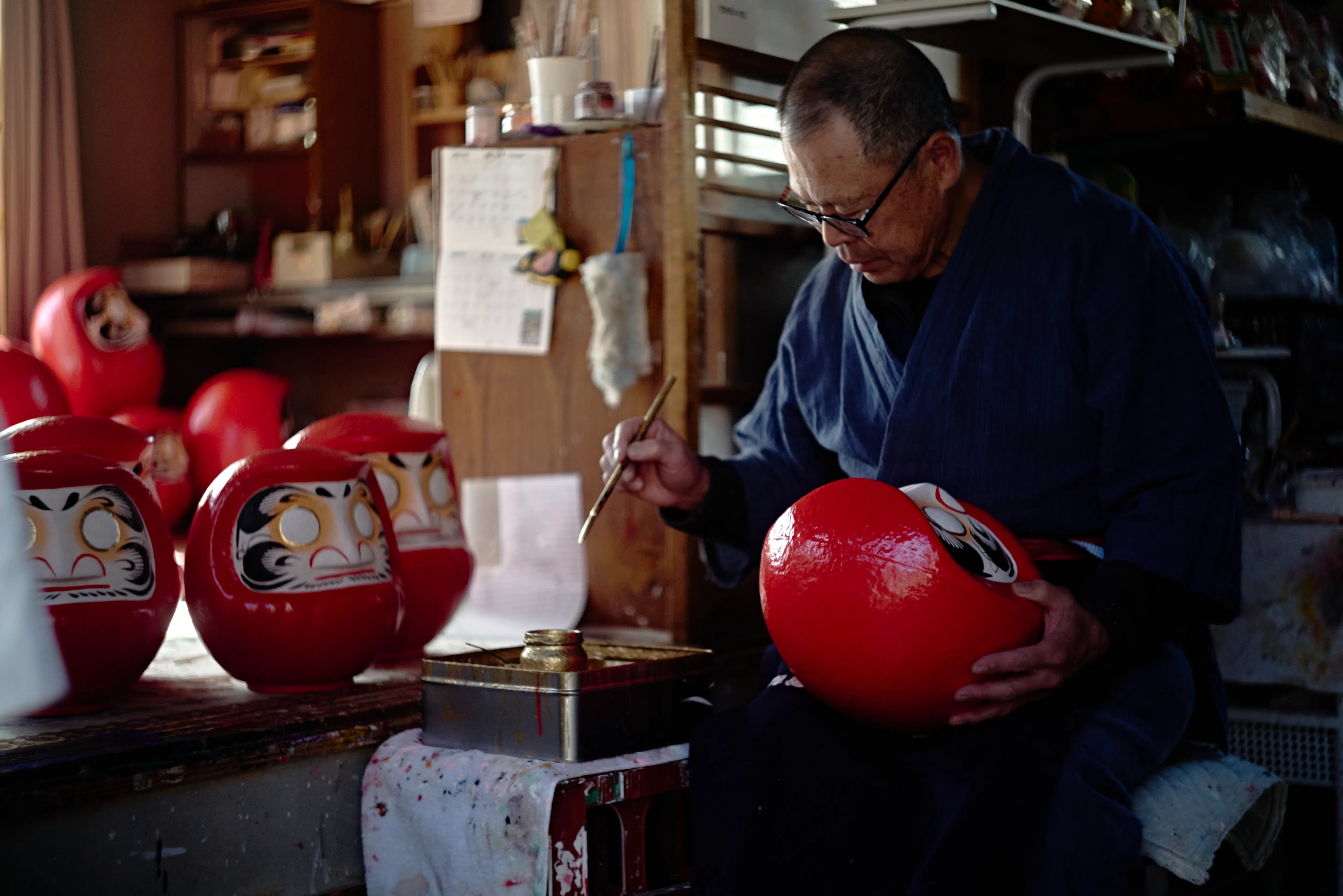

Paint the Daruma doll's own left eye first. When the Daruma is facing you, that is the eye on your right. Paint the second eye after the goal, wish, or commitment has been completed.
The key is point of view. "Left eye first" usually means the Daruma doll's left eye, not your left eye as the viewer. If the doll is looking at you, the first eye is normally on the right-hand side from your perspective.
| Question | Direct answer |
|---|---|
| Daruma doll which eye first? | The doll's own left eye. |
| Which side is that when the doll faces me? | Your right side. |
| When do you paint the first eye? | When you set the goal or wish. |
| When do you paint the second eye? | When the goal is complete or formally closed. |
| Do paint, color, fill, and draw mean the same thing here? | Yes. They all mean adding the pupil to the blank eye. |
Daruma Doll Which Eye First? Quick Answer
For the common Daruma eye ritual, start with the left eye from the doll's perspective.
Think of the Daruma as a person facing you:
- the Daruma doll's left eye appears on your right;
- the Daruma doll's right eye appears on your left;
- the first eye marks the beginning of the goal;
- the second eye marks completion.
This is why the wording can feel contradictory. "Paint the left eye first" and "paint the eye on your right when facing the doll" usually describe the same eye.
Daruma Which Eye to Paint First: Left or Right?
The safest general rule is:
- Set one clear goal.
- Paint the Daruma doll's own left eye.
- Keep the Daruma visible while you work.
- Paint the doll's right eye after completion.
Use the doll's perspective when you read left and right. If you are facing the doll, your directions are reversed.
| Perspective | First eye | Second eye |
|---|---|---|
| Daruma doll's own side | Left eye | Right eye |
| Your side while facing the doll | Right side | Left side |
| Ritual timing | Start of the goal | Goal completed |
If the Daruma came with specific maker, workshop, or local instructions, follow those instructions for that Daruma. If there are no specific instructions, the left-eye-first rule is the common general answer.
Why Daruma Doll Eyes Start Blank
Daruma doll eyes are usually blank at first because the goal has not started. Painting one eye turns the doll into a visible promise. Leaving the second eye blank keeps the unfinished goal in view.
The blank second eye matters. It is not just decoration. It reminds you that the commitment is still open and that the other eye should wait until the goal is achieved.
When the second eye is painted, the Daruma becomes a completed record of effort. That is why Daruma eyes are usually explained together with perseverance, goal-setting, and follow-through.
When to Paint the First and Second Eye
Paint the first eye when the Daruma begins to stand for a specific goal. The goal can be an exam, a business milestone, a creative project, recovery, a personal habit, or another commitment with a clear finish point.
Paint the second eye when the goal has been achieved. If the goal has changed, become impossible, or needs to be closed respectfully, you can use the second eye to close that cycle rather than pretending the original wish still applies.
Do not usually paint both eyes at the beginning if you are using the goal ritual. The one-eyed stage is part of the practice.
Paint, Color, Fill, or Draw the Eye
Searchers use different verbs for the same Daruma eye step.
| Search wording | Practical meaning |
|---|---|
| Paint the Daruma eye | Add the pupil to the blank eye. |
| Color the Daruma eye | Fill in the same eye with pigment or ink. |
| Fill in the Daruma eye | Complete the blank eye by adding the pupil. |
| Draw the Daruma eye | Draw or paint the pupil, depending on the doll and tool. |
The wording matters less than the sequence. First eye at the start, second eye at completion.
If you are decorating a blank Daruma body as well as the eyes, finish the body design first, let it dry, and then treat the eye as the ritual step. The craft order is separate from the goal ritual, and is covered in how to paint a Daruma at home.
What If Your Daruma Instructions Say the Other Eye?
Daruma instructions are not always written as one universal rule. A maker, local event, workshop, family custom, or specific Daruma may tell you to begin with the other side.
If your Daruma came with its own instructions, follow those instructions for that Daruma. If it did not, use the common rule:
- Set a goal.
- Paint the Daruma doll's own left eye.
- Place the Daruma where it stays visible.
- Paint the other eye when the goal is complete.
After the first eye is painted, placement matters because the doll works as a reminder. If you are deciding where it should sit, read where to place a Daruma doll.
What If You Painted the Wrong Eye First?
If you painted the other eye first, the Daruma is not ruined. Treat the eye you already painted as the first eye, keep the goal clear, and paint the remaining eye when the goal is complete.
The ritual is built around commitment and completion. The side question helps you follow the common form, but it should not become more important than the goal itself.
If the Daruma came from a specific event or included specific instructions, follow that guidance from this point forward.
What Daruma Eyes Mean
A Daruma with one eye filled shows that a goal is still in progress. Filling the first eye marks the commitment; filling the second marks completion or the respectful close of that goal.
One traditional explanation connects the two eyes with a and un: the beginning and the end. Customs are not identical everywhere, so instructions from the maker or event should take priority. In everyday use, the important distinction is simple: one eye for starting, both eyes for finishing.
The eye ritual belongs to the wider meaning of Daruma as a reminder to persevere and return to a goal after setbacks. The complete Daruma guide explains that broader background.
Common Questions About Daruma Eye Order
Which Daruma eye is the left eye when it faces me?
It is the eye on your right. Left and right are named from the Daruma's point of view.
When should I paint the second eye?
Paint it when the goal has been reached. If the goal changes or must be closed, you can still fill the second eye to mark the end of that commitment.
What if I painted the right eye first?
Your Daruma is still usable. Treat the filled eye as the beginning of your commitment and add the remaining eye when you finish.
Can I use a pen instead of paint?
Yes, provided it makes a clean mark without damaging the surface. Let the first eye dry before placing the Daruma where you will see it regularly.
Use the Eye Ritual in Context
Eye order is only one part of the Daruma practice. A stronger ritual is: choose one goal, paint the first eye, place the Daruma somewhere visible, keep working, and paint the second eye when the goal is complete.
If you want the broader step-by-step sequence, use the Daruma doll ritual guide. This page is the dedicated guide for left eye vs right eye, first eye timing, second eye timing, and Daruma doll eyes meaning.

