


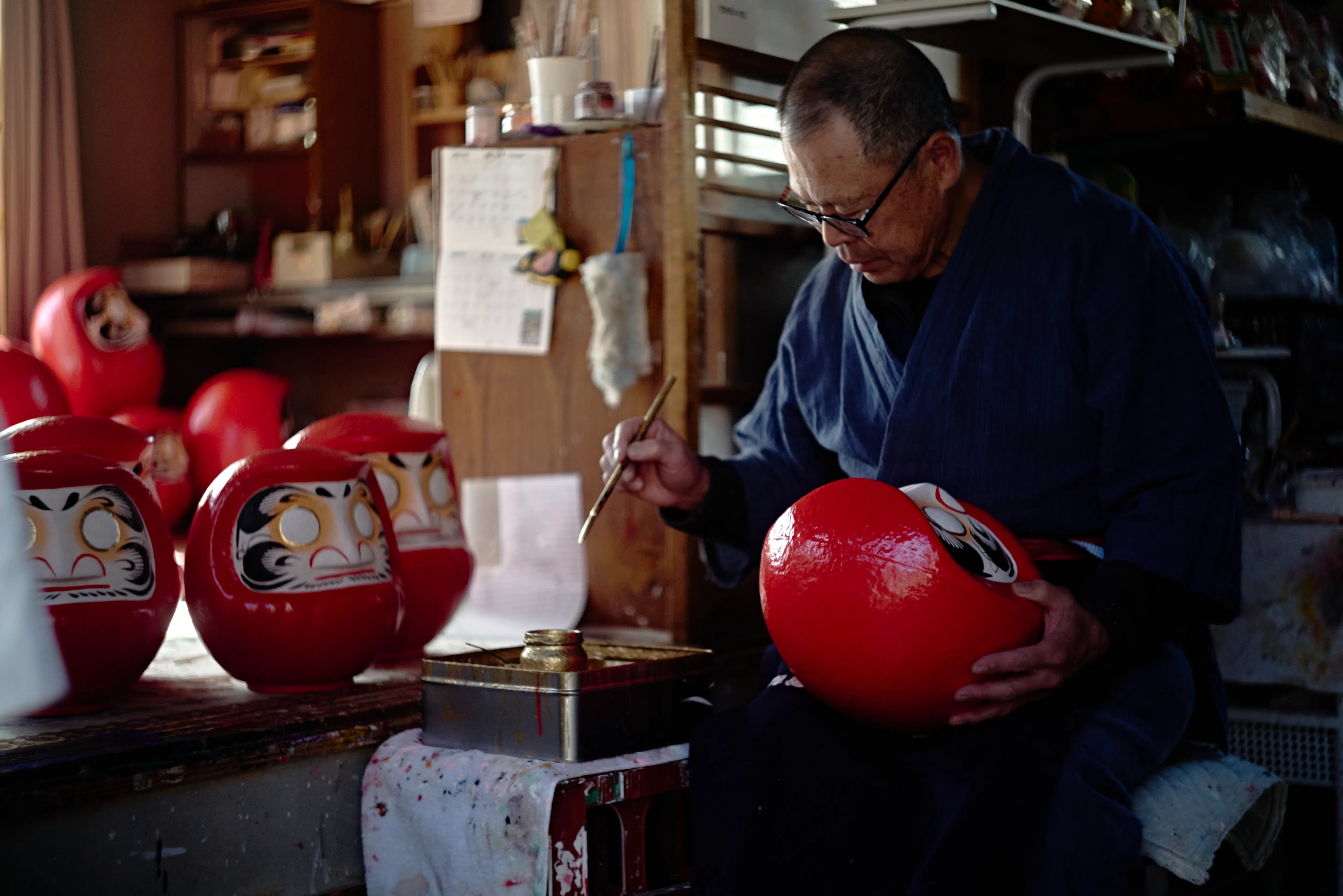

Daruma Symbolism: Quick Answer
Daruma symbolism centers on perseverance, resilience, good luck, and commitment to one clear goal. The doll's round shape, blank eyes, serious face, colors, and written words each make part of that message visible.
| Search question | Short answer |
|---|---|
| What does a Daruma symbolize? | The round body, blank eyes, color, face, writing, and ritual all point to active perseverance. |
| What do the blank eyes symbolize? | One eye marks the start of a goal, while the second marks its completion. |
| What does the round shape symbolize? | Rising again after a setback. |
| What does the serious face symbolize? | Focus, discipline, and determination. |
| What does the writing symbolize? | A specific wish, such as success, victory, or good fortune. |
Taken together, these parts turn an abstract goal into something visible, unfinished, and present in daily life.
What Is a Daruma Doll?
A Daruma is a traditional Japanese doll associated with Bodhidharma, the figure traditionally linked with Zen Buddhism. Most Daruma dolls are round, often red, and shown with a serious face and blank white eyes.
The doll is not just decoration. Its shape, eyes, color, and writing are designed to support one idea: choose a goal, keep the goal in sight, and continue until it is complete.
If your question is the broad beginner question, the complete Daruma guide covers meaning, eyes, colors, use, and common first-time questions. This article focuses on what the Daruma represents and why each visible part matters.
What Does a Daruma Represent?
A Daruma represents a goal that should stay visible. It can be a study goal, work goal, business launch, recovery period, creative project, personal reset, or new beginning.
The doll does not say success is automatic. It says the goal is worth returning to. This is why Daruma dolls are often connected with exams, business goals, creative projects, recovery after setbacks, personal discipline, and encouragement gifts.
For concrete goal wording, see Daruma wish examples for exams, work, business, health, family, and personal milestones.
Daruma Doll Symbolism by Part
| Part of the Daruma | What it means | Why it matters |
|---|---|---|
| Round body | Resilience and perseverance | A Daruma returns upright, making persistence visible. |
| Blank eyes | Commitment and completion | One eye marks the start of a goal; the second marks follow-through. |
| Red color | Tradition, protection, and good fortune | Red is the classic Daruma color, though meanings vary by maker and context. |
| Serious face | Focus and discipline | The expression points to determination rather than decoration. |
| Bodhidharma image | Spiritual discipline and endurance | Daruma dolls are associated with the figure behind the Daruma name and form. |
| Facial hair | Auspicious imagery | In some Daruma styles, eyebrows and facial hair are read as crane and turtle imagery. |
| Wish words | A specific intention | Words such as success, victory, or good fortune make the goal more concrete. |
| Goal ritual | Active effort | The doll works as a reminder, not as a substitute for action. |
Each visible part supports the same main idea: keep going until the goal is complete.
Daruma Meaning vs Daruma Symbolism
Daruma meaning and Daruma symbolism overlap, but they answer slightly different questions.
| Term | What it answers | Best way to understand it |
|---|---|---|
| Daruma meaning | What the doll means in Japanese culture | Good luck, perseverance, goal-setting, and encouragement. |
| Daruma symbolism | What each visible part represents | The shape, eyes, color, face, writing, and ritual each carry specific meaning. |
| Daruma ritual | How the symbolism is used | Set one goal, paint one eye, keep going, then complete the second eye. |
Meaning is the broad idea; symbolism explains how the visible doll expresses it.
What the Daruma Eyes Mean
The eyes symbolize the movement from intention to completion.
Many Daruma dolls are sold with blank eyes. The usual practice is to paint in one eye when setting a goal, then paint in the second eye after the goal has been completed. The blank space is not a defect. It is part of the ritual.
The first eye makes the goal visible. The unfinished second eye keeps the promise open. When the goal is finished, completing the second eye gives the ritual a clear end.
If your main question is eye order, read Which Daruma Eye First? Paint the Left Eye or Right Eye. If you need the whole practice, read how to use a Daruma doll.
What the Round Shape Means
The round shape is one of the clearest parts of Daruma meaning. Many Daruma are weighted so they return upright after being tipped over.
That physical movement expresses the idea of rising again after falling. You do not need to understand every layer of Daruma history to understand the message. The doll falls, rises again, and continues facing forward.
This is why Daruma meaning fits long goals better than quick wishes. It is especially suited to goals that require repeated effort: studying, building a business, changing a habit, training a skill, or beginning again after a difficult period.
Daruma Colors and Meaning
Red is the traditional Daruma color. It is commonly associated with protection, general good fortune, and the classic image of the Daruma doll.
Other colors are modern ways to connect a Daruma with a more specific intention. Gold is often used for prosperity or work-related goals. White may suggest clarity or a fresh start. Black is often connected with protection or business stability. Green may suggest health or steady growth. Blue often fits study, focus, or skill-building.
Color meanings are useful, but they are not fixed rules. Meanings can change by maker, region, shop, and context. If a specific maker explains a color differently, follow that explanation. If not, choose the color that best helps you remember the goal.
For a color-by-color chart, use Daruma Color Meaning Chart: Red, White, Black, Gold, and More.
What the Face and Writing Mean
The serious face points to focus, endurance, and discipline. In the meaning of the doll, the face supports the same message as the shape and eyes: stay with the goal even when progress is slow.
Some Daruma dolls include writing such as fortune, victory, success, or exam-related words. These words help narrow the intention. The writing does not replace the ritual. It clarifies the direction.
For more examples, see What Is Written on a Daruma Doll? Common Kanji and Wish Words. For the deeper background behind Bodhidharma and the Daruma doll, read Daruma doll history and origin.
Why Daruma Means More Than Good Luck
Calling a Daruma a lucky charm is not wrong, but it is incomplete.
If the Daruma is treated only as an object that grants wishes, the central meaning gets weaker. The doll is stronger as a reminder of effort. Its round shape points to resilience. Its eyes point to commitment. Its color and writing give the goal a visible form.
That is why Daruma meaning works even for people who approach the doll in a practical or secular way. You do not have to treat the doll as magic for the practice to make sense. The Daruma helps you keep a goal present in daily space.
If you are comparing physical dolls, use the Daruma size chart to choose a height that fits the place where the doll will stay.
Common Questions About Daruma Meaning
What is the meaning of Daruma?
Daruma means perseverance, resilience, good luck, and commitment to a goal. The doll turns a wish into something visible so the owner keeps returning to it.
What does a Daruma doll represent?
A Daruma doll represents a wish or goal that should be supported by repeated effort. It is a visible reminder to keep returning to the goal until it is complete.
What is Daruma doll symbolism?
Daruma doll symbolism is the meaning carried by the doll's visible parts: round body, blank eyes, red color, serious face, written words, and the eye-painting ritual.
What do Daruma eyes mean?
Daruma eyes mean beginning and completion. One eye is painted when a goal is set, and the second eye is painted when the goal has been achieved.
Is Daruma a good luck symbol?
Yes, a Daruma is generally treated as a positive good-luck symbol. Its deeper meaning, however, is disciplined effort: good fortune is tied to continuing the work.
Keep Exploring Daruma Meaning
If you want the full beginner guide, read What Is a Daruma Doll? Meaning, Eyes, Colors, and How to Use It.
If you want the practical ritual, read How to Use a Daruma Doll: Step-by-Step Instructions.

