


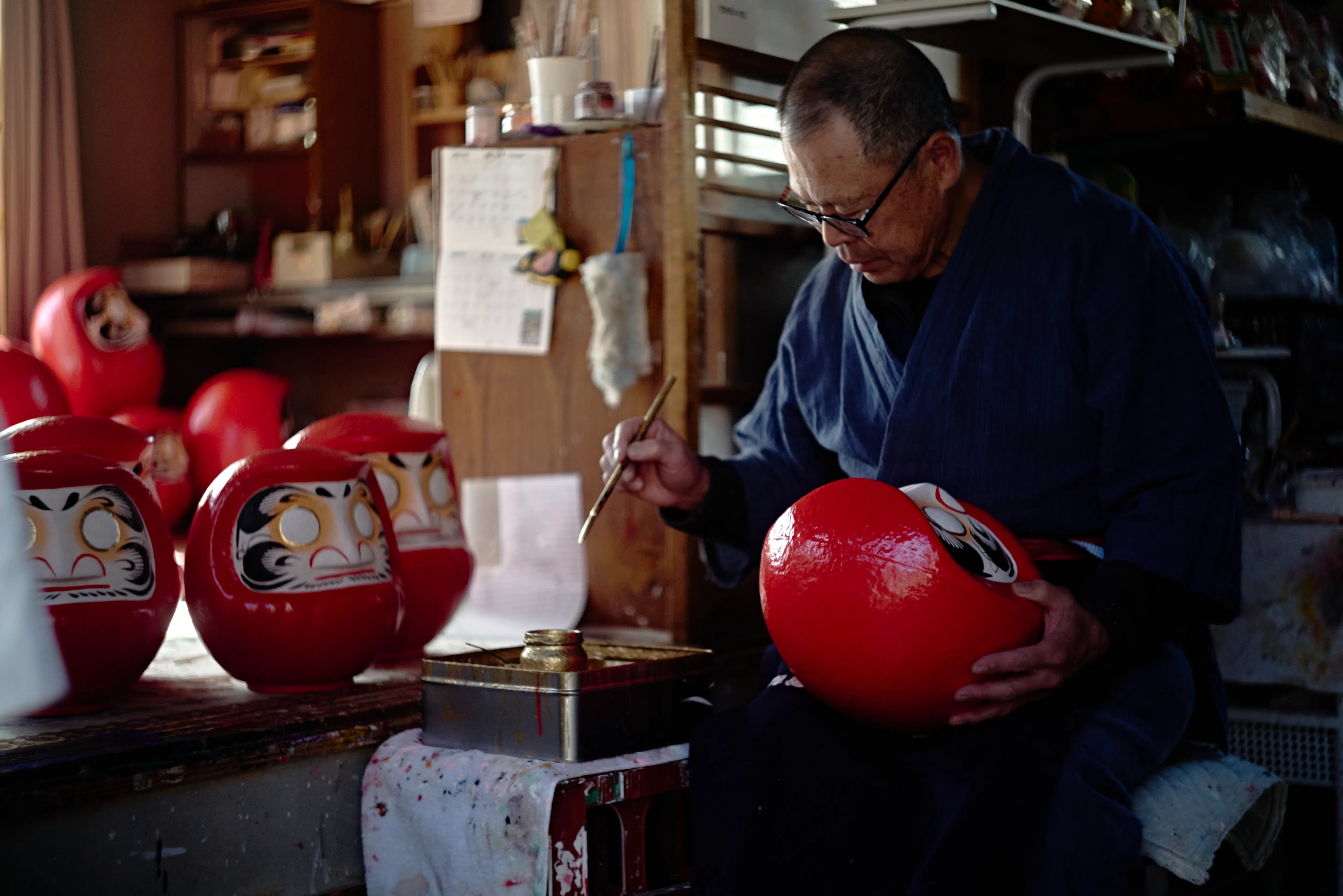

Takasaki Daruma: Quick Answer
Takasaki Daruma is a regional Daruma doll tradition from Takasaki in Gunma Prefecture. It is known for a rounded paper-mache or papier-mache body, a self-righting shape, a bold red face, blank eyes for goal-setting, and hand-painted facial motifs often explained as cranes and turtles. In search results, Takasaki Daruma is usually treated as both a Gunma craft story and a wishing charm: a doll used for perseverance, good fortune, gifts, and visible goals.
| Question | Short answer |
|---|---|
| What is Takasaki Daruma? | A regional Daruma doll style associated with Takasaki, Gunma |
| What is Takasaki Daruma history? | A local Daruma-making tradition shaped by paper craft, households, markets, and wish culture |
| What is a Takasaki Daruma doll? | A rounded, self-righting red Daruma with blank eyes, painted face, and auspicious details |
| What are Takasaki Daruma features? | Red body, blank eyes, crane-and-turtle face motifs, writing, and a sturdy rounded form |
| What does Takasaki Daruma mean? | Perseverance, good fortune, rising again, and staying committed to one clear goal |
| Is Takasaki the origin of every Daruma? | No. Takasaki is one important regional Daruma center, not the whole origin of all Daruma dolls |
The important distinction is this: Takasaki Daruma is not just any red Daruma. It is a Takasaki-area craft identity with its own regional history, good-luck use, and recognizable visual features.
What Is Takasaki Daruma?
Takasaki Daruma is the Daruma style most closely associated with Takasaki, Gunma. For many people outside Japan, it is the image they have in mind when they picture a red Daruma doll: round body, intense face, blank eyes, and a stable shape that returns upright after being tilted.
Historically, the term is more specific than "red Daruma." It points to a local craft tradition shaped by Takasaki-area makers, paper work, farming rhythms, markets, and regional wish-making customs.
The eyebrows are often described as cranes, and the beard or moustache as a turtle. Both are auspicious motifs in Japanese culture. This face is one reason Takasaki Daruma is recognizable as a distinct regional style.
For search intent, keep three ideas together: place, object, and use. The place is Takasaki in Gunma. The object is a red paper-mache Daruma doll. The use is a visible wish, goal, or good-luck reminder.
Takasaki Daruma Features
| Feature | What it signals |
|---|---|
| Region | Takasaki, Gunma Prefecture, especially the local craft history around the area |
| Material | Paper, paper pulp, paper-mache, or papier-mache body, then hand-finished and painted |
| Shape | Round, stable, and self-righting, connected with rising again |
| Face | Bold eyebrows and beard, often explained through crane and turtle motifs |
| Eyes | Usually blank until the owner begins and completes a wish or goal |
| Writing | Front and shoulder inscriptions may express fortune, safety, business, victory, or other wishes |
| Use | Goal-setting, good fortune, New Year wishes, business prosperity, gifts, markets, and display |
These Takasaki Daruma features explain why the doll is both a craft object and a wish-making object. The shape, eyes, face, and writing all help the doll carry meaning beyond decoration.
Takasaki Daruma Doll: Materials, Shape, Eyes, Face
A Takasaki Daruma doll is usually understood through four visible parts.
First, the body is light and rounded. Paper-based construction makes the doll suitable for forming, drying, painting, and display.
Second, the base is weighted or shaped so the doll returns upright. This self-righting form is often connected with perseverance: fall down, rise again.
Third, the eyes are left blank. In common Daruma practice, one eye is filled when a goal is set and the second eye is filled when the goal is completed. For the broader ritual, read how to use a Daruma doll.
Fourth, the face carries regional detail. The crane-and-turtle explanation of the eyebrows and beard helps distinguish Takasaki Daruma from a generic red lucky doll.
If the query is Takasaki Daruma doll, the searcher may be comparing an article answer with a product result. The article answer should clarify the doll type first. A buying decision then depends on size, material, color, and whether the Daruma is finished or blank for painting. For finished dolls, use the Takasaki Daruma collection after the craft background is clear.
Takasaki Daruma History and Origin
Takasaki Daruma history is usually explained through local paper-mache making, the Toyooka area of present-day Takasaki, and a regional wish culture that helped Daruma dolls circulate as New Year and goal-setting objects.
One common account places the spread of Takasaki Daruma making about 200 years ago, when local households could make paper-mache dolls during the agricultural off-season. The craft fit the region because paper work, farming rhythms, sericulture, and markets supported production and distribution.
This does not mean Takasaki invented every Daruma doll. Daruma imagery and self-righting folk toys have broader histories in Japan. The narrower point is that Takasaki became one of the best-known centers for the red lucky Daruma doll.
For the broader Daruma origin before the regional Takasaki craft developed, start with the Bodhidharma story and how it became connected to Japanese Daruma dolls.
Why Takasaki Became Famous for Daruma
Takasaki became famous for Daruma because several local conditions supported the same craft tradition.
| Local condition | Why it mattered |
|---|---|
| Local makers | Concentrated making gave the craft a regional base |
| Paper and paper-mache work | The body could be formed, dried, painted, and finished by hand |
| Agricultural off-season work | Some households could make dolls outside the main farming season |
| Sericulture | Silk and cocoon culture connected naturally with prosperity and rising-again imagery |
| New Year markets | Markets helped the dolls circulate as annual good-luck objects |
| Wish culture | The dolls were not only souvenirs; they were tied to goals and fortune |
This combination made Takasaki Daruma more than a local product. It became a recognizable regional identity and a search topic that blends craft history, travel curiosity, good-luck symbolism, and doll selection.
Takasaki Daruma Meaning and Use
The meaning of Takasaki Daruma is close to the broader Daruma meaning, but the regional craft identity makes it more specific. It stands for perseverance, good fortune, rising again, and keeping one goal visible. The blank eyes make the meaning practical: one eye marks the start of a wish or goal, and the second eye marks completion.
This is why Takasaki Daruma appears in several search intents at once. Some people want a Gunma craft guide. Some want the history. Some want a red Daruma doll to buy. Others want to understand why the doll is used as a wishing charm. A strong answer should keep those intents connected without turning the article into a generic Daruma page.
| Search intent | Best answer on this page |
|---|---|
| Takasaki Daruma | regional overview, meaning, craft identity, and main features |
| Takasaki Daruma history | local paper-mache tradition, markets, households, and regional craft development |
| Takasaki Daruma doll | physical doll features, materials, eyes, face motifs, and product handoff |
| Takasaki Daruma meaning | perseverance, good fortune, goal-setting, and visible commitment |
Traditional Craft Wording and Recognition
People sometimes search for whether Takasaki Daruma is a traditional craft. The wording matters.
Takasaki Daruma is widely treated as a major regional craft tradition and is strongly associated with Gunma and Takasaki. It is also commonly described through local craft recognition, regional branding, and long-standing maker communities.
Be careful not to assume that every use of "traditional craft" means the same formal national designation. A safer explanation is: Takasaki Daruma is a major regional traditional craft identity, and formal designation wording should be checked carefully when a specific legal or administrative category is being discussed.
Takasaki Daruma Is Not Every Daruma
Takasaki Daruma is one important regional Daruma tradition. It is not the origin of all Daruma dolls and should not replace the broader Daruma story.
That distinction matters for search intent. If the question is "what is Takasaki Daruma," the answer should focus on Takasaki, Gunma, regional makers, local features, and craft history. If the question is "what is a Daruma doll," the broader complete Daruma guide is the better next step.
Takasaki Daruma can still be bought, displayed, and given as a lucky object, but reducing it to a souvenir misses what people are trying to understand. It is also a local craft object, a wish-making tool, a New Year object, and a regional symbol.
Common Questions About Takasaki Daruma
What is Takasaki Daruma?
Takasaki Daruma is a regional Daruma doll tradition from Takasaki, Gunma. It is known for a rounded paper or papier-mache body, red color, blank eyes, hand-painted face, and crane-and-turtle facial motifs.
What is Takasaki Daruma history?
Takasaki Daruma history is the local craft story of Daruma making in the Takasaki area. It is usually connected with paper-mache doll making, agricultural off-season work, markets, and regional wish customs.
What is a Takasaki Daruma doll?
A Takasaki Daruma doll is a rounded, self-righting Daruma with a paper-based body, blank eyes, bold painted face, auspicious writing, and regional motifs. It is used for goal-setting, wishes, gifts, and display.
What does Takasaki Daruma mean?
Takasaki Daruma means perseverance, good fortune, rising again, and commitment to one goal. Its blank eyes turn that meaning into a simple ritual: start the wish with one eye and complete it with the second.
What are Takasaki Daruma features?
Key Takasaki Daruma features include the red rounded body, self-righting form, blank eyes, bold face, crane-and-turtle facial motifs, and wish-related writing.
Is Takasaki the origin of all Daruma dolls?
No. Takasaki is one of the most important regional Daruma centers, but Daruma dolls and self-righting lucky dolls have broader histories in Japan.
Is Takasaki Daruma a good gift?
It can be a good gift when the message is encouragement, goal-setting, or a new beginning. For gift wording and etiquette, read Daruma gift meaning and etiquette.
Where can I buy a Takasaki Daruma doll?
If you already understand the craft background and want a finished red Daruma, browse the Takasaki Daruma collection. If you want the making experience instead, a blank Daruma kit is the better route.
Learn More About Daruma
If you prefer a hands-on path, the Daruma painting kit lets you paint a blank Daruma at home while keeping the wish-making process personal.
If you want the broader meaning of Daruma eyes, colors, wishes, and symbolism, continue with the complete Daruma guide.

