



A creative hobby is easier to keep when it fits the space and time you actually have. Watercolor cards, collage, lettering, object painting, air-dry clay, embroidery, paper folding, stamp carving, writing, photography, and guided craft kits can all begin on an ordinary table.
To choose one, decide how much mess you can tolerate, how long your first session can be, and what you want at the end: an object, a quiet process, or a skill to practice. You do not need a studio or a large box of supplies to begin.
Start Here: Easiest Creative Hobbies for Adults
For an easy first session, choose a project with little setup, clear steps, and a result small enough to finish.
| If you want... | Start with | Why it works at home |
|---|---|---|
| The easiest first session | Collage or watercolor cards | Low supplies, quick result, forgiving mistakes |
| A no-blank-page activity | Paint-by-number or a guided craft kit | Structure removes the hardest decisions |
| A calm repetitive project | Embroidery, paper folding, or simple stitching | Small motions make progress visible |
| A finished object | Object painting, air-dry clay, or stamp carving | You end with something to keep, display, or give |
| A low-cost hobby | Creative writing, photography prompts, or paper craft | Uses materials you may already have |
| A creative activity for tonight | A card, small collage, painted ornament, or one-page journal spread | Can be finished in one sitting |
Do not start by buying a large supply set. Pick one project, finish one version, then decide whether you want to repeat it.
Quick List: 25 Creative Hobbies for Adults at Home
You do not have to try the whole list. Read across the first few options that appeal to you, then choose the one you could realistically start this week.
| Creative hobby | Best for | Beginner setup |
|---|---|---|
| Watercolor cards | Color, atmosphere, small finished pieces | Low |
| Collage | Low-pressure visual composition | Low |
| Hand lettering | Cards, labels, signs, words as design | Low |
| Paint-by-number | Structured painting without a blank page | Low |
| Art journaling | Mixed media, memory, personal pages | Low |
| Object painting | Decorating a figure, box, frame, or keepsake | Low to medium |
| Air-dry clay | Trays, ornaments, small forms | Medium |
| Candle decorating | Giftable objects and color | Medium |
| Simple jewelry making | Wearable results and small components | Medium |
| Guided craft kits | A contained project with materials and steps | Low to medium |
| Embroidery | Slow stitching and textile detail | Medium |
| Visible mending | Repairing clothes with creative detail | Medium |
| Sashiko-style stitching | Pattern, rhythm, calm focus | Medium |
| Crochet | Portable handwork and useful pieces | Medium |
| Knitting | Texture, repetition, wearable pieces | Medium |
| Beadwork | Color, pattern, small accessories | Medium |
| Paper folding | Quiet, repeatable paper work | Low |
| Paper cutting | Silhouette, pattern, layered designs | Low |
| Stamp carving | Reusable marks for cards and tags | Medium |
| Block printing | Pattern, handmade prints, repetition | Medium |
| Creative writing prompts | Stories, poems, scenes, personal voice | Low |
| Photography prompts | Creative seeing with a phone or camera | Low |
| Digital drawing | Repeatable practice without physical cleanup | Medium |
| Calligraphy practice | Slow hand control and visual rhythm | Low to medium |
| Scrapbooking | Photos, keepsakes, family memory | Medium |
How to Choose a Creative Hobby You Will Actually Start
When a new hobby stalls, the cause is often practical: the first project was vague, messy, expensive, or too large to finish. Check these five points before buying supplies.
| Filter | Ask yourself | Good choice |
|---|---|---|
| Space | Can I do this on a desk, table, or small floor area? | Paper craft, drawing, cards, stitching |
| Time | Can I make progress in 30 to 90 minutes? | Collage, watercolor cards, stamp carving |
| Cleanup | Will cleanup stop me from repeating it? | Photography, writing, paper folding |
| Result | Do I want something to display, use, wear, or give? | Object painting, clay, jewelry, kits |
| Confidence | Do I need structure instead of a blank page? | Paint-by-number, guided kits, templates |
If you often stop before the first session, read how to start a creative hobby as an adult. That guide focuses on the first-session problem, while this article focuses on choosing the hobby itself.
Art Hobbies for Adults at Home
You can make visual choices without being confident at drawing. A small surface, a limited set of materials, and a clear stopping point make the first project much less intimidating.
Watercolor Cards
Watercolor cards keep the format small. Try a gradient, a loose flower, an abstract wash, or a two-color study without committing to a large painting.
Start with a small pack of cards, one brush, and a few colors. The result can become a note card, gift tag, framed piece, or practice stack.
Collage
Collage is useful when a blank page makes you hesitate. You begin with existing paper, color, and texture, so the first decision is where to place something rather than what to invent.
Try one theme per page: calm colors, favorite shapes, a travel mood, a seasonal palette, or a single word. This keeps the project from becoming a pile of random scraps.
Hand Lettering and Calligraphy Practice
Hand lettering turns words into visual work. It is useful for cards, labels, notebooks, place cards, small signs, and personal notes.
Begin with short phrases. A finished use is better than endless alphabet drills because it gives the practice a reason.
Paint-by-Number
Paint-by-number removes the need to plan every shape and color. It lets you practice handling a brush and completing a picture within a fixed structure.
Choose this if you want painting without deciding every mark yourself.
Art Journaling
Art journaling combines writing, collage, color, drawing, and memory. It is a strong at-home hobby because the page is personal and does not need to look polished.
Use one prompt per page: a color, a sentence, a small object, a memory, or a mood.
Craft Hobbies That Leave You With a Finished Object
If you like having something to show for the time, choose a project that ends in a usable, wearable, or displayable object.
Object Painting
Object painting can be easier than painting on a blank sheet. A figure, frame, ornament, box, tray, or keepsake already has a form, so you can focus on color and detail.
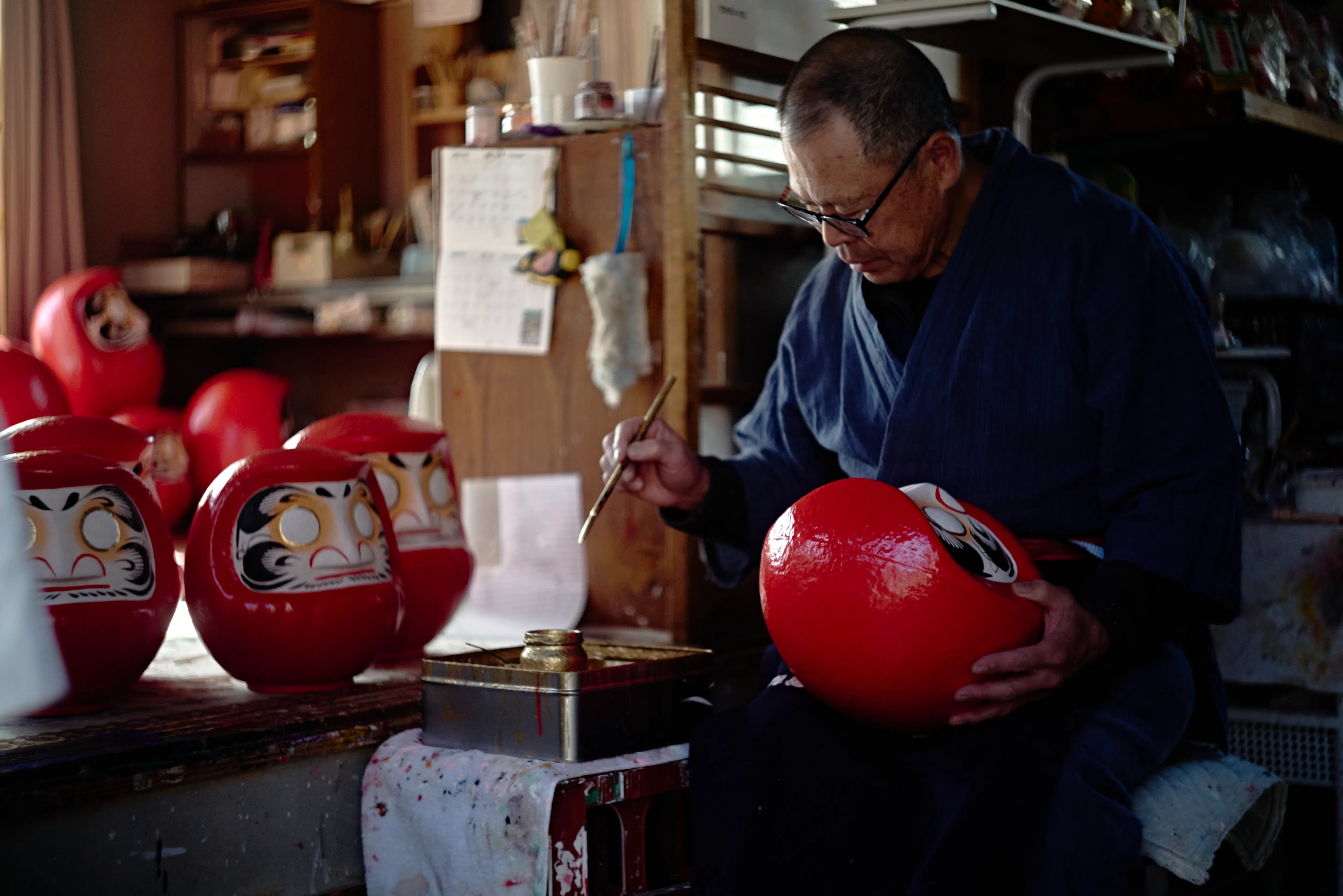
Daruma painting belongs in this group because the completed figure remains visible after the session and can be tied to a personal goal. Our Daruma painting guide covers the steps; the guide to Japanese craft kits for adults helps you compare it with other projects.
Air-Dry Clay
Air-dry clay works well at home because you can make small trays, ornaments, charms, tags, or simple sculptural forms without a kiln.
Keep the first piece small. Large clay projects take longer to dry and create more chances for cracking or frustration.
Stamp Carving and Block Printing
Stamp carving gives you two results: the stamp itself and the prints it makes. Use the stamp for cards, wrapping paper, tags, notebook pages, or small fabric pieces.
Block printing is the next step if you enjoy repetition and pattern. Start with a simple shape before trying a detailed illustration.
Simple Jewelry Making
Jewelry making is a good creative hobby when you want something wearable. Earrings, bracelets, charms, and beadwork all give quick visual feedback.
The risk is buying too many small parts. Start with one project type and one color direction.
Textile and Repetitive Handwork Hobbies
Textile hobbies suit people who enjoy repeated movements and watching a pattern appear slowly.
Embroidery
Embroidery is portable and easy to pause. A small motif, patch, napkin, bookmark, or decorative hoop is enough for a first project.
It works well for adults who want a hobby that rewards consistency more than speed.
Visible Mending
Visible mending turns repair into design. Instead of hiding a patch or stitch, you make it part of the object's character.
This hobby is satisfying because the result returns to everyday life. You improve something you already use.
Sashiko-Style Stitching
Simple pattern stitching can feel meditative because the movement repeats and the design becomes visible slowly.
Start with straight lines, grids, or geometric motifs. You do not need a complicated drawing stage.
Crochet and Knitting
Crochet and knitting are good at-home hobbies when you want texture, rhythm, and portable handwork. For a first project, choose a small square, coaster, dishcloth, scarf sample, or simple accessory.
Do not begin with a large blanket. The first goal is learning the movement and finishing something.
Paper and Print Hobbies for Small Spaces
Paper hobbies are useful because they are low-cost, easy to store, and realistic for apartments or shared spaces.
Paper Folding
Paper folding gives you a sequence from the first step. Boxes, stars, flowers, ornaments, and modular forms all fit into short sessions, and the materials are easy to store.
Paper Cutting
Paper cutting focuses on silhouette, pattern, and negative space. You can make cards, layered scenes, simple wall pieces, or decorative panels.
Start with simple shapes. Clean cuts matter more than complicated designs.
Scrapbooking
Scrapbooking combines photos, paper, writing, memory, and layout. It is a good choice if you want a creative hobby tied to real events or family moments.
Start with one page, one trip, one season, or one person. A narrow theme keeps the project manageable.
Creative Activities for Adults at Home in One Evening
You may want something absorbing to do tonight rather than a new lifelong pursuit. In that case, choose a one-session version of a larger hobby.
| One-evening activity | Time | Supplies | Result |
|---|---|---|---|
| Paint three watercolor cards | 30-60 min | Cards, brush, paint | Giftable cards |
| Make a color collage | 30-60 min | Paper, scissors, glue | Finished page |
| Letter one short quote | 20-45 min | Pen, paper | Small sign or card |
| Decorate a small object | 45-90 min | Paint, object | Display piece |
| Fold paper stars or boxes | 20-60 min | Paper | Small decor |
| Stitch a simple patch | 45-90 min | Fabric, thread, needle | Textile detail |
| Carve one small stamp | 60-90 min | Carving block, tool, ink | Reusable stamp |
| Write a one-page scene | 20-40 min | Notebook or document | Finished writing |
| Take ten texture photos | 20-40 min | Phone or camera | Visual study |
| Build a craft kit step one | 45-90 min | Kit materials | Started project |
An activity can end after one evening. It becomes a hobby only if you enjoy it enough to return. Let the first project answer that question before you buy more materials.
Best Creative Hobbies by Goal
Choose by the result you want, not by what sounds most impressive.
| Goal | Best hobbies to try first |
|---|---|
| Relax after work | Embroidery, paper folding, watercolor cards, collage |
| Make something giftable | Cards, jewelry, candle decorating, object painting |
| Avoid mess | Creative writing, photography prompts, paper folding, digital drawing |
| Build an art habit | Watercolor cards, hand lettering, art journaling |
| Work with your hands | Clay, stitching, stamp carving, visible mending |
| Finish something quickly | Collage, cards, one-page journaling, small paper craft |
| Try a meaningful cultural craft | Daruma painting or another guided Japanese craft kit |
If calm focus is the reason you are looking, compare these with mindful crafts for adults.
Common Mistakes When Starting a Creative Hobby
Choose for your present routine. A project that needs a permanent workspace, long uninterrupted afternoons, or expensive tools may stay untouched even if the finished work looks appealing.
Give the first session a small verb and a finish line. “Make art” is vague; “paint three small cards” is clear. “Learn embroidery” is vague; “stitch one small patch” is clear.
Choose the first project before buying supplies. Then judge the session by a simple question: after finishing one small version, would you like to make another? That matters more than whether the first result looks skilled.
FAQ
What are the best creative hobbies for adults at home?
The best creative hobbies for adults at home are watercolor cards, collage, hand lettering, object painting, embroidery, air-dry clay, paper folding, stamp carving, art journaling, photography prompts, creative writing, and guided craft kits. They work because they can fit a small space and leave a visible result.
What are easy creative hobbies for adults?
Easy creative hobbies for adults include collage, watercolor cards, paper folding, hand lettering, paint-by-number, photography prompts, creative writing prompts, and guided craft kits. Choose these when you want low setup and a clear first session.
What are good hobbies for adults at home?
Good hobbies for adults at home are hobbies that fit your space, time, and cleanup tolerance. Creative options include paper crafts, stitching, drawing, journaling, object painting, clay, digital drawing, and compact kits.
What are good art hobbies for adults?
Good art hobbies for adults include watercolor, collage, hand lettering, art journaling, digital drawing, paint-by-number, paper cutting, and printmaking. Start with a small surface so the hobby feels finishable.
What creative activities can adults do at home tonight?
Adults can make watercolor cards, build a small collage, decorate an object, fold paper boxes, stitch a patch, carve a stamp, write a one-page scene, take photography prompts, or start a guided craft kit. Pick one activity with a clear end point.
Which creative hobby should I choose first?
Choose the hobby with the least friction: the one that fits your table, your available time, your cleanup tolerance, and the kind of result you want. A finished first project matters more than choosing the perfect long-term hobby.
If you want a contained project that can also be given as an experience, see the Daruma Gift Experience.

