What Is Zen?
Zen is a tradition of Buddhism that emphasizes direct experience, disciplined practice, and insight into the nature of reality. The word is also used in Japanese to refer to this Buddhist tradition, and in casual English it is often used to mean calm, simple, or peaceful.
Those meanings are related, but they are not the same.
Strictly speaking, Zen is not just a mood, an interior design style, or a synonym for relaxation. It is a Buddhist tradition with roots in India, development in China, and a long history in Japan. Its practices and ideas have also influenced Japanese culture, including gardens, tea, calligraphy, ceramics, poetry, and ways of thinking about simplicity and presence.
A simple definition is this: Zen is a school of Buddhism that values direct insight through practice, especially meditation, rather than relying only on words, theories, or scripture.
The Three Common Meanings of Zen
The word “Zen” is often used in three different ways. Understanding the difference helps prevent confusion.
First, Zen can mean Zen Buddhism. This is the formal religious meaning. Zen Buddhism is a Buddhist tradition that developed from Indian Buddhist meditation, became known as Chan in China, and later became Zen in Japan.
Second, Zen can mean the Japanese word 禅. In Japanese, Zen refers to the Buddhist tradition and to the idea of meditative discipline associated with it. The word is not simply the Japanese word for “calm.” It carries religious, historical, and philosophical meaning.
Third, “zen” can be used casually in English. In everyday English, people may say a room feels “zen,” a person is “feeling zen,” or a design has a “zen” quality. This usually means calm, minimal, balanced, or peaceful. That casual use is common, but it is much narrower than Zen as a Buddhist tradition.
The most accurate way to understand the word is to keep these meanings separate: Zen as Buddhism, Zen as a Japanese term, and “zen” as a modern English adjective.
Where the Word Zen Comes From
Zen has a long linguistic path.
The root is the Sanskrit word dhyāna, which refers to meditation or meditative absorption in Indian Buddhist tradition. As Buddhist teachings moved into China, dhyāna was translated and pronounced in Chinese as Chan. When the tradition later developed in Japan, Chan became Zen.
The path is often summarized like this:
- dhyāna → Chan → Zen
This history matters because it shows that Zen did not begin as a Japanese design idea. It began as part of Buddhist meditative practice. Japan gave Zen its Japanese name, institutions, schools, arts, and cultural forms, but the tradition’s roots go back earlier to Indian Buddhism and Chinese Buddhism.
Zen as a Buddhist Tradition
For a deeper Japan-specific explanation of beliefs, practice, and schools, read Zen Buddhism in Japan.
Zen is a branch of Mahayana Buddhism. Like other Buddhist traditions, it is concerned with awakening, suffering, impermanence, and the nature of self and reality. What makes Zen distinctive is its emphasis on direct realization through practice.
Zen often points beyond purely intellectual explanation. That does not mean Zen rejects study or scripture completely. Rather, it warns that words and concepts alone are not the same as understanding. A person can read about silence, attention, or awakening, but Zen asks what is actually seen, practiced, and realized.
For this reason, Zen is often associated with meditation, teacher-student training, monastic discipline, everyday action, and direct experience.
Is Zen the Same as Meditation?
Zen is closely connected to meditation, but Zen is not only meditation.
Meditation is central because the word Zen itself comes from a term connected to meditative practice. In Japanese Zen, seated meditation is often called zazen. Zazen is one of the best-known forms of Zen practice.
However, Zen includes more than sitting quietly. It includes ethical discipline, ritual, study, teacher guidance, work, community life, and attention to ordinary activities. In some traditions, formal questions or teaching encounters are used to challenge ordinary patterns of thought. In others, quiet sitting is emphasized more strongly.
A better way to say it is: meditation is central to Zen, but Zen is a complete Buddhist tradition, not just a meditation technique.
What Does Zen Mean in Japanese?
In Japanese, Zen is written as 禅. The word refers to Zen Buddhism and to the meditative discipline associated with it.
It is important not to translate Zen too loosely as “peace” or “calm.” Calmness may be associated with Zen practice in popular imagination, but it is not the full meaning of the word. Zen is not simply a feeling. It points to a religious tradition, a form of Buddhist training, and a way of approaching direct insight.
In Japanese culture, Zen also carries historical associations with temples, monks, gardens, tea, calligraphy, martial training, poetry, and craft. These associations are real, but they should not be confused with the full meaning of Zen itself.
Zen and Japanese Culture
For the design and craft side of this topic, continue with Zen and Japanese aesthetics.
Zen became deeply influential in Japan, especially through religious institutions, arts, and cultural practices. Its influence can be seen in certain forms of garden design, tea practice, ink painting, calligraphy, ceramics, poetry, architecture, and ideas about simplicity.
This does not mean that all Japanese culture is Zen. It also does not mean that anything simple, quiet, or minimal is automatically Zen.
The connection is more specific. Zen helped shape certain Japanese cultural values and artistic forms, especially those that emphasize discipline, restraint, directness, impermanence, attention, and the beauty of what is simple or incomplete.
For example, a handmade bowl may show irregularity rather than perfect symmetry. A garden may use empty space as carefully as stone or moss. A brushstroke may value immediacy rather than correction. These qualities can be compatible with Zen-influenced aesthetics, but they are not a complete definition of Zen.
Zen is the root tradition. Japanese aesthetics are one area where that tradition has left visible traces.
Zen Is Not Just Minimalism
One of the most common modern misunderstandings is that Zen means minimalism.
Minimalism usually means reducing objects, decoration, or visual complexity. Zen may sometimes appear simple, but its simplicity is not just a design preference. In Zen-influenced culture, simplicity can point to discipline, clarity, impermanence, and direct attention.
A sparse room is not necessarily Zen. A calm product design is not necessarily Zen. A neutral color palette is not necessarily Zen.
Zen is not defined by how something looks. It is better understood as a Buddhist tradition of practice and insight that has influenced certain ways of seeing, making, arranging, and living.
Zen Is Not Just Being Calm
Another common misunderstanding is that Zen means being relaxed or emotionally calm.
In casual English, “zen” often means calm. This usage is now widespread, but it is only a simplified modern meaning. Traditional Zen is not mainly about achieving a pleasant mood. Zen practice may involve stillness, but it can also involve discipline, difficulty, repetition, doubt, concentration, and confrontation with uncomfortable assumptions.
Zen is not simply the absence of stress. It is not a wellness shortcut. It is not a promise of constant peace.
A more accurate view is that Zen trains attention and insight through practice. Calmness may appear in some contexts, but it is not the whole point.
Zen, Chan, and Buddhism
Zen is part of a larger Buddhist history. It did not appear in isolation in Japan.
The tradition developed from Indian Buddhist meditation, took shape in China as Chan, and later entered Japan as Zen. Each stage changed the tradition’s language, institutions, and cultural expression.
In China, Chan developed distinctive teaching styles and lineages. In Japan, Zen developed through major schools, temple networks, artistic patronage, and cultural influence. The Japanese form became especially visible internationally, which is one reason the Japanese word “Zen” is now widely recognized in English.
This history is why Zen can be both Japanese and not only Japanese. The word is Japanese, and Japan gave Zen many of its best-known cultural forms. But the tradition’s deeper roots are Buddhist, Indian, and Chinese as well as Japanese.
Major Forms of Japanese Zen
Japanese Zen is often associated with several major schools. The best-known are Soto and Rinzai. Another historical school is Obaku.
Soto Zen is often associated with the practice of seated meditation and sustained everyday discipline. Rinzai Zen is often associated with intensive training and teaching methods that may include formal questions or encounters designed to challenge conceptual thinking. Obaku Zen has its own historical place and reflects later connections between Chinese and Japanese Buddhist practice.
These distinctions are useful, but a beginner does not need to master them to understand the basic meaning of Zen. The essential point is that Zen is not one vague idea. It is a living Buddhist tradition with institutions, practices, teachers, texts, and historical schools.
Why Zen Often Sounds Paradoxical
Zen is sometimes described through short sayings, sharp questions, or stories that seem paradoxical. This can make Zen appear mysterious or anti-intellectual.
The purpose is not usually to be confusing for its own sake. Zen often uses language to expose the limits of language. A statement may be designed to interrupt habitual thinking rather than provide a neat definition.
This is one reason Zen can be difficult to summarize. It is a tradition that often says direct experience cannot be replaced by explanation. Still, a beginner-friendly definition is possible: Zen is a Buddhist path of practice and insight that emphasizes direct realization over purely conceptual understanding.
Zen and Craft
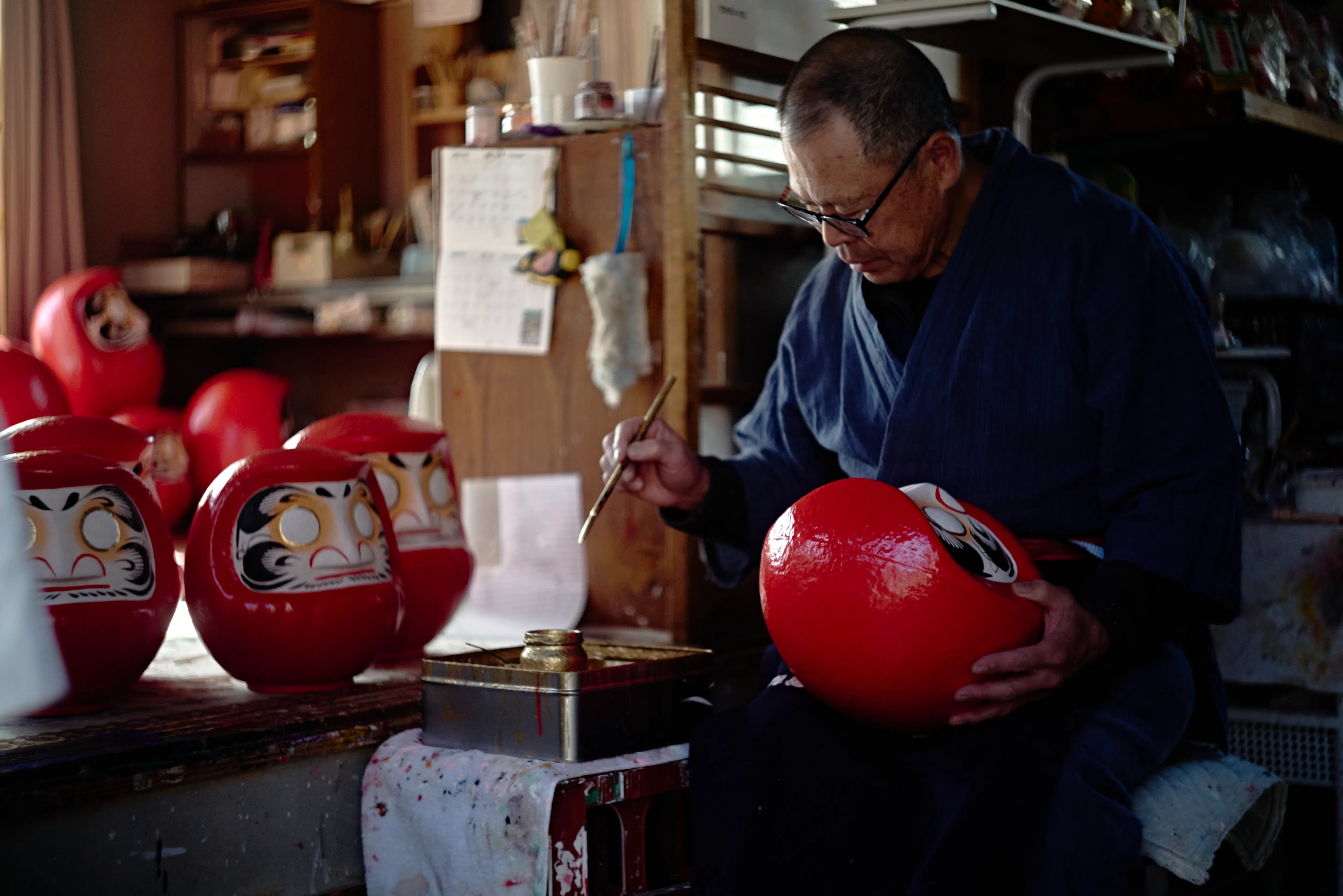
Zen’s relationship with craft is best understood through attention, discipline, and form rather than product style.
In Japanese arts and crafts, Zen influence may appear in restraint, repetition, asymmetry, natural materials, empty space, and respect for imperfection or impermanence. A crafted object may invite quiet attention not because it is branded as “Zen,” but because it reflects care, humility, and presence.
This connection should be handled carefully. Not every Japanese craft object is Zen. Not every simple object has a Zen meaning. But Zen has helped shape a cultural environment where making, using, and observing ordinary objects can become a serious form of attention.
For a Japanese craft journal, this is where Zen becomes especially relevant: not as a sales label, but as background for understanding how spiritual practice, aesthetic restraint, and material culture sometimes meet.
The Best Simple Definition of Zen
Zen is a Japanese Buddhist tradition, rooted in Indian meditation and Chinese Chan, that emphasizes direct insight through disciplined practice.
In Japanese, Zen refers to this tradition and its meditative training. In casual English, “zen” often means calm or minimal, but that is only a modern simplification.
Zen can influence aesthetics, craft, and culture, but it is not just an aesthetic. It is a Buddhist tradition first.
Common Questions About Zen
What does Zen literally mean?
Zen comes from a word connected to meditation. Its deeper path runs from Sanskrit dhyāna to Chinese Chan to Japanese Zen. Because of that history, Zen is strongly associated with meditation, but it is not only a word for sitting quietly.
Is Zen a religion or a philosophy?
Zen is a Buddhist religious tradition. It also contains philosophical ideas and has influenced culture and art, but it should not be reduced to philosophy alone.
Is Zen Japanese or Chinese?
The word Zen is Japanese. The tradition developed from Chinese Chan Buddhism, which itself grew from Indian Buddhist roots. So Zen is Japanese in name and historical form, but its background is broader than Japan alone.
Does Zen mean peace?
Not exactly. In casual English, “zen” can mean peaceful or calm. In its formal sense, Zen refers to a Buddhist tradition of practice and insight. Peacefulness may be associated with Zen, but it is not the full meaning.
Is Zen the same as Buddhism?
Zen is not the same as all Buddhism. It is one branch of Buddhism, specifically within the Mahayana tradition. Other Buddhist traditions have different histories, texts, practices, and emphases.
What is Zen Buddhism?
Zen Buddhism is a Buddhist tradition that emphasizes direct realization through practice. It is especially associated with meditation, teacher-student transmission, disciplined training, and attention to direct experience rather than words alone.
Why is Zen associated with Japanese gardens and tea?
Zen influenced parts of Japanese culture, including gardens, tea, calligraphy, ceramics, and poetry. These arts can reflect values such as restraint, attention, impermanence, and simplicity. However, they are cultural expressions influenced by Zen, not the full definition of Zen itself.
Is a minimalist room Zen?
Not necessarily. A minimalist room may feel calm, but Zen is not simply a visual style. Zen is a Buddhist tradition. Minimal design may borrow from Zen-influenced aesthetics, but the two should not be treated as identical.
How should beginners understand Zen?
Beginners should understand Zen in three layers: it is a Buddhist tradition, it is a Japanese word connected to meditative practice, and it is also used casually in English to mean calm or simple. The formal meaning is the Buddhist one.
Conclusion: Zen Is Deeper Than Calm
Zen is often used today as a word for calm, simplicity, or minimalist beauty. That casual meaning is common, but it is incomplete.
At its core, Zen is a Japanese Buddhist tradition rooted in Indian meditation and Chinese Chan. It emphasizes direct insight, disciplined practice, and lived experience over explanation alone. Its influence on Japanese culture is important, but Zen itself is not just an aesthetic style.
To understand Zen clearly, begin with the full meaning: a Buddhist path of practice and insight that later shaped language, culture, and art.