


Kyoto is easier to plan when you stop treating it as one long list of attractions. Its major sights sit in separate parts of the city, and crossing between them can take longer than the visits themselves. Assign one major area to each half-day, use rail for longer moves, and walk between nearby sights.
With one day, combine a shortened southern Kyoto shrine visit with eastern Kyoto. With two days, add western Kyoto. With three or more days, add central, northwestern, or northeastern Kyoto and reserve one cultural experience that fits the route.
Quick Kyoto planning table
The time blocks below are itinerary allowances, not promises that every visitor will finish within the stated time.
| Priority | Area | Time block | Booking | Weather | Best fit |
|---|---|---|---|---|---|
| Iconic shrine and torii walk | Southern Kyoto | 1–3 hours | Usually flexible | Outdoor, with steps and prolonged walking | First-time visitors, photographers, and active travelers |
| Historic streets and hillside temple | Eastern Kyoto and Gion | Half day | Reserve a performance or a high-priority dinner | Outdoor, hilly, and crowd-sensitive | A first visit and traditional street atmosphere |
| Bamboo, garden, and river scenery | Arashiyama | Half day | Standard sights are usually flexible | Mostly outdoor | Scenery, gardens, and families |
| Palace and political history | Central Kyoto | Half day | Some interiors use timed entry | Mixed indoor and outdoor | History, architecture, and some flexibility in poor weather |
| Pavilion and garden circuit | Northwestern Kyoto | Half day | Usually flexible | Mostly outdoor | Gardens, design, and a slower pace |
| Food, shopping, and city life | Downtown Kyoto | 1–3 hours | Reserve a specific restaurant | Covered in places but open-sided | Food and a flexible block between major sights |
| Canal-side walk, gardens, and museums | Northeastern Kyoto and Okazaki | Half day | Exhibitions may need tickets | Mixed; the main walk is outdoors | Art, gardens, and a less rushed half-day |
| Participatory culture | Choose a venue near the day’s route | 1–2 hours | Usually requires a reservation | Often indoor | Tea, food, craft, meditation, or performance |
Plan Kyoto by the number of days
One day
Begin in southern Kyoto and decide in advance how much of the shrine and mountain route you will walk. A visit to the main precinct and lower torii sections can fit into about an hour, while a longer climb can use most of the morning.
Continue toward eastern Kyoto. Use the hillside temple and historic approach streets as one connected block, then walk downhill toward Gion and downtown. Finish with dinner, a river walk, or a reserved performance.
This works because the major blocks sit on the southern and eastern side of the city. Do not add Arashiyama or northwestern Kyoto unless your goal is only to take a photograph and leave.
Two days
Use the first day for southern and eastern Kyoto.
Begin the second day in Arashiyama. Combine a garden, the bamboo route, the bridge, and nearby streets instead of crossing the city immediately after the bamboo section. Return to central Kyoto for a castle, downtown food stop, or dinner.
If gardens and architecture matter more than river scenery, replace Arashiyama with the northwestern pavilion-and-garden circuit. It is a separate half-day cluster, not a quick addition to eastern Kyoto.
Three days or more
Keep the first two days above, then choose a third-day focus:
- central Kyoto for palace history, imperial grounds, and food;
- northeastern Kyoto for a canal-side walk, gardens, and museums;
- northwestern Kyoto for architecture and garden design;
- a participatory cultural experience paired with nearby sights;
- a station-area day with less walking for museums and indoor attractions.
A fourth day can go deeper into one interest instead of adding more headline sights. Use it for craft, food, performing arts, an outer district, or a slower neighborhood route.
Reserve fixed-time experiences first
Shrine walks, temple districts, and neighborhood exploration can usually remain flexible. Book the activities that control the day before filling the gaps around them:
- palace interiors or attractions with timed entry;
- tea, cooking, craft, and meditation sessions with fixed starts;
- traditional or contemporary performances;
- a high-demand restaurant or formal multi-course dinner;
- special exhibitions, seasonal transportation, and limited-entry attractions.
After the fixed times are set, add nearby sights. Do not reserve activities in distant areas back-to-back without allowing for walking, station navigation, and transit delays.
Eastern Kyoto: combine the hillside route and Gion
Allow three to five hours for the temple, historic approach streets, park or shrine grounds, and Gion.
Start early when possible, especially during spring, fall, and weekends. After the hillside visit, continue downhill through the historic streets rather than returning by the same route. The district is primarily a walking experience, so weather, footwear, and crowding matter more than the number of map pins you collect.
Some major grounds publish step-free routes, but the surrounding neighborhood still includes slopes, uneven surfaces, and a substantial uphill approach. Plan the arrival route separately if mobility is limited.
Gion is a working residential and entertainment district. Do not follow, stop, touch, or photograph geiko or maiko without permission. Respect private-property signs and avoid blocking narrow streets for photographs.
Southern Kyoto: choose the length of the shrine walk
Allow 45–90 minutes for the lower precinct or two to three hours for a longer mountain route.
Decide which version you want before arriving. The shorter route fits a day that continues to eastern or central Kyoto. The full mountain walk should be treated as one of the day’s main activities.
Use rail rather than building the journey around a cross-city bus. Rail also makes it easier to continue north along the eastern side of Kyoto.
The sake-producing district farther south is a separate destination. Give it a half-day or combine it only with a deliberately shortened shrine visit. Museum visits, tours, and tastings may have different reservation and closed-day rules.
Western Kyoto: treat Arashiyama as a half-day
Allow three to five hours for a garden, the bamboo route, the bridge, and surrounding streets.
The bamboo section itself is short. The reason to travel west is the complete district rather than one narrow photo stop. Arrive by rail and walk between the central sights.
Rain changes the experience, but Arashiyama remains largely outdoors. In sustained rain or midsummer heat, shorten the outdoor route and do not add another distant temple district to the same morning.
The bamboo grove is a maintained landscape within a living neighborhood. Do not carve, mark, or damage it.
Northwestern Kyoto: group the pavilion and gardens
Allow three to four hours, including local transfers.
Begin with the landmark pavilion, continue to a rock garden, and add a larger temple complex when time and energy allow. The three stops form a more coherent block than combining one of them with an unrelated eastern Kyoto attraction.
Arashiyama and the northwestern circuit are both west of central Kyoto, but they are not one compact area. Combining them can work with a full day and careful transportation; it is inefficient in a short itinerary.
Central Kyoto: choose castle, palace, market, or workshop
Central Kyoto supports a mixed half-day because history, food, shopping, museums, and reserved activities sit closer together than in the outer districts.
Choose the castle for furnished palace interiors, political history, and architecture. Allow at least 1–1.5 hours for the main palace and garden; adding another timed interior lengthens the visit.
The imperial grounds offer a more outdoor-focused historical visit. Public routes may include gravel, security checks, and restrictions on large baggage.
A downtown food market works best during the day between larger attractions. Individual shops set their own hours, so do not save it for late evening and assume everything will be open. Eat purchases at the shop or take them away instead of stopping to eat in a narrow passage.
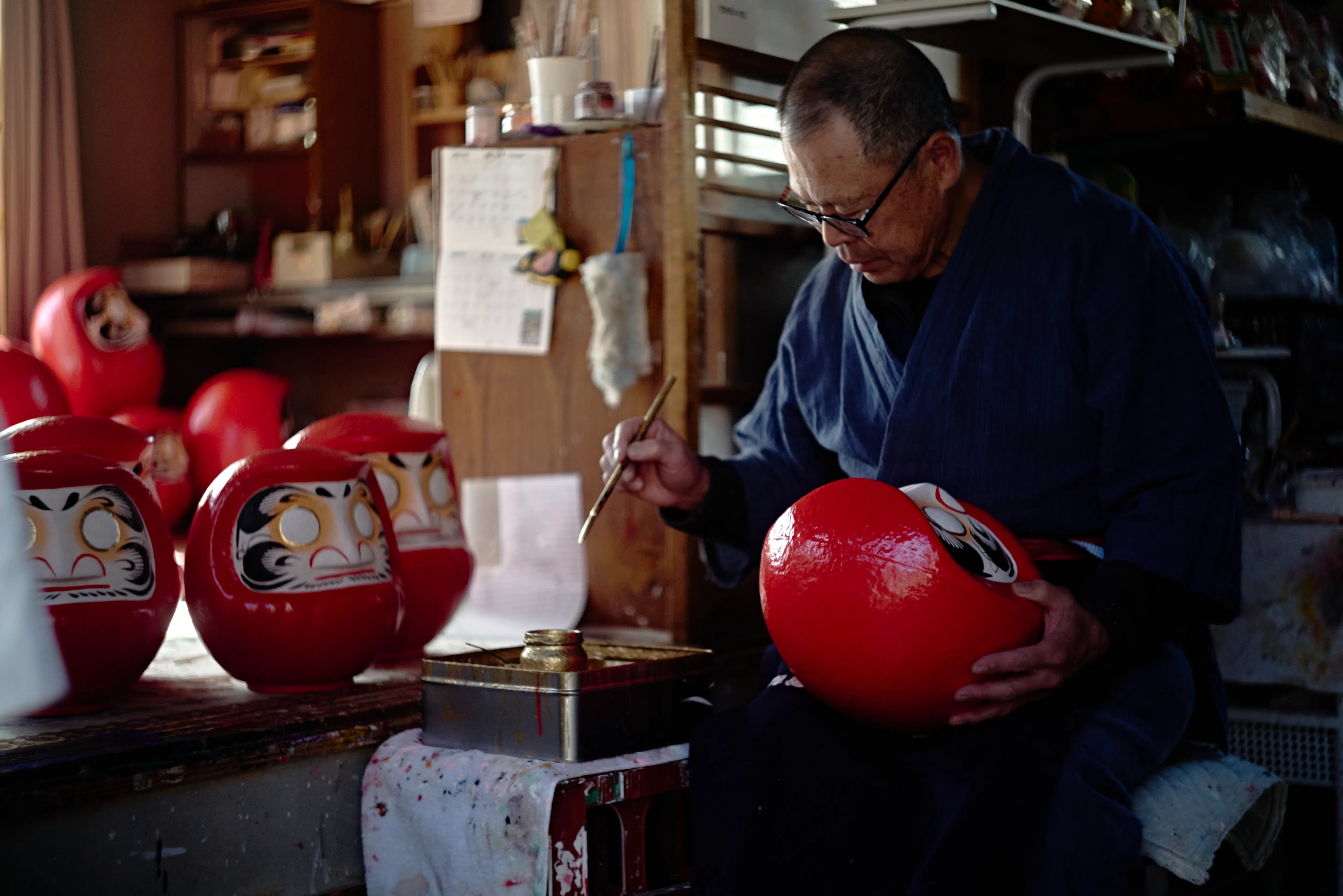
Central Kyoto also works well for a fixed craft session. The current Takasaki Daruma painting workshop at Zen Craftworks is one indoor option in a Kyoto machiya. Check current dates and conditions on the Workshop page rather than assuming availability.
Northeastern Kyoto: combine walking and indoor culture
Allow three to four hours for a garden, canal-side walk, and museums or cultural facilities in Okazaki.
Use the walk as the connection between places rather than treating it as another isolated attraction. This area works best when the weather is comfortable. In rain or extreme heat, shorten the exposed section and give more time to one indoor venue.
The northeastern route also suits travelers who have already seen the best-known western and eastern landmarks and want a less rushed day.
Use the station area for short visits or bad-weather days
The area around Kyoto Station is useful when:
- you have a few hours before check-in or departure;
- heavy rain makes a long neighborhood walk impractical;
- a family itinerary needs one substantial indoor block;
- you want to avoid crossing the city with luggage;
- a reserved activity elsewhere has been canceled.
Museum and family-attraction schedules differ, and special exhibitions can change entry procedures. Check the exact venue rather than assuming that every museum closes on the same weekday.
Add one participatory cultural experience
A general Kyoto trip should include at least one experience in which you do more than observe. Suitable formats include tea preparation, traditional sweets, cooking, meditation, craft, sake education, and performing arts.
Choose by practical fit rather than by the broadest claim of authenticity. Confirm:
- what you will personally do;
- whether instruction is available in a language you understand;
- total on-site time rather than hands-on time alone;
- floor seating, stairs, and other physical requirements;
- shared, private, and minimum-participant conditions;
- what can be taken home immediately;
- drying, firing, shipping, pickup, cancellation, and late-arrival rules.
A craft workshop fits especially well as an indoor midday block or weather contingency. It should complement the area-based itinerary, not replace Kyoto’s essential geographic clusters.
Make food part of the route
Match meals to the area instead of sending every food stop downtown. Use a daytime market for ingredients and small shop visits, try tofu dishes around temple districts, choose everyday Kyoto-style side dishes for a casual meal, or reserve a formal multi-course dinner when it is a trip priority.
Formal restaurants and small dining rooms can have limited seating. Reserve the dinners that matter most rather than planning the evening around walk-in availability.
Travelers with allergies, vegetarian or vegan requirements, or religious restrictions should confirm ingredients and broth before arrival. A dish name does not guarantee that its seasoning or preparation meets a particular requirement.
Plan one area for the evening
Kyoto’s evening options are quieter and more dispersed than its daytime sightseeing. Build the night around one district.
In eastern Kyoto, combine Gion with a hosted performance or reserved meal. Downtown, use the river and restaurant streets for dinner and an evening walk. Seasonal illuminations can be worthwhile, but they operate only on designated dates.
Do not assume a daytime temple remains open after dark. Confirm special-entry dates, last admission, and return transportation before changing the day’s order.
Move between areas without losing the day
Use rail first, bus second, and walking within the district.
Rail is especially useful for southern and western Kyoto. The subway is useful for trips through central and northern Kyoto. Buses remain useful for short local connections, but a bus-only itinerary is more vulnerable to traffic and boarding delays.
Avoid returning to Kyoto Station between every attraction unless it is genuinely on the route. Use a taxi for a difficult final connection, a mobility need, or when a small group can split the fare—not as the default for an entire day.
Store or forward large luggage before sightseeing. Suitcases make buses, market streets, gravel routes, and temple approaches harder for you and everyone around you.
Adjust for weather and season
| Condition | Keep | Adjust |
|---|---|---|
| Sustained rain | Palace interiors, museums, performances, food, and workshops | Shorten canal walks, Arashiyama, and long temple approaches |
| Midsummer heat | Early outdoor visit and an indoor midday activity | Avoid a full mountain route or several exposed districts in the afternoon |
| Peak blossom or fall-color seasons | One priority site at opening and a reserved evening activity | Do not schedule several headline areas during the busiest midday hours |
| Winter | Temples, gardens, food, and museums | Check earlier closing times and finish outdoor blocks before late afternoon |
| Severe weather or transit disruption | One nearby indoor option | Recheck official closures and do not force a distant connection |
Before leaving each morning, confirm the first closing time, keep each half-day within one area, leave a buffer before reservations, check weather and current crowd information, store luggage, and keep one nearby indoor substitute.
If sustained rain becomes the main constraint, use the more detailed Kyoto rainy-day activities guide to compare total outdoor exposure and transfer risk.
A workable Kyoto itinerary is not the one with the most famous names. It is the one that gives each area enough time without spending the day in transit.