



What would your children like to do in Kyoto?
Make a keepsake, shape Japanese sweets, try a traditional game, explore trains or spend an afternoon around the aquarium and Umekoji Park. These Kyoto family activities give children something to do between sightseeing stops, without filling every hour of the day.
Start with their interests. A child who wants to paint may enjoy a booked workshop; one who needs room to move may prefer the park. Choose one main activity, then leave the next stop flexible.
| Activity | What children can do | How parents can join in | Main thing to check |
|---|---|---|---|
| Craft workshop | Choose colors and make or paint a keepsake | Create alongside them, subject to booking rules | Eligible ages and adult participation |
| Cooking or sweet-making | Shape, assemble or decorate food | Help with the steps the class allows | Menu, language and dietary requirements |
| Traditional games | Fold paper or practice a new skill | Play together | Available games and session format |
| Interactive museum | Try controls, models or practical displays | Explore the parts that interest you both | Separate tickets or restrictions for activities |
| Aquarium | Watch animals and revisit favorite exhibits | Follow the child's pace | Opening times and outdoor sections |
| Umekoji Park | Play, picnic or take a break | Leave time for unplanned play | Weather and energy levels |
| Short neighborhood walk | Spot details, choose a snack or take photos | Let children help choose the stops | A manageable route and a place to finish |
1. Make or paint a keepsake
A workshop turns a souvenir into something your child helped create. Look for a clear task, such as choosing a design and painting it, rather than judging the experience only by a photo of the finished piece.
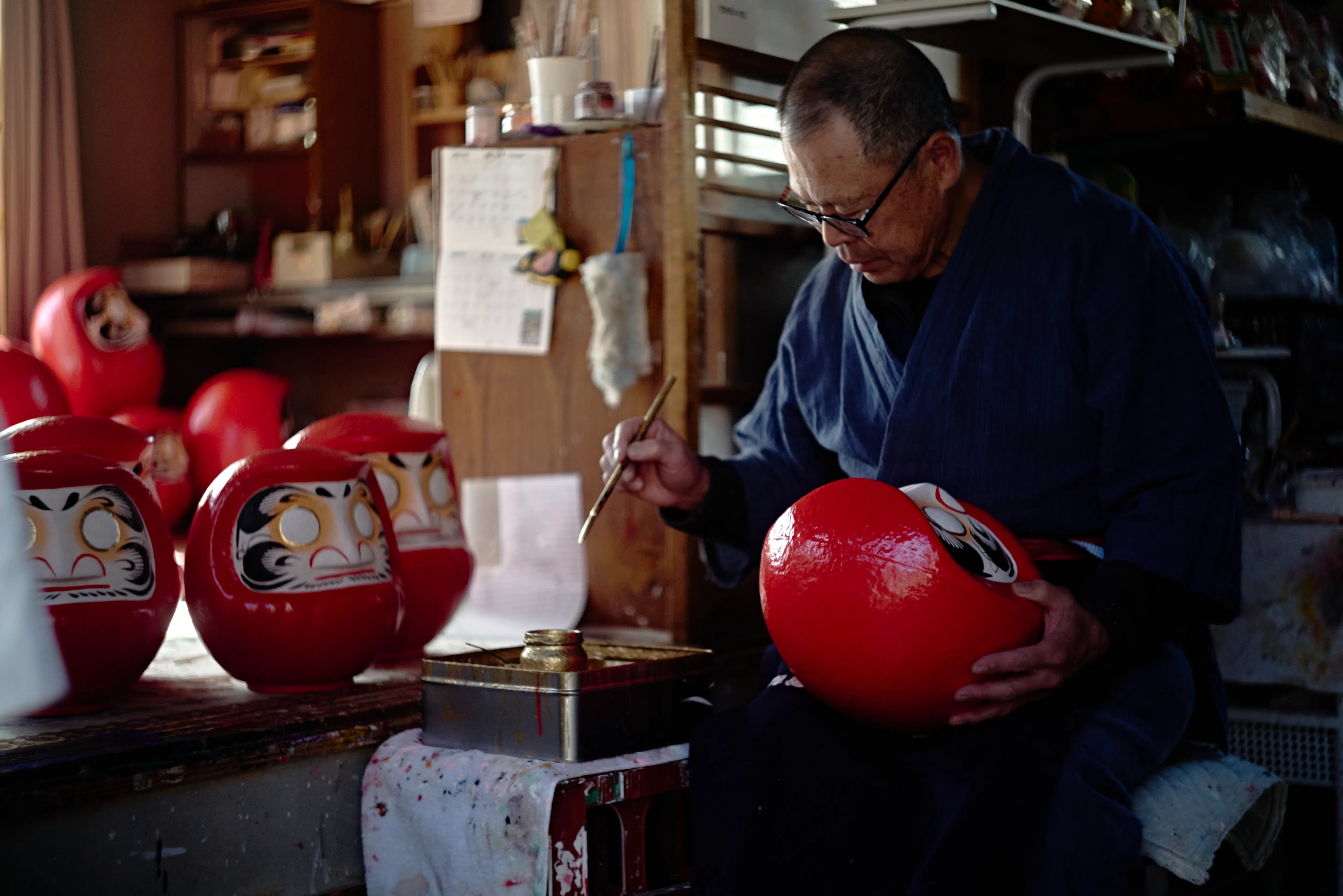
For Daruma painting, Zen Craftworks' workshop in Kyoto offers six base colors and a practice sheet for trying a design before painting with staff guidance. The full visit takes about 90 minutes, including check-in, photos and packing. Participants take their finished Daruma home the same day in a drawstring bag.
Before booking with children, ask Zen to confirm the eligible ages and whether accompanying adults need to take part or buy their own place. The workshop page does not publish those family participation rules.
The small-group session takes place on the second floor of MICASADECO & CAFE Kyoto in Nakagyo-ku. It brings the Daruma tradition of Takasaki, Gunma, to Kyoto.
For any craft class, check when the work will be ready. A piece that needs firing or further finishing may require collection or shipping later.
2. Make Japanese sweets or prepare food together
Wagashi are Japanese sweets, often shaped and decorated by hand. Making them gives children a small, visible project to work on. A cooking class might instead involve forming onigiri rice balls or assembling a meal.
Choose a class by what your child will actually make. Some steps may be demonstrations, while others are hands-on. Ask about the tools involved, the instruction language and the role of accompanying adults.
Share any allergies or dietary requirements before booking, and confirm what the provider can accommodate. Also check whether you eat your food during the session or take it away afterward.
3. Try traditional Japanese games
Kendama, a wooden cup-and-ball toy, gives you a skill to practice together. Origami offers a quieter alternative: fold a sheet of paper into something recognizable, then try another design. Kyoto also has traditional-play experiences featuring games such as daruma-otoshi, where players knock blocks out of a stack without toppling it.
This is an option for families who would rather play than follow a long explanation. A child can repeat the same game or move on to a different one, depending on the venue's format.
Look at the available games and how the room is arranged. Floor seating, a free-play visit and a structured lesson can feel quite different.
4. Choose a museum with something to try
If your child likes trains, look beyond the collection itself. Around Umekoji, railway experiences include a driving simulator and model-train activities, as well as trains to see up close.
Other museums may use interactive displays to explain how objects are made. Check the activity your child is excited about: museum admission does not necessarily include every simulator, ride or workshop, and some extras have their own participation rules.
For children who do not read Japanese, find out what translated explanations or demonstrations are available. A short visit built around a few interesting exhibits is an option; you don't have to cover every room.
5. Spend time watching animals at the aquarium
An aquarium gives children a different kind of activity: watching rather than making. Let them choose an animal to look for, compare how different animals move, or return to the tank that held their attention.
The aquarium beside Umekoji Park is a useful choice when you want to spend much of the visit under cover. Some sections are outdoors, so bring what you need for the weather rather than assuming the entire route is enclosed.
If rain is shaping the whole day, our Kyoto rainy-day activities guide covers more indoor options.
6. Leave time for Umekoji Park
Umekoji Park has lawns and playground space beside the area's railway and aquarium attractions. You can use it as the main outing or as a break after an indoor visit.
Bring a picnic, find a place to sit or let the children play. Keep this part of the day optional: if everyone is tired or the weather turns, there is no reservation to work around.
You don't need to visit both neighboring attractions to justify coming here. Pick the one your family is most interested in, have lunch and decide about the park afterward.
7. Make a short walk part of the activity
A neighborhood walk can be more engaging when children help choose what to notice. Look for an unusual sign, an old building detail or a food they haven't seen before. A few streets may be enough.
Give the walk a simple destination, such as a snack stop or park, and avoid adding several distant sights along the way. Stay together on busy streets and follow signs about private property and photography.
Make the plan fit your family
Younger children may prefer open-ended play and help from a parent. School-age children might choose a project to finish or a machine to operate. Teenagers may want more say in the design, food or places you pick. These are starting points for a conversation, not rules about what children of a certain age should enjoy.
Before paying for a family activity, confirm the eligible ages, adult participation, instruction language and total price. If relevant, ask about stroller space, seating and dietary needs too.
Then keep the rest simple: one activity your children want to try, a meal and room to change your mind about what comes next.

