



Which crafts is Kyoto known for?
Kyoto is known for Kyo-yaki and Kiyomizu-yaki pottery, Nishijin woven textiles, Yuzen dyeing, fans, decorative paper, lacquerware, wood, bamboo and metal crafts. You can explore them through exhibitions, shop for a piece to use at home, or book a hands-on lesson.
Start with the material or object that interests you. A cup, a woven pouch and a decorated sheet of paper each reveal a different part of Kyoto's craft traditions.
| Craft | What to look for |
|---|---|
| Kyo-yaki / Kiyomizu-yaki | Pottery in varied shapes, glazes and painted designs |
| Nishijin-ori | Fabric with patterns formed by weaving dyed threads |
| Kyo-Yuzen | Patterns dyed onto cloth, by hand or with stencils |
| Sensu and uchiwa | Folding fans and flat, non-folding fans |
| Paper crafts | The paper's texture and any printing or decoration |
| Lacquerware | The lacquer finish and decoration, often over a wooden base |
| Wood and bamboo | Joints, grain, weaving and the way the material is shaped |
| Metalwork | Inlay, engraving, casting or wirework |
Woven textiles or dyed fabric?
Nishijin-ori and Kyo-Yuzen can both produce intricate designs, but they are made differently.
In Nishijin weaving, the threads are dyed first. The pattern is formed as those threads are woven together. Look closely at the surface to see how the design sits within the fabric.
Yuzen dyeing adds designs to cloth. Hand-painted and stencil-dyed work are two main approaches. The process can involve several specialists, so a short visitor lesson usually lets you try one part of the work.
Neither technique is limited to a full kimono. When browsing smaller textile goods, ask what fabric has been used and who made it. A familiar Japanese motif alone does not identify the technique.
Kyoto pottery: more than one style
Kyo-yaki and Kiyomizu-yaki cover a wide range of ceramics, not one signature color or glaze. You might be drawn to painted decoration, the shape of a bowl, or a plain surface that lets the clay and glaze stand out.
For a piece you will use regularly, consider its size and weight as well as its appearance. Ask permission before picking it up, and check its intended use. A decorative object and a cup for daily use may need different care.
Smaller crafts to look for
Fans and paper
A sensu folds closed; an uchiwa stays open. Some fans are made for everyday cooling, while others are intended for display or performance. Choose according to how you want to use it, not just the painted design.
With paper goods, washi refers to Japanese paper, while karakami is a decorative paper craft using woodblock printing. The printing may be done in Kyoto on paper made elsewhere in Japan. Both the papermaking and the decoration can be worth asking about.
Lacquer, wood and bamboo
Lacquerware is defined by its finish, not simply by being made of wood. Wood joinery, meanwhile, involves carefully fitted wooden parts. A bamboo piece offers something else to notice: how narrow strips have been shaped or woven.
Look for the construction as well as the surface decoration. It can be easier to appreciate a simple box or basket once you understand how its parts fit together.
Metalwork
Kyoto metalwork includes several techniques. Inlay adds one metal to the surface of another; engraving cuts into the surface; wirework builds a shape from wire.
Ask about the material and finish before choosing something you will wear or use around food. Cleaning instructions can differ between pieces that look similar.
Where to see and buy crafts in Kyoto
Nishijin, in northwestern Kyoto, is a starting point for textiles. This is a weaving district with exhibition, shopping and visitor-experience options. Plan around the places open to visitors rather than assuming you can enter a working studio.
Okazaki suits a first introduction to several crafts. Craft exhibitions there let you compare finished work with materials and tools. If you want to watch an artisan, check the demonstration schedule: the craft on show changes.
Gojo-zaka and Chawanzaka, in eastern Kyoto, suit pottery browsing. Production also takes place in Yamashina, so ask about the maker or kiln if you want to know where a piece was made.
Downtown is convenient for shopping alongside other plans. The Shijo area between Karasuma and Kawaramachi has a broad mix of stores. Treat it as a place to browse, not a guarantee that everything sold there was made in Kyoto.
For any area, check the particular shop or exhibition before setting out. A demonstration is something you watch; a workshop is something you join. They may have separate schedules and booking arrangements.
Before you buy
A few questions can help you choose a piece you will enjoy at home:
- Who made it, and where? Ask about the maker or kiln if you want a Kyoto-made souvenir.
- What is it made from? A finished object can combine materials from different places.
- How should I use and clean it? Check the instructions for that item, including dishwasher or microwave use where relevant.
- How can I take it home? Ask about protective packaging, box size and shipping before buying something fragile or bulky.
Contemporary design does not make a piece less traditional in technique. Equally, an old-fashioned appearance does not prove that it was handmade locally.
Try making something during your visit
If browsing leaves you wanting to work with your hands, choose a lesson that explains what you will actually do and when the finished piece will be ready.
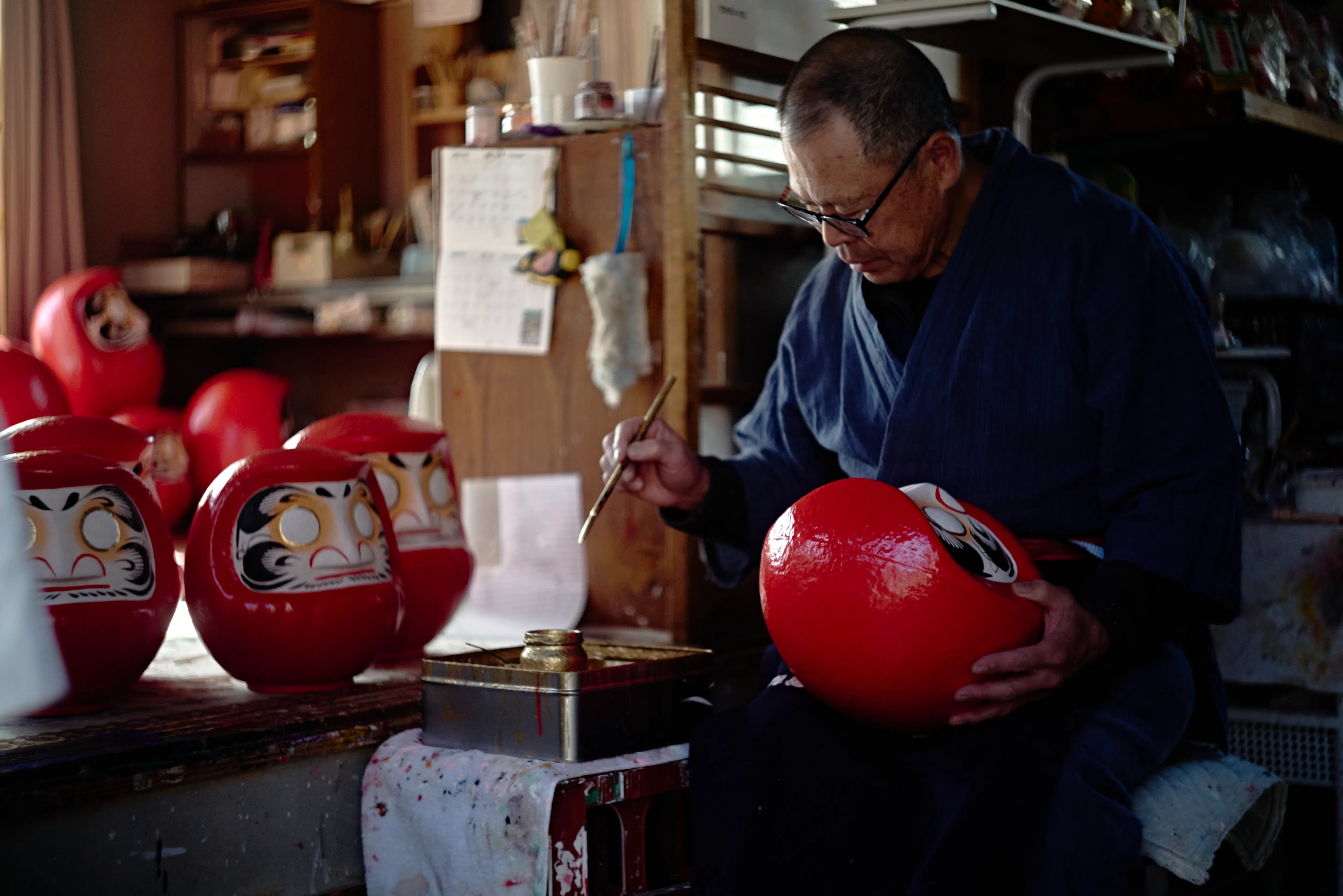
At Zen Craftworks' Daruma painting workshop, you paint a Takasaki Daruma in a small-group setting. The Daruma comes from the Takasaki tradition in Gunma; the painting experience takes place in Kyoto.
Allow about 90 minutes for the full visit, including check-in, practice, painting, photos and packing. You choose from six Daruma base colors, use a practice sheet and receive staff guidance. The venue is on the second floor of MICASADECO&CAFE Kyoto, and you take your painted Daruma home that day in a drawstring bag.
If you would like to combine making with more craft browsing, the Kyoto craft and culture itinerary offers a way to plan the rest of the day.

