


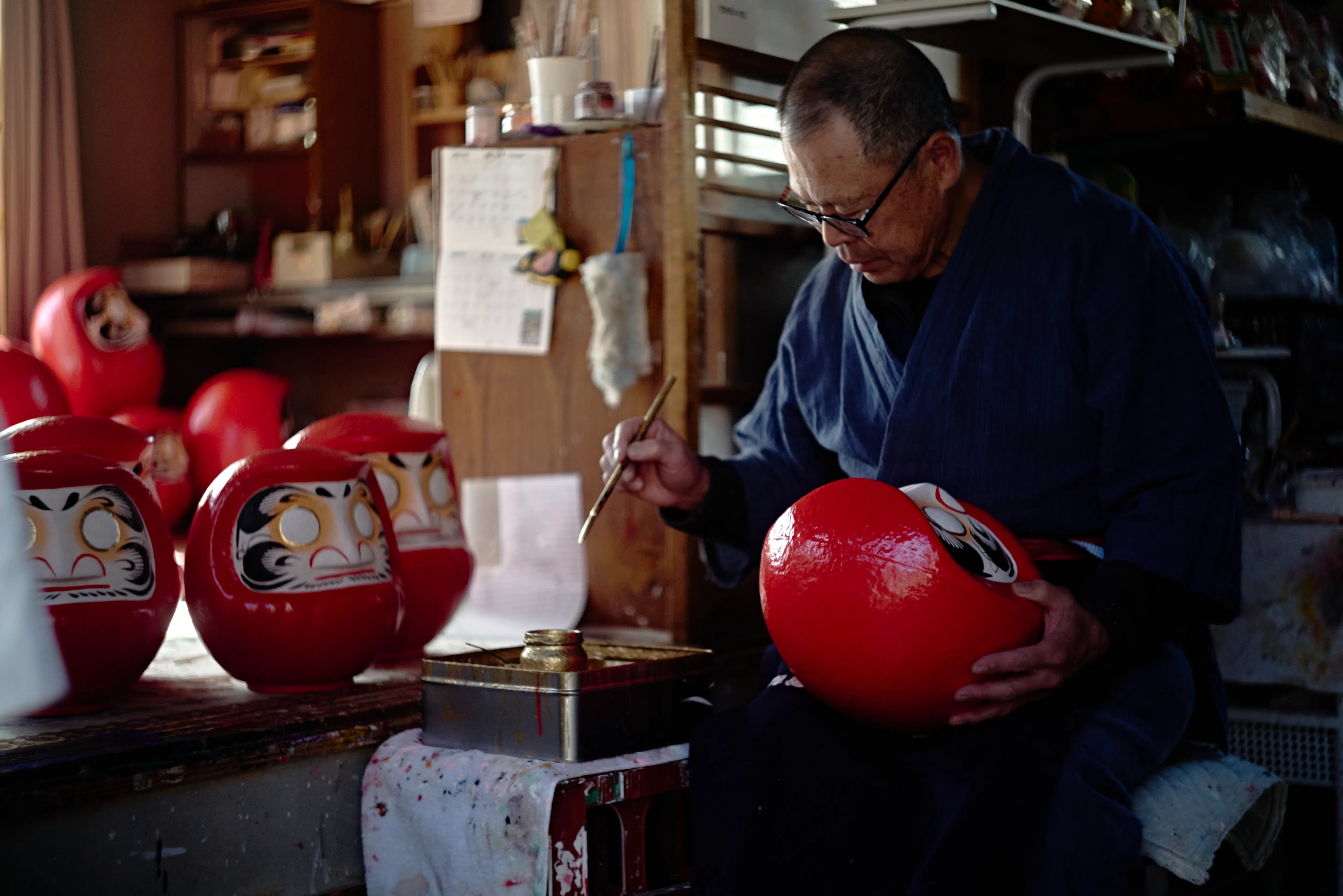
Kyoto has craft workshops that accept one-person bookings, but solo eligibility does not always mean the session is guaranteed to run. Before choosing a craft, check whether one person is explicitly accepted, whether a minimum fee applies, whether the workshop will operate for one, and whether the format is private, shared, or still subject to approval.
The conditions below are current examples reviewed on August 12, 2026. They are not category-wide rules, and booking terms can change.
Compare solo booking models first
| Workshop format | One-person booking | Operating minimum | Shared or private | Published time | Take-home | Confirmation |
|---|---|---|---|---|---|---|
| Stencil dyeing | Explicitly accepted | No separate operating minimum published | Shared workroom | Usually 1–1.5 hours | Same day for most items; some assembled products are sent later within Japan | Manual confirmation; a current example accepts same-day requests by phone |
| Ikkanbari washi craft | Published range starts at one | No separate operating minimum published | Not stated | About 2 hours | Shipped after drying; overseas shipping is stated | Reservation request for morning or afternoon |
| Wire mesh craft | Solo lesson explicitly accepted | No separate operating minimum published | Not stated | About 1.5–2.5 hours | Project-dependent; one requires later pickup or eligible delivery | Advance inquiry, generally at least 10 days ahead |
| Private weaving or embroidery | One guest accepted | A solo traveler may have to pay the minimum charge for two or more participants | Private | About 2–6 hours by program | Same day in the examples checked | Instant or request confirmation, depending on date |
| Woodblock printing | One person can submit a request | Not published | Listed as small group; private status not stated | About 1–1.5 hours | Same day | Request booking at a fixed 10:30 start in the example checked |
| Notebook making and factory tour | Solo participation accepted with a minimum charge | Standard minimum of two, with a solo exception | Not stated | About 1 hour | Same day | Reservation request |
| Lacquer tour and chopstick workshop | Solo participation accepted with a surcharge | Standard minimum of two, with a solo exception | Other bookings may share the time slot | About 45–90 minutes | Depends on the selected plan | Email request |
| Traditional kintsugi | No; current direct-booking terms require at least two people | Minimum of two | Not stated | About 2 hours | Leaves with you but needs 2–3 weeks to cure | Online booking followed by confirmation |
This table compares booking mechanics, not workshop quality.
Read solo booking terms in the right order
Start with the provider’s own statement about one-person participation. Strong evidence includes wording such as “solo participants are welcome,” “take a solo lesson,” “private: 1–2,” or “participants: 1–5.”
Next, check the financial minimum. A workshop may accept one traveler but charge a solo surcharge, a two-person minimum fee, or a minimum private-session fee.
Then look for the operating minimum. This is different from the smallest number accepted by a booking form. A selector that allows one traveler proves only that one person can submit the form; it does not prove that the session will run with that one booking.
Finally, identify the confirmation type. An instant booking is complete after payment. A request booking is not final until the instructor or host approves it.
A general cancellation policy may explain what happens when you cancel without stating what happens if the provider cannot meet an operating minimum. Ask whether the session will be canceled, rescheduled, or refunded if it cannot run.
Private, shared, and small-group are different
A private workshop is reserved for your booking party. For one traveler, that usually means direct instructor time without unrelated customers.
A shared workshop can place different bookings in the same room or time slot. That makes meeting another participant possible, but it does not guarantee that anyone else will book.
Small group usually describes capacity. Unless the listing also says private or shared, do not assume either format.
A regular studio setting is different: other customers or local students may be present but working independently rather than joining your guided session.
Decide how much interaction you want
The social experience depends more on the format than on the craft.
A private weaving session can provide one-to-one instruction. A private embroidery session may include conversation with the maker. A workshop led directly by a craftsperson can include demonstrations and questions even when no other traveler attends. A shared dyeing studio may have other customers working nearby.
None of these formats guarantees social interaction with another traveler. If meeting people matters, ask whether the session is shared and whether another booking is currently confirmed. Treat the answer as date-specific information, not a permanent feature.
Count your total time commitment
The advertised duration may not reflect the workshop’s full time commitment.
A finished wire item may need to be collected two hours later. A washi object may be shipped after the paste dries. A kintsugi piece may leave with you but remain unusable while the lacquer cures. Some dyed items require later assembly and domestic delivery.
Before booking, separate:
- hands-on activity time;
- check-in and explanation;
- studio tour or tea time;
- finishing and packing;
- later pickup;
- shipping;
- curing before use.
This matters if you schedule the workshop before a train departure, hotel change, or day trip.
Check language support precisely
An English booking page does not prove that the instructor teaches in English. Look for the exact level of support:
- English-speaking instructor or host;
- English-speaking guide or interpreter;
- simple English with written instructions;
- paid English guidance;
- demonstration-led instruction from a craftsperson who is not fluent in English;
- no language information published.
For a visually demonstrated craft, limited spoken English may still be enough for the procedure. It is not the same as an English-led explanation of the craft’s history and context.
Check access rather than assuming it
Most of the reviewed workshop pages did not publish enough accessibility information to make a useful claim. A central location, ground-floor storefront, or modern-looking room does not prove step-free access.
If access matters to you, ask about the route from the street, thresholds, stairs, elevators, restroom access, table height, seated work, companion space, and assistance with tools. One dyeing workshop states that wheelchair users can enter a first-floor workspace through a rear entrance if they notify the provider in advance; do not generalize that arrangement to other studios.
Solo booking checklist
Before paying or submitting a request, confirm:
- Can one person book?
- Will the workshop operate with one person, or is one only the form minimum?
- Is there a two-person minimum fee or solo surcharge?
- Is the session private, shared, or unspecified?
- If shared, are other participants confirmed or only possible?
- Is the reservation instant or awaiting approval?
- What is the fixed or available start time?
- Does the duration include check-in, explanation, tea, finishing, and packing?
- Does the item leave with you, require pickup, need shipping, or need time to cure?
- What happens if the provider cannot operate the session?
The least ambiguous option is a workshop that explicitly publishes a participant range beginning at one, states directly that solo participation is accepted, or explains its solo surcharge or minimum-fee arrangement. Do not rely on a one-traveler selector alone.
Once the booking terms are clear, a Kyoto craft and culture itinerary can help you fit one fixed workshop into the day without stacking too many timed stops.
Zen Craftworks is not included in this solo comparison because its current Workshop page does not explicitly publish one-person acceptance or an operating minimum. Direct Daruma booking conditions belong on the live Workshop page once those terms are confirmed.