


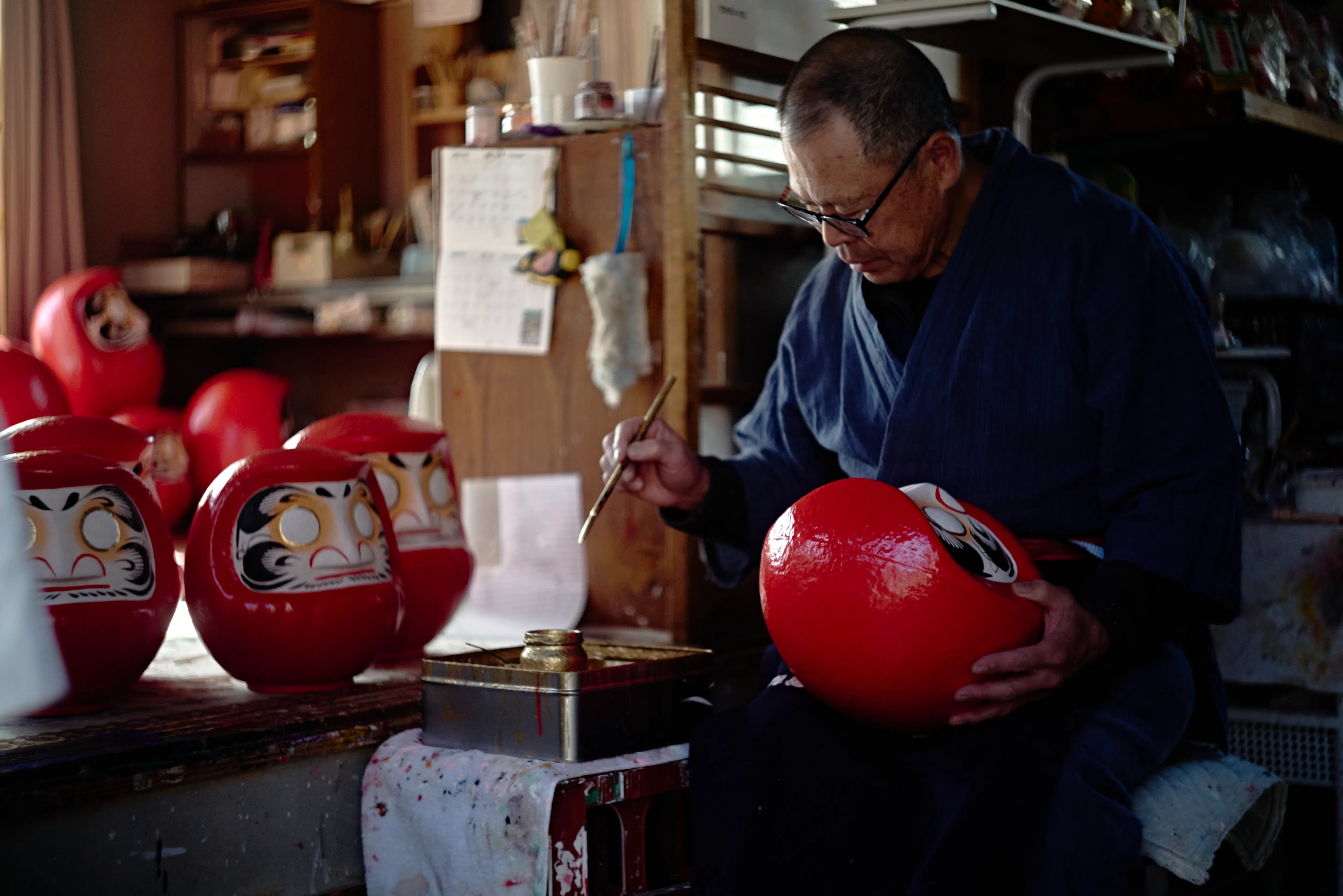
Unusual things to do in Kyoto are not necessarily secret, obscure, or free of crowds. Here, “unusual” means that an experience changes what you do with your day. Instead of moving from one historic site to another, you might make something, interact with digital art, read manga, watch a dialogue-free performance, explore sake culture, follow local bathhouse customs, or travel through historic canal infrastructure.
These options suit travelers who already know Kyoto’s standard sights and want things to do besides temples. Some require timed tickets, while others can remain flexible.
Compare alternative Kyoto experiences
Times labeled “plan” are scheduling allowances based on current evidence, not official duration guarantees.
| Experience type | What you do | Why it differs | Mode | Area | Time | Booking | Weather |
|---|---|---|---|---|---|---|---|
| Takasaki Daruma painting | Practice motifs, choose colors, paint a Daruma, and take it home | Your own making determines the result | Active | Central Kyoto | About 90 minutes | Reserve ahead | Indoor |
| Video-game history museum | Explore product history and spend a limited number of digital coins on interactive exhibits | Makes Japanese game and design history the focus of a Uji half-day | Both | Uji | Plan 3–5 hours | Advance timed ticket | Mostly indoor |
| Interactive digital-art exhibition | Move through large installations that respond to people | Replaces historic sightseeing with contemporary, movement-based art | Active | Near Kyoto Station | Plan 2–3 hours | Timed ticket recommended | Indoor; an outdoor wait is possible |
| Manga museum and reading space | Explore manga history, read from open shelves, and join a same-day activity if available | Turns modern visual culture into the main subject | Mostly passive | Karasuma Oike | 1–3 hours | Core visit is relatively flexible | Mainly indoor |
| Dialogue-free theater | Watch movement, stage effects, sound, and visual storytelling | Provides a structured evening that does not depend on spoken dialogue | Passive | Downtown | About 90 minutes | Reserve ahead | Indoor |
| Fushimi sake district | Combine brewing history, water culture, tasting when eligible, and canal-side streets | Connects food, industry, and former river-port history | Both | Southern Kyoto | Plan 2–3 hours | District walk is flexible; museum reservation can help | Mixed indoor and outdoor |
| Neighborhood sento | Follow the routine of an everyday shared bathhouse | Participates in a local custom rather than viewing another attraction | Active | Citywide | Plan 60–90 minutes | Often walk-in; facility rules vary | Indoor |
| Seasonal canal cruise | Ride through tunnels and historic water infrastructure | Makes Meiji-period engineering the route itself | Passive | Keage, Yamashina, and Otsu | About 80–130 minutes by route | Advance reservation | Seasonal and weather-sensitive |
Make something you can take home
A painting workshop changes the pace of a sightseeing day because the finished object depends on what you do rather than what you photograph.
At Zen Craftworks’ Takasaki Daruma painting workshop, participants learn about the Daruma, practice painting, choose from six colors, create a design, write a wish, fill in one eye, and take the finished piece home in a drawstring bag.
Takasaki Daruma comes from Gunma Prefecture. The workshop is a Japanese regional craft experience held in a Kyoto machiya, not a Kyoto traditional craft.
Allow about 90 minutes and check current dates and conditions before building it into your day. The room is on the second floor, and the public page does not say whether a step-free route or elevator is available.
See modern and creative Kyoto
Build a Uji half-day around game history
A video-game history museum in Uji combines exhibits on product design with interactive experiences. Visitors receive a limited number of digital coins for the interactive area, so they must choose which experiences to try rather than expecting to use every station.
Treat it as a half-day anchor rather than a quick display. Current procedures use timed admission and identity checks, and visitors are directed to arrive by public transportation. An optional card-making activity may be offered after entry, but capacity is limited and it is not guaranteed.
Wheelchair users can enter the building, but some interactive exhibits are not accessible. Check the detailed access information if a particular activity is important to you.
Enter an interactive digital-art environment
A permanent digital-art exhibition near Kyoto Station offers a contemporary alternative to historic sightseeing. The installations respond to movement, position, and participation.
Plan about two to three hours as an editorial allowance; the operator does not publish one standard visit length. Admission uses a date and entry time, and busy periods may involve waiting outside.
Wheelchair users can enter, but some works have access limits. Strollers remain outside the exhibition area. Those details are more useful than describing the venue with a simple accessible-or-not label.
Read rather than rush
A central manga museum in a former elementary school combines exhibitions, a research collection, and tens of thousands of volumes available for reading, including translated works.
A visitor who views the main displays may finish relatively quickly. Someone who reads, explores temporary exhibitions, or waits for a same-day activity can stay for several hours. Treat portrait drawing and other activity corners as optional additions, not guaranteed parts of admission.
Most of the visit is indoors, while lawn reading depends on the weather.
Use the evening for a performance
A 90-minute dialogue-free production in central Kyoto combines physical performance, visual storytelling, sound, lighting, and mechanical stage effects. It creates a structured evening without requiring continuous translation.
Reserve ahead and arrive before the stated start; late entry may be delayed. The production uses loud sounds, strong lighting, and dark scenes, so visitors with sensory sensitivities should check the current guidance before booking.
This works well when the day already includes enough walking and you want one passive but distinctive evening anchor.
Build a sensory half-day
Follow water and brewing history in Fushimi
Fushimi works best as a connected district experience rather than a single tasting stop. Begin with a museum-style introduction to brewing tools, rice, water, storage, and production history, then continue through brewery streets and canal-side paths.
Allow two to three hours for the indoor interpretation and outdoor walk. Adults who choose to drink can add a tasting. Non-drinkers can still enjoy the exhibits, architecture, water history, and food stops, so the half-day does not need to revolve around alcohol.
Do not schedule a public bath immediately after drinking.
Use a neighborhood sento respectfully
A sento is an everyday shared bathhouse, not a staged demonstration. That is what makes it different from conventional sightseeing: participation depends on following the local routine.
Remove your shoes at the entrance, wash before entering the bath, keep your towel out of the water, avoid disruptive behavior, and dry yourself before returning to the changing room. Do not take photos inside.
Allow about 60–90 minutes, including changing and washing. Opening hours, closed days, payment methods, towel rental, soap, tattoo policies, and accessibility differ by facility. Check the individual bathhouse and carry cash as a precaution.
Follow Kyoto’s water and engineering history
A seasonal canal cruise turns historic infrastructure into the sightseeing route. Boats travel between Kyoto and Shiga through tunnels and sections of the canal built to connect Lake Biwa with Kyoto.
Exact routes vary, but the full scheduled block is generally about 80–130 minutes. Confirm both the boarding and arrival docks because some routes end outside central Kyoto.
Weather is a real constraint. Passengers wear life jackets, umbrellas cannot be opened, and rainwear is more practical. The tunnels can feel cooler than the outside temperature.
This is also the most physically restrictive option in the guide. Boarding can involve steps and narrow passages. Passengers must be able to board and leave the boat independently, and large luggage is unsuitable.
Choose one strong anchor
| Day structure | Main plan | Best for | Constraint to protect |
|---|---|---|---|
| Central creative day | Manga museum, Daruma painting, then an evening performance | Active and passive variety with limited cross-city travel | Reserve the workshop and performance before filling the flexible museum time |
| Modern Kyoto half-day | Interactive digital art near Kyoto Station | Arrival, departure, or station-area stays | Keep 2–3 hours free and allow for the entry queue |
| Uji anchor day | Video-game history museum | Game, design, and modern cultural interests | Do not stack another distant timed attraction around the admission time |
| Southern sensory half-day | Fushimi brewing history and district walk | Food, water, industry, and neighborhood atmosphere | Separate alcohol tasting from a later sento visit |
| Flexible local evening | Dialogue-free theater or a neighborhood sento | A change from shopping streets and night sightseeing | Choose theater for structure or a sento for flexibility |
| Seasonal infrastructure half-day | Canal cruise | Landscape and engineering history | Confirm weather, both docks, and onward transportation |
An effective alternative day usually contains one strong anchor, not several activities combined only for novelty. Reserve the least flexible experience first, then add nearby options that can expand or contract around it.
If your priority is a lower-profile place rather than an unusual activity type, compare the routes in the Kyoto hidden-gems guide.